We got a few announcements today.
Brian:So we've been acquired by OpenAI.
Justin:Welcome to The Panel where bootstrappers talk about building a better life and a better business. I'm Justin Jackson, the cofounder of transistor.fm.
Brian:And I'm Brian Casel. I'm the founder of Builder Methods.
Justin:Thanks for joining us for this special episode. We have teased that there is a special announcement coming. We actually have two special announcements. We have the most people watching the livestream ever. We have 25 people here in chat waiting for the announcement.
Justin:And I think we should just get right into it.
Brian:Let's just get right into it. Here we go.
Justin:Announcement number one is we are welcoming a new permanent co host to the panel. This is somebody you all if you've been listening to the show, you all they've been a guest before. You know them. You love them. They were a crowd favorite.
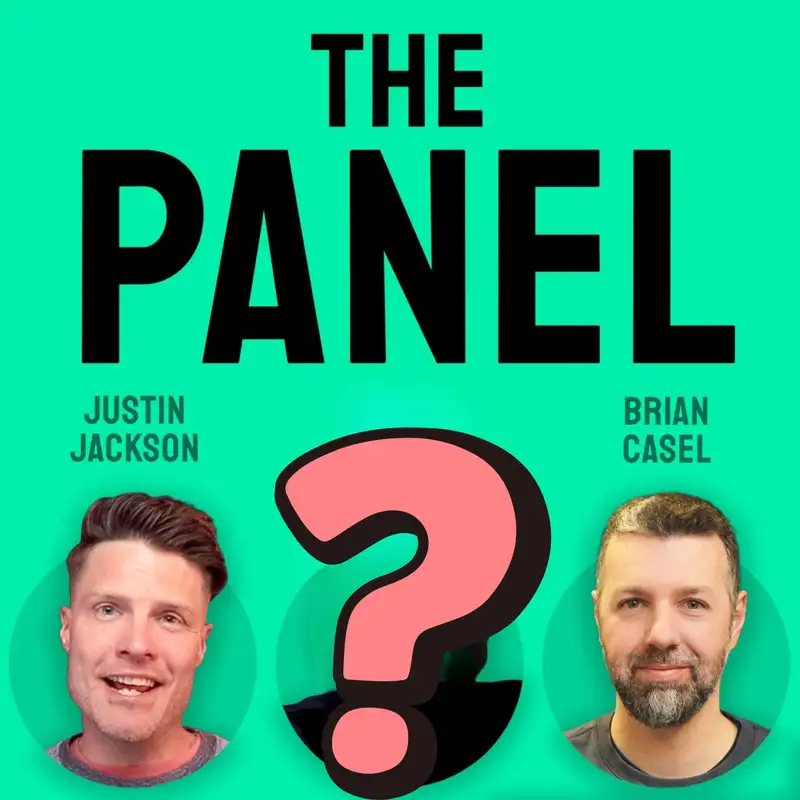
Justin:People wanted to see more of them. And we are responding by making them a permanent fixture here on the show. I'd like to welcome as the first as the new permanent co host along with Brian and I, we have. Oh, he's still hiding. Jordan Gal!!!
Justin:There
Brian:he is.
Jordan:I am reconsidering. After that showing, I'm not sure. I think I said yes too quickly.
Brian:It's it's his first and last episode as as co hosts. No.
Justin:Alright. So for folks at home
Brian:Jordan Gal is back on the show. We're I'm I'm super excited. The the panel is becoming a a true panel.
Justin:Mhmm.
Brian:Jordan and I are are reuniting as as cohosts in in a new format, new new home here on the panel. Let's get into it.
Justin:Let's get into it.
Jordan:Yeah.
Justin:So if folks don't know Jordan, Jordan is the founder of Rosie. But previously, Jordan and Brian had really one of my favorite ride along buddy cop podcasts called Bootstrapped Web. And so you have some history. So, Brian, you were the one who kind of pitched this idea to Jordan and I. Maybe talk about that.
Justin:And then let's get into how the show is gonna change moving forward.
Brian:Yeah. Well, you know, first of all, once again, Jordan, welcome back to the show. Welcome back on air. I'm I'm super psyched to to hang with you again. We've we've been talking a lot about this off air.
Jordan:Thank you. It's good to be back. I kept listening to your podcast and being like, but I have something to say right then. That's the
Justin:sound of a good podcast. If you just if you're like, ah, I gotta say something.
Brian:I've having a ton of fun just, you know, Justin and I doing the normal, like, week to week talking about our thoughts on business and life and what we're up to. But meanwhile, you know, Jordan and I have been talking a lot, and and Jordan was a guest with us three or four weeks ago. And it's and I was on one of my, like, you know, over caffeinated mornings with lots of ideas spinning around. So I I pitched this to Justin first. I was like, what if we not think about guests, but think about turning this into a three host show?
Brian:Mhmm. And and, like, you know, who who better than than Jordan? I mean, I Jordan had been podcasting, you know, over the past year, but but not so much lately. And and it seemed like a good time for for all three of us. And and I hadn't even pitched it to Jordan yet, but I you know, the next day after Justin was on board with the idea, I I pitched it to to Jordan, and and here we are.
Justin:I mean, this is this is really full circle for me because I was the guy listening to you guys talk on Bootstrap Web going, I've got something to say. Let me in there. So finally, it's like all of all of my podcast dreams are coming true here.
Jordan:It worked out the way it was supposed to. Right? I I did my own podcast for a while, and then I stopped. And then I was listening to yours and kind of, like, daydreaming about about podcasting. So every once in a while, would just, ping both of you guys with a compliment.
Justin:I love
Jordan:that show. Great episode, guys.
Brian:You know? And I think I was I am also looking at this, like, from a formatting standpoint and, like, a content production standpoint. And I I always like to when it comes to podcasting, especially, I like to think about our shows as, like, something I would really wanna tune into myself. Mhmm. I actually do, you know, listen to listen back to most most of our episodes, like, of the panel, and I used to do the same with with Bootstrapped Web.
Justin:Mhmm.
Brian:Because even as a cohost, I I still get enjoyment out of, like, going back and listening to it. And I just know the three of us. The three of us have known each other for for a long time, you know, both off air and on air. And I knew that it would I think, first of all, the idea of going to three hosts is really interesting and exciting to me on a number of levels, and we can get into that. But I also think that, like, what Jordan and I had with Bootstrapped Web, which worked, I think, really well, is that we both come at business in slightly different approaches and different experiences, different backgrounds, some very similar backgrounds as well, both of us growing up in the New York area and whatnot.
Brian:And then same different dynamics with me and Justin, different countries, different backgrounds. And then thinking about the three of us together, I I feel like, again, it can be that situation where it's like three, I think, pretty different voices. Yeah. A lot of overlap, a lot of a lot of different in in in background and and opinion, and I think that'll make for some interesting conversations.
Justin:And really different businesses. Right? Like, Brian, you're running Builder Methods, which is like a solo person content driven business. Jordan is has funding. It's a funded startup and has pivoted from the first idea to the second idea.
Justin:And now Transistor is kind of a mature bootstrapped business. So I think that variety is gonna be really interesting.
Brian:I like to also get into, like, sort of like product mode. Like, how do we make this an interesting product, right, as a as a podcast? And so formatting. Right? Like, three three cohosts.
Brian:And, you know, three hosts does come with some challenges. Right? We've even experienced this whenever we had a third or fourth guest guest on the show. Literally just like, let's try not to talk over one another or let's or how do we get, you know, have enough space for all the people on the on the broadcast to be able to get their get their airtime, get their get their say in who talks when and who's driving the conversation. So Mhmm.
Brian:I wanted to kinda turn it over to to Jordan real quick. Jordan, I mean, what are your thoughts on all of this? Like, why were you receptive to the idea when I when I messaged you about it?
Jordan:So from, like, a, you know, personal selfish point of view in terms of, like, what is interesting about joining, I I I listen to a bunch of podcasts and a big range from David Chang on cooking to politics to the All In podcast, but nothing feels as relevant as your podcast. And so when I when I like, listening to your podcast makes me want to share what I think and I'm working on and I'm learning and I lost that avenue. I don't I'm not good at I'm not good at doing it in a written format. This is the format that I prefer. And I did my own thing for a while and I get I missed some of the, like, dynamic around a recurring show with the same people.
Brian:Mhmm.
Jordan:And I I agree with you on three can be interesting because if you just do the two and then a new guest every time, it's tough to avoid it becoming an interview.
Justin:Yeah.
Brian:Right.
Jordan:And you don't want to be in an interview, not always. So I'm hoping what we can get to is like a real three person show with three different points of view. And I think the idea that we have right now that for each episode, one person will lead the discussion as the host, I I I think that can work. And I think it's up to that person to identify the topics and also keep the conversation moving. I think we can learn a lot from the All In show where they you know, they'll give air to a topic.
Jordan:Mhmm. And not every single person has to talk about every single topic. Sometimes one person kind of leads it because they're the most passionate about it and the show keeps moving forward. So I hope that's what we can get into. But more than anything, I'm excited to share what I'm thinking and working on and have it in the mix of your opinions and your conversations.
Jordan:I do think we come at things from three different points of view, but we're not actually that far apart. Different experiences, different types of companies, but it's in the same range of, like, whatever our universe of relevancy is.
Justin:I think the other thing that I mean, because I was listening to your podcast, Jordan, off-site. And I think you're just also a very good host. And I think that gave me a picture for what this could look like if I think we've gotten into it now. The the new format is that one person is going to be the host for every episode. So it's their job to come to the episode with a topic.
Justin:The other two can just show up. And they are going to present the topic, and then they're going to kind of drive it forward, get the other two panelists involved. And I think that's just gonna be such an interesting way to do things. It kind of fired me up when I heard about it. I was like, oh, this solves so many problems.
Justin:It solves the problem of like, sharing too much and everyone trying to get, you know, their updates in. Also opens up this opportunity for having a surprise guest, which has happened a variety of times on the show already. And it was always exciting when it happened. So for the host to say, and I've got a surprise guest, You know, here's the topic, and there's a surprise guest. I think both of those are gonna be really fun for us to explore.
Brian:Yeah. I mean, I love the idea of of the rotating host of the show. And, I mean, obviously, we we all know each other, and we are actual, like, equal cohosts, so this will just be a general conversation. But I think the idea with a rotating host is it it solves a a number of problems that I that I think we we would normally run into. Right?
Brian:Like, one is, like, just who's driving the conversation? Who's coming in with with a couple of, like, bullet points and, like, what's the focus of today's episode? And so, you know, we can sort of defer to that person to to lead the way and keep the conversation moving and make sure we're we're hitting on the right segments. You know, the other thing is like all three of us have have had experience with this, like, let's share your update, and then let's share my update, and then maybe back to you, and and and what are you working on? And like, that has worked well.
Brian:And I think this is where we can start to think of the future of the panel as this is really a new direction for all three of us. We're not trying to necessarily revive Bootstrap Web. We're not trying you know, do what Justin and I have been doing for the past year on the panel. This we should start to think of this like a like a sort of a new direction. It'll still have the same flavor.
Jordan:Yeah, man. I'm pumped. I I also like that we often disagree on a topic or a story.
Brian:Mhmm.
Jordan:And I think that's fun and healthy for a show. And the truth is things right now in our industry are so fun and exciting. There's so much and it's so new that it just doesn't feel stale. These topics don't feel stale. Talking about go to market, product, design, distribution, it's all it all has like a very new coat of paint on it and a lot of opportunity to just throw old wisdom out the window.
Jordan:And that and that's fun to talk about because I'm I'm confused about what's happening, and I don't know how to think about all of it. And it's I end up my poor team, that we try to minimize calls, but they know I need calls. I need to talk through this because I need someone to talk to to just go, I'm sorry, it's going to be half an hour in your day that I'm basically just going to be monologuing with some of your feedback. But I don't know how to think about how to take what's happening in engineering and drag it over to go to market. I don't know how to think about the fact that we can build all the features very, very quickly.
Jordan:And so should we? Are our competitors gonna do that? Should we care about our competitors? So I'm excited to be able to talk through it, and I'm sure we're not gonna agree on all of it. And and that that Yeah.
Justin:Well, it's perfect. Now now instead of a thirty minute call, you just send your team a two hour livestream link.
Jordan:At least they can, like, go to 1.4 x, you know, as opposed to Zoom with me. You you can't do that.
Brian:Yeah. Yeah. Totally. Totally. I I think it'll be it will be really interesting to kinda pick up on a lot of the same stories and themes that we've talked about for years.
Brian:But it's true that here in 2026, it it does feel like, I think to all of us, like everything has changed a lot. Maybe some things haven't, but like, I think a lot of what we've talked about in the past is going have a completely new light and a new perspective now. And we got into this, you know, when Jordan was on the show a couple of weeks ago. I'm sure this is going to continue, you know. I mean, that also brings me to I think another reason why I think it's worth putting some effort and some and and like remixing this this podcast rather than just kinda like showing up and going through the motions.
Brian:And and and like the whole idea of of turning this into a three host show and and working on the format is like, I really see podcasting and what we do here as a as a pretty important, like, strategic part of what I do. I think what all three of us do from a marketing perspective,
Justin:from a
Brian:building in public. And and I think that now it's it's always been important to to me and I think all of us throughout our careers. I I feel like it's more important than ever now to to even, like, double down on the idea of being out there, being public, being human on microphones, and generating raw human content that we can leverage for for our business.
Justin:And to be clear, the the second announcement that the format of the show is changing. So we're gonna go from kind of a update driven show where we're just running through, like, each of us would have a list of three or four things to talk about. Now, the host is going to bring a topic. And all three of us are gonna talk about it. And I think this is also an opportunity for the audience to get more involved.
Justin:If there's a topic, a question, something you're confused about, like Jordan said, something that you would like to see us three argue about, hash out in public for your benefit, you're gonna be able to suggest those say, hey, okay. I wanna I wanna hear you guys talk about team dynamics. How is this new disruptive force of AI affecting your team? I want to hear how it's affecting marketing. I want to hear so there's always gonna be links in the show notes where people can reach out to us.
Justin:And in the past, we haven't been able to respond to those as much. But now this format lends itself perfectly to, like, give us some ideas. And especially since eventually, I'm gonna be the host, and I'll be like scrambling for like, what do we talk about? If I'm hearing from the audience that I can go, oh, a lot of people want to hear want us to talk about this, then it's very likely I'll I'll choose that topic.
Brian:Yeah. You know, I'm really glad you brought that up because this was actually another idea I I hadn't yet mentioned to you guys. I don't know if this would play out this way, but one thought that I was having last night. Okay. So if we're rotating, you know, say, you know, there's four weeks in a month, like, three of those weeks, one of us is a cohost.
Brian:Maybe the fourth week could be that, like, open that's that extra week could be the the the place where we get our actual updates Mhmm. In, plus some mailbag. Right? Because I do think that there's still gonna be the element of people just kinda wanting to tune in to our ongoing stories. That that's always been a a draw in Bootstrap Web and the panel, I think.
Brian:But I but I also wanna make sure that, like, when each of us is a cohost, we're coming in with, like, this is the topic that I really wanna focus the conversation around.
Jordan:Mhmm.
Brian:But at the same time, I know we're gonna wanna make some time, and I think the audience would wanna make some time to hear like what's new at ROSI, what's new at Transistor, what am I working on? And I think it's also a You know, I think this has historically been a good platform or medium for us to speak our minds about our actual business and what we're seeing and maybe even talk through vulnerably about some hard challenges we're facing. So that extra week, I don't know if it's every four weeks or or, you know, maybe, like, further out than that.
Justin:Yeah. I would it's like I that's
Brian:what I I definitely wanna hear that spot for the updates plus, like, some some mailbag questions. Yeah.
Jordan:I plan on on competing with you as host. I think the I think the host format is actually like a healthy competition, almost like who can figure out the right approach to the host and what feels best that creates the mixture of talking about our individual businesses mixed in with topics, mixed in with the riffing off of the X timeline and where the general conversation is. So I hope we can kind of experiment and bring our own host flavor, and then we'll we'll start to figure out.
Brian:The download metrics won't lie. So we'll we'll hit the scoreboard.
Justin:That's right. That's right. Alright. And so I and think, Brian, you had some other ideas about what we could talk about in this show. Less less less talk, more rock.
Justin:More less less of the housekeeping. I wanna get into something right now.
Brian:Well, I I did tune into your interview with Lars Lofgren a couple weeks ago on your are you calling that the Marketing for Developers podcast?
Justin:Marketing for Developers podcast. Yep. Marketingfordevelopers.com.
Brian:Yeah. So really, really great conversation there with with Lars, who is sort of a, you know, a marketing genius expert. The the big thing, the big takeaway from that conversation was the game now is a, to to be everywhere, you know, have you know, build up presence across different platforms. And and I think b, to to be more human and and that, like, you know, placing an even higher value on that, like, personal brand advantage or founder. I think he was talking about it as, a founder branding advantage.
Brian:You know?
Justin:That's right. Yeah.
Jordan:Yeah. I I have not bought into that yet.
Justin:You haven't bought into that?
Jordan:Yeah. I think it's right. And I also haven't felt the need to buy into it because my ICP is pretty far away from me.
Brian:Mhmm. Right.
Jordan:I I'm not like an SMB main street, like, guy, and I I don't have an enormous amount of interest in going out and interviewing them and creating a podcast about that and becoming known in that field. There there actually is no industry because we're so horizontal. Yeah. If anything, like the largest portion, the largest industry represented in our customer base is home services. I thought about, okay, maybe I should do a podcast with that type of customer and go deeper in there.
Jordan:And and I stop myself because if it just feels inauthentic. I'm not gonna go all in for the next, like, five years. And then I think about the other industries. So, like, I buy into the fact that the founder relationship is super important in marketing.
Justin:Mhmm.
Jordan:And yet it's not necessary. Like, we're we're we're pretty far away from that. Ours is, like, ad driven, partner driven, SEO driven. Mhmm. And we wanna get into other forms of marketing and so on, but it it doesn't look like a traditional here's me, you get to know me and like me and the work and you respect the work that I do when I when I put the work out, you're connected to both the work and the person behind the work.
Jordan:So I agree that that is important and powerful even more so today, and yet it doesn't seem to be necessary in a business that has a more traditional nontechnical like, you know, my my people are not really on Twitter. Maybe a little bit, but they're just kinda doing their thing.
Justin:Can I can I push into that a little bit? So your background, Jordan, if I understand it correctly, immigrant family, your parents started a small business? Yeah. And and you worked there. Right?
Justin:Like, the kids worked there. That's how you kind of got your chops initially?
Jordan:Yes. Yes. So I after one year of investment banking, I I that I did not like at all, I left and joined my dad in the family business that I grew up, like, helping on in high school. And then I joined him full time and we built it up and then my my other brothers joined. Was like, there was the whole gang, my three brothers and my dad running this business.
Jordan:And that was my, like, SMB experience.
Justin:Yes. And and And you It was significant.
Jordan:You know, it was, like, many years, something like five or seven years before I went off and did my did my own thing.
Justin:Yeah. And your and your brother also ran some gyms as well?
Jordan:My younger brother just sold his chain of Crunch gym franchise business to private equity. Yeah. My older brother runs the same type of small business, but in his geographic location, it's like a property tax reduction. It's like a bit legal. Okay.
Jordan:Very interesting marketing business. But I've been in ecommerce and then software. I'm kinda like pretty far away from our our current ICP.
Justin:Yeah. You're you're you're far away. But one thing I've been thinking about is based on that conversation with Lars, I keep thinking about this founder mode thing that people were talking about. What distinguishes like, basically, a bunch of venture capitalists were sitting around having coffee and they're like, man, there's just some founders that have this founder mode, and it makes all the difference. Why is that?
Justin:And I can't get it out of my head. Mhmm. And there's this other quote from Patrick Collison, which is basically, a founder needs to have excellent judgment in their problem area. And it extends to what we're talking about with marketing as well. So this idea of founder mode, this idea of the founder doing some sort of marketing that's personal, that's from them, you know, as an individual on their personal Twitter account as opposed to the business account.
Jordan:Yeah.
Justin:And because for me, product is marketing. But the founder, the founder's experience, everything the founder brings to the table is marketing. It's what brings customers in the door. And I was thinking about you specifically, Jordan, because I I just wrote this on LinkedIn. Best product people know what it feels like to be the customer.
Justin:They embody the average customer's motivations, desires, and pain. And they can do that because they have some firsthand experience with it. They had an immigrant family that moved here and started an SMB. Their brother runs a thing. They've felt the pain.
Justin:They've been there. Now, this doesn't necessarily mean they are like themselves the ideal customer at this moment. But they can at least embody what the average customer wants. And Brian, you've proven this as well. Right?
Justin:So much of your appeal to people is I'm a developer. I'm not a young 20 year old that's like gonna love a certain tone. Right? I'm a more mature developer, and I'm trying to work my way through this AI world. And I think for me that conversation with Lars and this and thinking through how does a founder show up in this new ecosystem, both in terms of marketing, but also this just extends to everything.
Justin:It extends to product, extends to everything. And I think you just cannot fake the and the big advantage is going to be product people, founders that really embody what the customer desires. They feel it instinctually. They know it often because they've experienced it themselves.
Brian:Like I I'm also like not really on board with the idea that like every founder of every type of business needs to be doing a podcast and and promote their personal brand. Like, that's the only thing that works these days. Like, no.
Justin:I'm banking on it. Please start a podcast, transistor.a fam. If you're a founder, don't miss out. Know? Act now.
Brian:Like, I think I think, of course of course, businesses can and and do work without with with an unknown CEO founder. Right? But I do think that there are even more network effects, network benefits that I think we've all experienced as a result of being out there and sharing in public. Like whether that's like hiring opportunities, networking partnerships. Like for me, it's also just been like a sharpening of my ideas.
Brian:You know? Having these conversations and doing it on air, it forces me to think through and present my ideas in a way that's like, you know, free of mental bullshit that I would do on on my own in private. You know? Mhmm. Mhmm.
Jordan:You guys are you guys are in the bubble.
Justin:What do you mean? You're in the bubble.
Jordan:That that's that's one way to do it, and it's one form of leverage. Mhmm. Right? The founder relationship and the Twitter audience and the podcast audience and the email audience and your past work, it is a form of in the marketing context, is the form of marketing leverage.
Justin:Mhmm.
Jordan:So instead of here's a message, it's here's a message for me, and there's more that goes on behind that person, the relationship, the history, the reputation, and so on. It is not how 95% of the economy actually works.
Justin:Mhmm.
Jordan:You know? So so it's it's one way to do it. So look. I've had these I've had an experience around this with Rosie. Rosie was a pivot from Rally that just was not growing fast enough.
Jordan:It was too painful to acquire customers. So we pivoted and the decision to pivot was, I think this is a very painful problem that has never been able it it hasn't had a solution because AI wasn't available. And so the solutions were very limited. It is just, I can send it to voicemail or I can hire a real human answering service. Okay.
Jordan:So AI comes around and creates this new category of an AI answer in the phone. To me, that's like, that's obvious that there's gonna be a lot of momentum and demand. So I don't know if you wanna call it cynical or calculating approach to getting into the market, but it had nothing to do with like, oh, I love this and I and I I know the space and I feel it in my heart and I can work on it for ten years. Like, that that was not it. So as we got into that, as we go further, I do have this strange, like, guilt or impostor syndrome of, I don't really know what these people are talking about.
Jordan:I can kind of understand their day to day. I grew up in a, like, a middle class town, and a lot of my friends were dads were contractors, and my and their moms ran, like, regular bits. So I was around it. So it's kind of, like, in the air. But for a long time, I felt this disconnect
Justin:and
Jordan:the guilt that goes with it of, like, I don't feel our customers pain day to day. And so I don't look at that leverage of, like, the founder and the audience, but we're, like, just under 2,000,000 ARR. Like, it's working. And I think it's working because my particular superpower is putting a team together and making them really excited about the problem and making sure they're having a great time and really enjoying their work. And they know more about the customers than I do.
Jordan:I am not the person with the most knowledge on the customers. I don't do support. You know, I'll talk to partners and try to do integrations and reach out to people and this sort of thing, but I don't talk to customers kind of ever. And my support person does that and the customer success and the product has these interviews. And I my my founder strength is putting a good team together and motivating and pushing and creating that space for the team to really like what they're doing and pruning the team so that it's just the people who are really excited about working together.
Jordan:I don't know what that is, but that's pretty far from, like, being out there in front and using that marketing leverage.
Justin:Yeah.
Brian:Yeah. I think the I think the interesting thing for me has been that, like, with Builder Methods, 95% of my customers in in the funnel now, like, have never listened to my podcasts or follow me on Twitter or, you know, it's all coming through YouTube. Like, and that's been fantastic. I mean, this week, my video went insane, like 200,000
Jordan:It's good video.
Brian:Yeah. Like, I didn't even see that coming. But the and and I love it. Like, the the funnel is is is working and YouTube is clearly the the core of my business there. But part of me in 2026 is thinking like, I do need to broaden the funnel and and get and and this gets back to what Lars was was talking about.
Brian:You know, right now, my my business is highly dependent on my on my YouTube funnel. It that's always gonna be the core of what I do.
Jordan:Yeah. That's like the business model, though. Right? I mean, that's how you can get to a place where one person, maybe you have another person to on the team. You can make millions if people find you fall in love with the value that you're giving them, and then you're off with that leverage.
Justin:Don't get
Brian:me wrong. It's it's like YouTube to me has been incredible. It's it's it is literally the only marketing channel that I've been able to leverage where I know for a fact this platform is going to expose me to new strangers every single day, and they are good fit customers for my business, and that and that's working. The the the marketing problem that I'm trying to solve there's there's multiple, but one of them is that it it's highly dependent on a, me physically being able to produce a new video every week, which is a lot. And frankly, I would love to double or triple that that output, but I physically can't.
Brian:I don't have the time. B, not every video is a hit. Sometimes they flop. So then there's some unpredictability there as well. Would like to have more entry points in the top of the funnel.
Brian:I'm not saying that this podcast is the answer to that. I don't expect it will be. But part of what I'm doing, like, with with OpenClaw and and the AI agents is is trying to generate more raw material. Right now, my my main raw material my whole business is content. I'm I'm in a content business now.
Brian:Like, that's literally the the product. So my core content gets created on YouTube, and I and that that comes from me writing and ideating. And but the other place where I generate raw content ideas is is on podcasts like this.
Justin:Yeah. Certainly another job.
Jordan:Yeah. Justin, you're in between. Right? Brian's, like, business model is really dependent on on him. Mhmm.
Jordan:Mine is is least of the three of us, and yours is somewhere in between where people, even if they love you, they still need a solution that works
Brian:for And also Transistor has like, it highly leveraged Justin's audience in in the early days, but now you have plenty of customers who who don't know you.
Justin:Except I'm I'm seeing all of that differently now that I have. This was like such a classic debate in bootstrapping circles. Rob Walling would always say, my audience doesn't affect my sign ups at all. And I started adopting that philosophy. Like, yeah, Rob's probably right.
Justin:Like, it probably doesn't have that much of effect. And then the more I went along, I had voices like people like Tyler Tringes going, dude, this is affecting your marketing more than you think. Like, there were the the year Transistor started, he said, we almost funded like 10 other podcast hosting companies. There was a ton of them. So how come you made it through that and continued to win when and they didn't?
Justin:Like, what's the difference? And what the conversation with Lars revealed is he said, listen, in the SEO world and the paid acquisition world, we've realized for a long time that founder led marketing is always a huge leg up. It just has characteristics that give it way more leverage than you might see in beyond even sign up numbers. So sure, maybe 20% of our sign ups these days specifically mention me or something that they've seen. But the leverage from having a founder who is in public, who's very public.
Justin:Right? It multiplies. It it's one of those things that gets picked up by LLMs. It increases the chances. So as Justin's profile increases, so does transistors.
Justin:I bring transistor along for the the ride and vice versa. It's a very mutually beneficial relationship. But the leverage you get from founder led marketing is incredible. And now what people in marketing and growth are looking at and the dichotomy that Lars brought up, and this is maybe what this is pushing back on Jordan a little bit, is in the past, yes, 90% of the economy hasn't worked like this. But now what they're seeing is they're like, there's really only two channels we're seeing that are working.
Justin:Paid acquisition, mostly through Instagram and Facebook. And over on the organic side, when the only things they're seeing that's working is influencer marketing because people want real people. And so Lars's comment Lars's comment is you either have to be the influencer or pay the influencer.
Brian:Mhmm.
Justin:And so and and the most kind of pure or authentic form of that is a founder who's like, I'm a human. I'm going to show up all the time representing the company, but also talking about the product and tell talking about how we're serving customers and bringing folks along for the ride. And then, of course, you can multiply all of that. If you have two founders that are doing that, your leverage is even higher. Lars said if he was starting a SaaS company tomorrow, every single person he hired, he would make them sign a thing that said they have to post on their own personal social media channels on behalf of the company.
Justin:And you're seeing companies starting to leverage this like Buffer, Claude for like, you hear from the whole Claude team. They're all Yeah.
Jordan:That's right. Like, that
Brian:that has been interesting to to see their teams, you know, put like like really, like, all of their team members are are out there, you know. And Mhmm.
Jordan:Yeah. But that's that's also the game they're in. They're in the conversation game. So the only thing I agree with everything both of you have said, but it's not necessary. If you don't do it, it does not mean you fail.
Jordan:And, right, there's a lot of these things in our in our universe where what's most visible becomes assumed to be the right thing to do, like bragging about how fast you're growing, blah blah, that whole thing or or being the founder that's always out there. And then people start to feel bad like, oh, I can't do that. I'm not as good at that. Therefore, I can't make it. All this and I think that's like where the bubble stuff comes in because there are a lot more businesses where the founder is not out there that are successful than with the founder out there.
Jordan:We see the founder that's out there.
Justin:That have been successful. This is one thing this is one thing. I wanna get real spicy here. Okay. Is if we're going to apply the same rubric to AI, the idea that AI has completely disrupted the way we build software.
Justin:That's happening. Right? If that's true, is that also going to apply to everything else? So the founders who have been successful up till now have not have been able to do it other ways. But I think what's so crazy about this moment, what has everybody kind of going what's happening is we don't know what's going to happen going forward.
Justin:All of the old rules, all the old things that we could rely on, like we basically been building software for the same the same way for thirty years. It hasn't changed that much.
Jordan:Yes.
Justin:And now six months go by, and all of a sudden, everyone's like, we're building software a completely different way. We don't know how to run our teams. We got and and, you know, the one of the central tensions is that this is really hitting software developers hard. There's there's I don't know if you guys saw the five stages of AI grief article. But that like, people are there's some people that are suffering.
Justin:There's these new kind of things floating around, like people saying like, software developers are going like, well, now 90% of what I did before is no longer valuable. But the 10% that I was really you know, that really matters is what I got to focus on. And I'm looking at all of this, and I'm going, holy cow, this is going to affect everything. If everybody is now saying, oh, yeah, that 10%. That's what I'm gonna that's my real leverage.
Justin:But it's not just developers saying that. That's product managers saying it, marketers saying that. It's everybody it does feel we could potentially and I, again, I don't know. And I don't want to be a downer. But there could potentially be a lot of people who get who just can't do it anymore.
Justin:Because the new bar for distribution and winning and everything else is gonna get so much harder. And the things that worked in the past won't work anymore in the same way that we can't handwrite code anymore. And people hold held on to it for so long.
Brian:I think I keep I keep flipping back and forth on the viewpoint of, you know, AI the products and and especially SaaS as we know it is going to change forever. Like, some there there are some days when I'm just like, especially established SaaS companies, are gonna be just fine for for many more years to come. I do strongly believe that, like, starting up a brand new SaaS in 2026 is obviously harder than it's ever been, but I think it's it's harder by so many multiples more in 2026 just given, you know, the the speed and ease at which anyone can spin up a a competitor. But I I also but then there are days, and and this is more so lately, where it's just like, you know, even established SaaS products, I think, in the next couple of years are really gonna start to feel we we see it in the public markets already, you know, but but the, you know, like, when when renewals come around in '27 and '28 for for enterprise SaaS, I mean, as as building building your own internal tools gets even better and better and companies are are hiring more internal builders and their workforces are transforming into more expert AI, you know, enabled builders internally at most companies, small businesses to to medium and large, like, that is gonna have a real impact on what we think of as software entrepreneurship.
Brian:It's it's just hard to hard to predict, but, like, I I really think it's more I I'm leaning more toward, like, shit's shit's really gonna change and less even just a couple weeks ago, was thinking like, no, things will be just fine. I don't I don't know about that. Think
Jordan:Yeah. I mean, the yes. The the the change is coming. We happen to see it real real up close. And it's particularly hard for software developers because that was, like, the hardest part.
Jordan:It attracted the smartest people because it was math and really challenging. And to have that be automated almost first is is you could see you can understand the whiplash Mhmm. Involved in that. Now I don't Like,
Brian:on actually, just real quick on that point, I'm already well bought into the fact that developers' lives have completely transformed. I know mine has, and most professional developers have. It's like, we know that, but I think the thing that I thought that most people were a little bit delusional about was that like, yes, I know our lives as professional developers have changed, but I think it's gonna take way longer than people expect for the rest of the economy
Jordan:to Oh, sure. That will be as violent.
Brian:Yes. But I'm starting to rethink that assumption too. I like, I I I guess my larger question is, like, what what is the impact on actual software businesses, you know, going forward? Well
Justin:It's like this year.
Jordan:Competition. Really, really intense.
Justin:High hyper competition in everything. Did you guys also see the Marc Andreessen Mexican standoff clip? Okay. I'll see if I can pull it up while we're talking. But the basic idea is he's saying, like, a Mexican standoff is when three people are all pointing guns at each other.
Justin:Right? And he said, now on Teams, you have a situation where there's a Mexican standoff between the product manager, the marketer, and the developer. The product manager is saying, finally, I can translate my vision into code and design. The designer is saying, you you guys I've been getting after you guys about user experience this whole time. I can now code, and I can act as the product manager.
Justin:And the developer's going, well, now I have the skills to act as the product manager and the designer. So everybody is kind of pointing the gun at each other. It's a Mexican standoff. And Andreessen says, in a way, they're all right. And think about how if I don't know if that's actually playing its itself out like that.
Justin:But think about how disruptive that is to teams and team culture.
Jordan:Playing out that way in in our company. What the the way I've described it is that it is folding in on itself. It is like the design corner is folding in over the engineering corner. The engineering is folding over the design and product, and it is just kind of like it is messy. I think we have an easier time with it because we are six people and not 600.
Jordan:So that standoff gets resolved more amicably or more directly. Like, you know, we're talking to each other. So it's like the the the confusion or the existential crisis has kind of hit all of us separately. So at some point, Rock, right, the and on the engineering side was unsure of where his what his role was going to be. If all this stuff gets builds itself, I don't understand.
Jordan:Turns out Rock is a is a god who has an army of developers at his disposal. And we've gotten to the point where we are now like, hey, Claude, let's work on ticket fifteen forty eight. Go. And then all this stuff happens. So he's now much more certain of his place in the company and in the world in general because he understands, oh, my experience and knowledge and creativity and intelligence is actually, like, multiplied.
Jordan:So so he feels good. Then it went over to Jess on the product side, she was like, well, hold on. What what what am I doing here? Because if I just take a design and I throw it over to engineering and they don't really need me and it's not even like Claude skips the product part. It, like, writes the plan.
Jordan:It it makes the PRD. It's not even skipping that. So she had her existential crisis, then she started to realize, oh, I need to adapt certain tools. And also when I work with the with the designer, that is actually how we make sure our product doesn't turn into an absolute mess that no one understands. Right?
Jordan:Then it went over to me. So all of us kind of but I think in a two, three hundred person company, let alone two, three thousand person company, it it is a Mexican standoff and guns are going off. So there are there's casualties everywhere.
Justin:Yes. And and my worry, I think, like, small, highly actualized teams, like bootstrap teams and small startups and solo founders, a lot of those folks are going to have the best time of their life. This moment was like made for them because they are just very good at what they they do. They have good instincts that have been honed over years. They have good instincts for what customers actually want.
Justin:And now they'll be able to test and experiment way faster. They'll be able to iterate faster. But that's like what? 10% of the economy? Adam Wathorn was just on Matt Stauffer has a new podcast called Practical AI, I think it's called.
Justin:And Adam's like, listen, like, I know it sucks to say this, but the truth is is like, we're just gonna need less people. Companies are just gonna need less people. We can do way more with less. And there's a lot of news stories that have come out in the last I mean, they've been coming out forever that, you know, AI only lifts productivity by 1% or something like that. I call bullshit.
Justin:I think that whatever I haven't looked more deep into those studies, but it's just like it's undeniable. The teams that I see that have fully embraced it are moving way faster.
Brian:Yeah. And I and I also think it's undeniable that it it like, head counts are are going to drop. They already have, especially in software teams. It's completely obvious. I I do think that the rocks of the world and the great product managers and the great designers, like anyone in I don't wanna say, like, leadership, but, like, more like decision making level in those roles, like, people who are really deciding how a product is gonna fit the customer, those are the people who are really going going to to thrive.
Brian:I think we're gonna see, like, a a widening of the gap of almost like if you think about, like, the like, the income inequality thing, like, you've got like, I think I think the rocks and and the and the and the, like, the heavy hitters on on product teams are going to keep getting more and more valuable in this new world. And and the junior less experienced, unfortunately, like, that is going to be the that that's where our like, it just doesn't make sense to hire juniors anymore. Right? But, like, it it it's it's really interesting to me how fast it's like, the obvious thing is, of course, we can build faster now. And that that's been the case for the past year and just getting faster and faster.
Brian:But now now it's like expert level product builders are also getting really good at harnessing these tools to build even faster. You know, like, like, without getting too technical in the weeds, like things like like Ralph Loops and like like getting to the point where it's like, oh, we can actually engineer systems to leverage AI to build products in much more predictable way, more successful way. But if I just think about the past month, I literally built five new tools, five new mini apps in my own personal stack to run my business to fill very specific operational roles in my business to I mean, they they hook into my my AI system. They hook into markdown files. These are, like, paper cuts and, like, operational jobs to be done that I had in my business that I was literally able to ideate, plan, design, build in less than twenty four hours, each of them.
Brian:And even that wasn't possible three or four months ago. Since now that kind of thing is possible, thanks to advancements in models, thanks to advancements in techniques. Right? But like, so if I'm thinking about the future, yes, our circles of software engineering teams, software product teams, startups, like, of course, they're already transforming. They're already becoming smaller head counts.
Brian:And the heavy hitter product people are the ones who thrive here. If I think about the next wave of where this is going to change the economy is I think more businesses are going to hire builders. More more businesses who would not have normally hired software builders in their companies because they just were not software companies. They're going to hire more internally, you know, expert experts with building their own internal operate like anybody who works in operations of any kind at any business, the way the way to be a heavy hitter in operations is to know how to use Cloud Code now.
Justin:Mhmm.
Brian:You know, it's not to just know how to use Excel.
Jordan:Yeah. Just even know what's possible. I I forgot where I read this analogy, but if you think of something like a Downton Abbey and the number of people it used to require to run a household. Mhmm. And when that changed and things became automated and electricity came in and all this other stuff, those people didn't just, like, turn into paupers living on the street.
Jordan:So, yes, fewer people are needed to do the same amount of work, But those people are going to find other things to do. Ideally, it leads into more businesses and more success and more growth and more everything else. With that said, specifically for people in our layer of the economy, small businesses, very tech enabled, software, big leverage, big potential scale, we are in the best possible position to capitalize on all of this. Yes. The big AI labs and, like, the that's, like, kind of the teeny tiny point o 1% of success and leverage because that is just, like, bringing a complete new technology to the entire world.
Jordan:But in terms of using that technology to our advantage, it's it's people like us and people listening. We are in the absolute best possible place to take one person and do the work of 10, to take five people and do the work of 50. And that gap probably won't last forever, but but it will last long enough for us to capitalize on it. So there's there's a gap, like, over the next year, two, three years where it should be an absolute party. And I think that's why you see people just almost exhausting them.
Jordan:Rock Rock can't sleep.
Brian:Mhmm.
Jordan:You know, he the excitement and the motivation is, like, like a boss.
Brian:There is like an addiction thing to Like, yeah, like like, oh, I gotta go to dinner, but let me let me just fire off this one last thing to to get Claude going while I go out.
Jordan:But and how do I get into telegram so I could tell it what to do while I'm at dinner with my wife? Yeah. You know, it's it's so Exactly. But I I don't think the impulse is wrong because the time is now. It's just amazing.
Brian:It's addictive.
Justin:Well, that's probably a good place to end it. The the live chat has fully gone over to Jordan's side. They all think Jordan's right. So let's let's end it on that note.
Brian:Love it.
Justin:Yeah. Thanks everyone for joining us, and we will see you next week. Thank you.
Jordan:Thanks for having me.
Brian:Yes, sir. Later, folks.