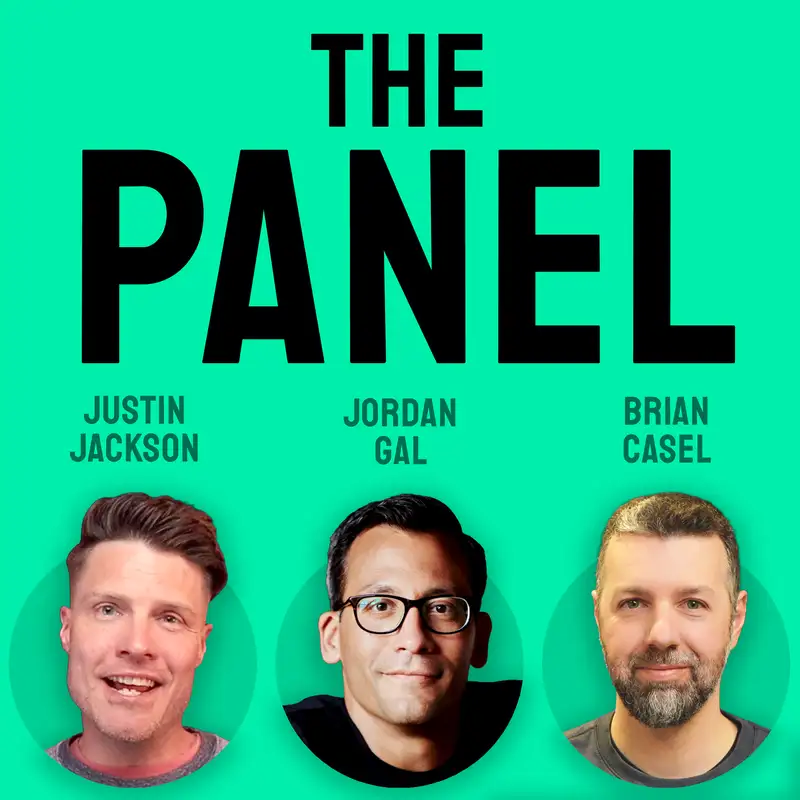
So it's hard, guys, on a show like this because there's lots of competition out there. Competitors want to eat our lunch. And some of you listening might even be competitors. So we gotta be careful. Welcome to the panel where three founders try to figure out how to build a better business and a better life in this current AI era.
Aaron Francis:I'm Justin, the cofounder of Transistor. Fm.
Brian Casel:And I'm Brian Casel. I'm the creator of Builder Methods.
Jordan:And I'm Jordan Gal, founder at Rosie. Good to be with you.
Aaron Francis:Alright. And this week, Brian's got some things to say. Brian's gonna take over the hosting reins. What what's going on in your world, man?
Brian Casel:Yeah. We'll we'll definitely get into it. I'm I'm just literally, just this morning, I'm getting back into the swing of things. I just got in very late last night, a long travel day back from Park City, Utah
Aaron Francis:Oh, nice.
Brian Casel:Where I had a it was a fun week snowboarding with a couple of longtime buddies of mine. The conditions were absolutely atrocious. Just literally, like, historic, like, worst,
Jordan:like Yeah.
Brian Casel:No snow out west. Icy you just spent
Aaron Francis:your whole time in the in the park? Backside?
Brian Casel:Yeah. Triple cork? No. My muscles and and body are not gonna handle that anymore. But I mean, we still had a good time.
Brian Casel:I had never been to Park City, so we explored it. But then last minute on Wednesday night, we realized the Knicks were playing the Utah Jazz in Utah. So we
Aaron Francis:Oh, fun.
Brian Casel:We booked it out of the hot tub. We we grabbed last minute tickets on StubHub and head over to to see to a jazz game to see the Knicks.
Jordan:Wow. That's cool. Owned by a founder. Right? Utah founder.
Brian Casel:What? The Jazz?
Jordan:Yeah. Ryan something. Yep. Yep. Very cool.
Brian Casel:Oh, I don't I don't know who that owner is.
Aaron Francis:Yeah. He was on he was on My First Million. I think Shan did a thing on him. That was pretty interesting. Yeah.
Jordan:Ryan Smith. That's it. Yeah. Yeah. Yeah.
Brian Casel:Yeah. Yeah. It was kinda cool seeing the Delta Center. Never been in there. And and, like, dude, there are so many Knicks fans on these road games.
Brian Casel:It's like, the the Knicks fans just take over the arena. It's great.
Jordan:Lovely.
Brian Casel:Alright. Let's let's talk business. So let's see. I I'm just gonna start with the random notes that I jotted down Okay. About twenty minutes ago.
Brian Casel:Opportunity costs. Let's talk about opportunity costs. I feel like this is the kind of thing that goes anyone who runs any business, we we all deal with this. You I know that both of you think about this and deal with this, but it doesn't I feel like when you hear about it on a podcast or when you hear folks like us talk about, like, what we're working on or what kind of what thing we're trying to build or what thing we have an opportunity for, it's hard to really express the implication or the feeling of opportunity cost. It's so real and it's sort of hard to understand unless you're in it.
Brian Casel:So, like, for me, the the the tension that I'm feeling right now in my builder methods business is, you know, for every one thing that's working really well, there are three or four or five other things that that I see as, like, clear cut opportunities being handed to me on a silver platter just coming into my inbox on a daily basis. And and and maybe I try to to grab hold of some of these in some small way. But for the most part, I'm unable to capitalize on these other opportunities because of the one thing that is actually working.
Aaron Francis:You know what I thought you were gonna say? This is not where I thought you were gonna go. In most businesses, there is a clear cut difference between the main thing that's working and driving most of the value. But you're it sounds like what you're saying is like, you're in a money tunnel, and you're holding on to a good opportunity. But then you see all of this other money floating around, and you're wishing, like, you could hold on to this opportunity and grab the money at the same time.
Jordan:Yeah. But it's more like he's holding on to ones and fives, and there are some twenties zipping around and saying, should I let go of what's working and reach
Aaron Francis:for something that might be better? Too much opportunity.
Brian Casel:Okay. So there's some truth to what you guys were saying. There's some not not quite accurate, I would say. There's like okay. So let me break this up into two two big parts.
Brian Casel:One is like revenue opportunities. The other is marketing opportunities, like funnel opportunities. Right? So Yep. Both are essential, obviously.
Brian Casel:And and I would say on both of those things, on on the revenue side and the marketing side, on each of those, I have one big thing that is absolutely working and working really well. And and I have and that one thing is something I want I very much wanna double down and triple down on. Like, there's no there's no part of me that wants to ditch the one thing or replace the one thing. It's it's it's I'm I'm more interested in double and tripling down. So on on the revenue side, I I'm running a membership business with Builder Methods Pro that just continues to grow.
Brian Casel:It's a fantastic membership now. The community is is great. And but like, it's working really well, but it's by no means finished. Like it's, there's constant, it needs constant work. It's on both adding more content and value to it and the onboarding experience for new members and the retention of of keeping members engaged and and encouraging renewals and all that.
Brian Casel:So that's a con that's a whole business just in itself. Right? We can get into, like, maybe we can get into, like, the other two or three other big opportunity, like, revenue opportunities that are in my inbox every day. But then on the marketing side, YouTube, obviously, is my marketing channel. Right?
Brian Casel:That's not going away. I am doubling and tripling down on it. I have a team around it. I have processes. I would say the majority of my days and hours are spent on YouTube, work related to doing the YouTube channel.
Brian Casel:But it could absolutely and this this this one really starts to it should, like, kinda frustrate me is that, like, there are other marketing channels that I'm under investing in or not investing in at all. Social media. Like, I really wanna get into, like, ads, funnels, and maybe and maybe some other, like, direct sales to teams. But, like, I I'm either half assing it on some of these or not doing them at all. And and that seems like a missed opportunity.
Brian Casel:But, yeah, like on the revenue side, it's like the the membership is like the core business and I see and I think of as the long term value of the business that I'm growing. That's the recurring revenue, the customer base, the
Aaron Francis:Yep.
Brian Casel:The the everything. And but, you know, I I have started to sell sponsorships on the YouTube channel, and that is a very, very raw, unfinished section of the business. Like, it it's literally just an inbox full of leads and no systems, no CRM, no no checkout flow, no sales process, nothing. It's like it's just chaos right now. But it's but it's also, like, working.
Brian Casel:And and then there's but, like yeah. And and and then there's the other thing, which is, like, consulting and private workshops for teams and organizations. I am exploring partnering up with someone on that. And I'm sort of like open to to partnership opportunities, but like the idea is so like and there are like two flavors of that. There are like development teams who who want to kinda up up their game with AI and and adopt AI in their organization.
Brian Casel:And then there are just like general businesses who want AI process streamlining agents, AI automations implemented and figured out in in their business processes. Yeah.
Aaron Francis:So there is a there's kind of both, though. It's like marketing, but also you're in the money tunnel. Like, when I look at your side, I maybe the grass is always greener. But when I look at your side, I just see, like, fields of opportunity. And it feels like right now you're plowing the field with a little John Deere tractor, but, like, you could definitely get, like, three more combines and, like like, really go after it if you wanted to.
Aaron Francis:It's there's still questions around how long will this particular moment last, but
Brian Casel:I I do wanna go after all of it. That's part of the challenge. I I There's there's really none of that are things that like I'm like not interested in. It it is an interesting With the sponsorship stuff, it's it's really interesting because I have I have started what I've I've had that that inbound interest for for months and I've sort of just ignored it and like was like, yeah, someday soon I'll start to talk to those leads. Well, I've now started to talk to those leads and start to sell some of them and I have multiple pending deals happening now and like and so that's that's an area where it's really interesting because it's like it is secondary.
Brian Casel:Like, I would say the membership is my core interest and focus. And that's where I that's where I I really care to to put the most love and energy and resource into. The sponsorship stuff, there's all different shapes and sizes of it, there's also all different people like to negotiate, and people like to try to hammer me on price and stuff. And it's like, have no appetite to I can just demand whatever terms I want, And I can and it's it's it's actually I definitely have a lot of leverage with it, which is an interesting dynamic because it's like, I I definitely want this portion of business, but I come from a place where I can just say, I can very easily just say no to most of them. And what I think that does, and what I'm actually working on today and tomorrow with this particular problem, is building systems.
Brian Casel:There are YouTubers out there who their entire business is sponsorships, and I'm not interested in being in that game. I'm much more interested in monetizing primarily through membership and maybe a consulting arm. But but the but the the sponsorships are a significant third piece. But in in my position, I that what that means is I can be more systematic about it rather than treat every single individual deal as a whole negotiation and a sales process person to person where we can haggle. Inbox, I just don't have the the time and bandwidth to deal with every single person on on that negotiation level.
Aaron Francis:Yeah.
Brian Casel:It has to just be like, this is the current rate. If you're in, then let's go. If not, then let's talk sometime down the road.
Aaron Francis:I'm curious what Jordan thinks about this. Because as I'm listening, to me, this feels like a conversation about strategy. And then just like what you're willing to do or not do to take advantage of opportunities. So like, Jordan, you must have the same problem. And you're just deciding, it sounds like you're deciding to go for a lot of opportunities.
Aaron Francis:Like you're saying there's a lot of opportunity out there. So how do you think, Jordan, how do you think through all that stuff?
Jordan:Yeah, I think opportunity cost is very different now. It feels less risky. When I listen to It Brian
Aaron Francis:feels less risky because you've got revenue?
Jordan:Well, I'm thinking of it in the context of like engineering opportunity cost. Should we build this integration or disintegration? Should we go in this direction or that? Should we expand our ICP or no? And that cost has been greatly reduced.
Jordan:Right? We're launching Shopify beta next week. And up until about a month ago, we kept dismissing that because it's too risky if it takes two, three months. But if it takes two weeks, the opportunity cost is so much lower that it's an experiment. It's not a big risk that takes three months.
Jordan:So when I hear Brian's you know, I I think you identified probably as, like, two sides. There's, marketing opportunity cost and, like, revenue opportunity cost.
Aaron Francis:Mhmm. But then you've just identified a third one, which is building opportunity costs. It's there's still a cost there.
Jordan:It's still a cost. Yeah. The non engineering opportunity cost feels more risky or more expensive. I I thought, Brian, when you were describing it, I thought you were gonna say that the marketing side's the easy side. Because if you have a marketing channel like YouTube that's working, the other ones feel like emotional opportunity costs.
Jordan:You're like missing out, I should be doing more social. In that way, where opportunity cost is different these days, there's a lot of automation that you can do around posting and scheduling and expanding outward to other channels without doing, you know, without doubling the work, without taking your eye off of the YouTube channel that works.
Brian Casel:Let's zero in on the marketing side for a second. I think you're I think you're right. I but I think that there are It's working really well. You're definitely right that there are, like, systems that can be built in, and that's something that I've been actively working on, especially with the OpenClaw stuff is, like, that's my primary role for my agents with OpenClaw is like, I'm trying to put them in marketing roles on my team, especially in like content development and social media development and posting. And most of that is not fully deployed yet.
Brian Casel:I'm still building the systems behind that. And that takes a surprisingly long time. Is not as simple as just fire up an OpenClaw agent and let it rip. Like, it is so not that easy.
Aaron Francis:Right.
Jordan:And it sounds like you don't wanna tackle more channels there and also figure out the revenue at the same time.
Brian Casel:Yeah. But but the other thing is, like, just forget the systems that that underneath it that drive it. That that can be figured out. It takes a long time, but it can be figured out. The the strategic thing is, yes, I have YouTube working really well.
Brian Casel:It's super time consuming and and energy resource heavy. But I do think it there there's all sorts of, like, strategic lines that can be drawn between because, like, if I think about, like, the the membership business, that game is about optimizing if that's a product market fit game, really. That's like, how can I craft this membership and the content inside it and the type of people that I attract into it who are the best fit not only to buy, but the best fit to stay engaged and then renew next year?
Aaron Francis:Mhmm.
Brian Casel:Right? And I'm already seeing like sub segments within the membership. Like I'm very tuned into who these people are and why they're coming in and why they're churning and why they stay, why they engage. And there's very different stories each of these different segments. So when I think about the ideal customer persona for a member in Builder Methods Pro, yes, a lot of them are coming straight from my YouTube channel.
Brian Casel:But I have to I just believe that there are lots of perfect fit customers out there who just are not YouTube people. I could reach them on Twitter. I could reach them on LinkedIn. I could reach them through ads. But it also works the other way too.
Brian Casel:It also works the other way too. It's like, I can have a rocket ship YouTube video go viral and that can bring in a lot of noise. That can bring in a lot of medium to poor fit customers who buy and then churn.
Aaron Francis:Have you had some churn? Yes. Oh, you have? Okay. So there are a few people who buy and they're like which happens a lot in the membership business.
Brian Casel:Yes. Would say it is not problematic churn. Would say for a membership business, it's actually a pretty good low level churn rate right now.
Aaron Francis:Yeah. I mean, I remember seeing some people that they were like 10 to 20% or something like that. Like
Brian Casel:Yeah. It's it's less than that, but it I'll really know come September, October of this year because that's when renewals happen.
Jordan:Yes. Sure.
Brian Casel:But I I do already know that there are because I I also offer a money back guarantee, so I do get refund requests from time to time. And I also see people who just buy, and I know that they cancel. They they just they just only want to commit to the one year. So there's that's Sure.
Jordan:Pay once and then don't expect it. Let me forget this renewal.
Brian Casel:Don't renew. But then that gets into like, okay, I want to keep delivering value. I want to double down on the community, make it worth renewing. Know, so it's so I but I I part of me does think that, like like, for example, one of the one of the things is I've just recently finished shipping a ClaudeCode course and an OpenClaw course within Builder Methods Pro. These are tent pole, like flagship courses that are just big benefits inside of Builder Methods Pro.
Brian Casel:In addition to the community and workshops and the hangouts and the ride alongs, all that stuff is in there, these are things that have dedicated landing pages on my site now. I should have an ads funnel that is specific to Claude. If you are interested in Claude code, I should be driving ads to that landing page.
Aaron Francis:Yeah.
Brian Casel:And I'm not. You know? And and I should be doing on Twitter, we Twitter is annoying right now. We all know that because it's like everyone is is an AI expert now. Yes.
Brian Casel:I kind of feel like of all the expert of all the AI experts, I'm one of the quietest ones
Aaron Francis:on Twitter. Right? Right now. I do think that's an opportunity for you. I mean, whether or not you can take advantage of it is another question.
Aaron Francis:But it does feel like the AI conversation is happening on Twitter. And you actually have a different kind of role to play there, which is I think I even posted this in your Discord the other day. I was I'm tired of people telling me about their new skills, their new like, Heat and Shaw just released one. And there's people I trust. And they're like, I've got a bunch of skills you gotta drop drop in your clock out.
Aaron Francis:And I'm like, this too fucking much. Yeah.
Brian Casel:It's too much.
Aaron Francis:I just need I need one Jesus. You know? Like, I'm gonna follow one guy. I want his deal. There's there's lots of messiahs.
Jordan:I just
Aaron Francis:need one. Yeah.
Brian Casel:Yeah. My my observation
Jordan:I like that.
Brian Casel:On Twitter is, like, there's a very small number. I can count them on one hand of people that I'm super tuned into. A fan of them either personally or or or professionally, And that I know that they are genuine and that they are really building real products and they're actively using this stuff and they are genuinely excited about certain things and they are share and they are building in public in the most authentic way possible. Just literally sharing things that are working for them, that to me is the most interesting authentic stuff.
Jordan:Yeah. It's very helpful. Anyone that tells me not to watch a two hour movie and to do this instead, I just go three dots, mute. Yeah. Do not tell me what to do with my time.
Brian Casel:Yeah. Mute. But the the noise that I that really annoys me are all the people who are literally just, like, finding every piece of news from the Anthropic team and the OpenAI team or or the Cursor team and just retweeting it and and immediately having a take without ever even trying the tool for for real, like
Jordan:Their business model.
Brian Casel:Yeah. Like Yeah. Like being a newsfeed is
Jordan:That's like their that's their funnel.
Aaron Francis:I I do think like you have the same opportunity that thirty seven signals had twenty years ago, which was the web finally became a thing, a platform. And people were like, how do we do this? How do we build a business in this world? And you're answering a bit of a different question. But it's basically how do I build in this world?
Aaron Francis:And they had, here's how you build a business. And here's how you build software. They had both sides of it. And people were just like, literally, like, thirty seven signals is my religion, or Ruby on Rails is my religion. And there is something incredibly comforting for humans when there's a myriad of people out there making noise to go.
Aaron Francis:I mean, this is why they called their blog signal versus noise. It was like, I just want one signal that's simple that I can follow. And I'm going to read Getting Real when it comes to building a business and building software. And I'm gonna just follow DHH and everything he says about building software over here. And I think you could perform a similar role.
Aaron Francis:And what we've seen is once you build that kind of once you build that kind of trust, it can last a long time. Like what's most surprising about 37 signals is through ups and downs and, you know, controversies and everything.
Jordan:Yep. Yep. Good and bad.
Aaron Francis:Good and bad. They still have a massive voice and people still trust them.
Jordan:Well, they've been authentic.
Brian Casel:Yeah. And I I think because because, like, they they've stayed exactly they've stayed authentic to to their true like, you know exactly who they are, what they're about, like, no matter no matter what year it is, you know? I don't I'm not I won't get into all the specifics, but, like, on I'm I'm starting to just get more tuned into like what builder methods really is, who who I am, and who who the customers are, what they care about, what the what the core problem space is that that we are here to solve. Mhmm. There's you could you could split that into like two or three versions of that with different ICPs that are coming through my funnel.
Brian Casel:But there are like, I'm really tuned into that now more than ever. And and I think it's for me, it's personally, it's been like an evolution of, like I'm just really embracing the idea that we are a media company and a content and a community company and much, much less about, like, products. The the only real product is Builder Methods Pro. And, like, yeah, like, I'm I'm I'm not selling a SaaS. I'm not even
Jordan:This this makes me think of old school Russell Brunson. You have traffic on one side, and then you have, like, this value ladder on the other side. And you have a low entry point that most people get start, and then you have a membership that's the kind of ideal fantasy business model, and then you need to build out higher ticket, higher value offer or offers that allow you to capture the most demand, the most value. I don't know if it's that much more complicated than that. So that's the side of the equation that I look at.
Jordan:It's the business model and the products and the offers. The traffic you're already doing great on.
Brian Casel:And that see, like, that's the kind of thing that that it's like so so, like, it is happening. Like, these deals are actually are happening behind the scenes, even without a a landing page, without a sales process. Like, like business is actually happening, coming back to opportunity cost, right? It's literally a decision. No AI can solve this problem, by the way.
Brian Casel:It's literally a decision of every single day. Like today, today I can choose. I have a choice. I can choose to answer these 30 inquiries about sponsorships and negotiate individually with each one of them. And that can take me all day.
Brian Casel:Or I can finish building the course that members have have decided to purchase. Or I can plan the next video instead of let that wait three, four, five days, and then my YouTube funnel is on pause until I get back to it. Like, those are real those are real choices. I can't just do them all today.
Jordan:It's it's trying to confuse you. It's trying to throw you off of the actual plan, which is kind of proceeding exactly according to plan. It's just that the human brain looks at it today and and now and what's in the inbox compared to over the next three months, I'm gonna do all these things, but they're not all gonna happen today.
Brian Casel:Yeah. Yep. It's always a question of like, what happens today and which things happen tomorrow and the next day.
Aaron Francis:Yeah. I mean, as I'm listening to you, it's kind of bringing up similar thoughts to kind of what I was thinking about last week. And then Jordan's answer, which was, what's my goal? What's my strategy to get to the goal? And then along with the strategy, so if if your goal is, want to build a sustainable business that makes, I don't know, dollars 3,000,000 a year.
Aaron Francis:That's where I want to get to. And the strategy is basically how you've observed the market. And you're like, you know what? This is what I'm seeing that maybe other people aren't seeing the same way. This is how I understand the way things are moving.
Aaron Francis:And then your plan is, how the heck am I going to execute on this strategy to get to the goal? And I'm wondering, because for me, the thought that's come up more is I need to get the right people on the boat. I need to get the right hire the right people. And as you were talking, I'm just like, man, like, if the sponsorship opportunity is big enough, just hire somebody to take take on that role. If the if you need a community manager to really fire things up in the community and, you know, make sure that community members are happy and they're doing surveys and they're like checking in on people, Maybe that's a part time role you should hire for right now.
Aaron Francis:It feels like that Those exist.
Brian Casel:So here here is how I think about it. The membership is primarily me, that's where I want to be spending my time and energy. It it turns out I actually do enjoy the member the the community engagement a lot more than I expected I would early on.
Aaron Francis:Yeah. Because that was an open question. You thought you were you thought it would be a hassle.
Brian Casel:Yeah. Like, I actually wanna do more more, like, sessions, like, live sessions just for members as as, like, a recurring thing, which I was doing last year. I wanna do more of that now.
Jordan:Sounds like a higher offer.
Brian Casel:In terms of getting people on the on the boat, the the the higher ticket stuff is the consulting stuff and private workshops. That the requirement for me as as a founder is, like, in order for that business arm to work, I need a great partner to to handle the fulfillment on that. And I I'm I'm in the process of of developing that right now. It's it's like some it's together. The the lead flow is coming together.
Brian Casel:The sales process is coming together. The person is coming together. We're we're figuring that out right now.
Aaron Francis:Wow. Can we pause there? Because that feels like to even Okay. But but just to go back, we don't have to talk about it too much. But I do want to like that Jordan was bringing that up on Bootstrap Web.
Aaron Francis:Like, the opportunity feels like there's so many teams that are drowning right now that need help. And it feels like even if it's not you, if it's somebody that you can say, hey, yeah, talk to Claire. She's the person. And then Claire just takes all that. That I feel That could be very big.
Brian Casel:It's it's in development.
Aaron Francis:Mhmm. Okay. Okay.
Brian Casel:The sponsorship stuff I see as so just to to reiterate, like, to me, I see, like, number one, grow the membership. That's Yeah. That's the core of the the business and the and the customer base and the recurring revenue. Number two is is that, is like the is the higher ticket consulting stuff, which is a combination of workshops and consulting engagements, working with a partner on that. And then number three is sponsorships, which I sort of feel like I I sort of think of it more as like gravy, but it's like a a significant revenue thing.
Brian Casel:Mhmm. And on that piece, my project today is building systems. And this can get into the other topic that I had for today. So there's a lot of debate about is AI going to kill SaaS? Is it you know?
Brian Casel:Or or is that or is that overblown? I'm just gonna give you my personal experience on this and the way that I that I think about this question or this I have a a very real business problem in my inbox today. And that is demand for sponsorship deals. Right? In years past, I would have solved this problem by doing any I would have hired a bunch of SaaS tools, like a CRM document, like a contract.
Brian Casel:First of all, Google Docs, then a doc signing app. And then a CRM to track it all. Probably I would hire a person to handle the pipeline, the negotiations, the sales process, the vetting, and probably some application form tools in there along the way. So you're duct taping multiple SaaS tools plus you're hiring a person, you got a salary on it. It's a whole thing.
Brian Casel:Right? And I'm still involved because I'm the I'm the person approving and delivering and recording the the actual ad spots. Right? Okay. So today, the way that I'm thinking about that is like, I'm not hiring any SaaS.
Brian Casel:I'm not hiring any person. I am I'm in the process of solving it with a combination of writing up Claude skills, setting maybe having some role for for like an OpenClaw agent, and maybe building a custom application. I I actually started vibe coding that on the flight yesterday. Okay. And so the the idea is instead of my inbox being completely chaotic with inquiries and negotiations and potential deals, they all flow through an intake form that goes into a custom CRM, that goes into a tracking system, that goes into automatically assemble the right agreement based on the sponsorship package that they chose.
Brian Casel:And then add the correct add on for the licensing agreement for the correct number of months of term for the payment terms that we agree on that they selected from the system. And then send them through the checkout process where they can make the payment and sign the contract. And if I can be as hands off as possible in all of that or maybe just click a few buttons to approve a few steps in that pipeline, that is ideal. And I think it's absolutely totally possible for me to build all that with a combination of just Cloud Skills or a custom or custom Rails app or both. And this is this is to me is honestly the the SaaS killer.
Brian Casel:Because these
Jordan:Is is it just a different SaaS?
Brian Casel:No. So so okay. Let let me let me really unpack.
Jordan:Is it just a general purpose SaaS? Aren't you paying Claude 2 I mean, yeah, Claude $200 a month to get the same thing done?
Brian Casel:For pieces of it, but but I'm also using Clawd to build a custom
Jordan:Mhmm. App. Mhmm.
Brian Casel:Yeah. The the what what I'm what I'm saying is what I'm saying is, like, building a custom internal tool, custom fit to my very tightly specific needs is extremely different from building a SaaS. A SaaS product has to work, even if you're a niche vertical industry SaaS, you still have to work for hundreds or thousands of customers. And that means you have to be generalized to a certain extent. You have to have UX flows that are that can that can scale across a whole customer base.
Brian Casel:You need you need scalability on the servers and all that kind of stuff. But if you're just building for yourself or for your own company, like, I have all these, like, weird, obscure, very technical needs for this particular pipeline, for these types of deals that to to duct tape them and and use various SaaS tools off the market in unusual ways, that is not workable. Like, it's not ideal. So much more optimal to build a smooth
Jordan:So what?
Aaron Francis:In chat, Keith is wondering if you're gonna call it FilterHawk Pro.
Brian Casel:All I'm saying is like, this is not even a tool that I'm I'm not interested in selling tools anymore. I'm just interested in building tools for my own business. But I think that's the thing that is going to grow over time. More and more businesses You're already seeing it. Most of these consulting gigs are just general small businesses who want to build automations in their business.
Brian Casel:To them, it doesn't even have to be a custom app. It could be a mix of agents or skills or
Aaron Francis:It's still an open question because I I would I'd be very interested for you to do the experiment. I think it's on brand for you. And even if I was a brand reaching out to you and I got, like, this automated robot response, part of me would be like, well, that's on brand for Brian. That's what he does. Of course, I'm gonna get this thing.
Aaron Francis:So I think you could do it. I'm still wondering if we're gonna if in six months can someone flag this episode and, like, put it in
Brian Casel:the There are ways to like dude, if if if if the human interaction interaction piece piece is is is is the the turn turn off off for you, there are ways to automate most of this with a custom app that like, even if it's like me responding or an assistant responding, like, there are still pieces that I would have hired a SaaS app for that are better built internally now and easier What to
Jordan:does that say?
Aaron Francis:I just wonder wonder if still, it's six months. I wonder what's actually gonna be true is if we're gonna find out. Because the question is either hiring somebody, contractor, employee, part time employee, whatever. Then in the middle, there's SaaS, buy it off the shelf tool. Then over here is build an internal tool.
Aaron Francis:And this has always been out of reach for a lot of things. And so now it's more in reach. But I still wonder if in a while, like, eventually, we're gonna be like, damn, it's just it is just better to have an employee run this whole process. Like, it's messier for sure. But you know what?
Aaron Francis:I hired Alice, and she just runs the process. She's amazing at it.
Brian Casel:Yeah. But you know what? Alice is gonna be running 10 to 20 internal custom built tools.
Aaron Francis:I don't know.
Jordan:But how many businesses? What what percentage of businesses are gonna run a bunch of custom tools?
Brian Casel:Just think it's going be an increasing trend over time, and it's going to happen faster than we think.
Jordan:Yes. But I don't see your approach to it in being comfortable and confident enough to build an internal tool in that way impacting more than like very, very few percentage points of the market. I do think the tools will become more general because what we're saying right now is like, I mean, you're still paying for software. It's just so general that you can do anything with it. So I can see a trend where there's like CRM as an AI generalized product.
Jordan:And then you come in there and you customize the hell out of it to your needs instead of having something very rigid brought over to you. Right. The whole
Brian Casel:thing I just don't think
Jordan:One sec.
Brian Casel:I really don't agree.
Jordan:The whole thing with like I mean, I have bought HubSpot and Salesforce in the past.
Aaron Francis:And
Jordan:the difficulty was in how rigid it is and then the pain in bending it to your needs, that feels like it will be greatly improved. Greatly improved. And that's like a very welcome
Brian Casel:It's going to be greatly improved. To meet my take is it's going to be greatly improved by more and more businesses just building their own custom version of HubSpot rather than, like, custom tweaking existing HubSpot to their needs.
Aaron Francis:It's almost like you're wanting use.
Brian Casel:And and listen, like every listener, I know you're I know I know what the listeners are saying. Like, no business are gonna have the skills in house to to build that kind
Jordan:of stuff. That's Not true.
Brian Casel:They're going to they are going to hire AI consultants to do it for them. More businesses are going to build custom To
Jordan:a degree. Some products will be very negatively impacted, but others will thrive in just a different environment. So there will be a lot more software used, which is awesome. Of it will be custom, some of it will be this, some of that, some some hybrid in between, like, here's a CRM AI that you can customize. So just a lot more software is great.
Jordan:But I think a lot of the companies that are already positioned where they are, they'll
Aaron Francis:do a good
Jordan:job at injecting this superpower. We we're we're very, very colored by our point of view of our teeny tiny little companies. Teeny tiny little one, two, three, five person companies. The second you get into any version of scale, if you have a 100 person company, which in this country is still teeny tiny, you have a completely different set of issues and you do want the power of AI and customization and speed. But you know who you're gonna trust to give it to you?
Jordan:HubSpot. And they're gonna do a great job at delivering.
Brian Casel:Yeah. Like that I think that that's true. I think it's definitely true under, like, different categories and different scales, but I but I just think that there are some, like, arguments that you hear all the time on on the Twitters and stuff that I that just don't ring true to me. Like, number number one is, like, is that I you you hear this a lot, like, all these small businesses are are not gonna go vibe code their own stuff. And I think that's actually true.
Brian Casel:But I do think that instead, they're gonna be hiring more consultants or in house employees who who have those those vibe coding capabilities. But number two is like, oh, like, SaaS products are way too hard to even vibe code. They're not rely like, it's it's it's too complicated to build a SaaS tool for your own business. So it's so it's better to buy one off the shelf. The the counter argument to that, that I think people are missing, is that there is a huge difference between building a software as a service and just building a software tool.
Brian Casel:Those are two completely different I
Jordan:think there's a gray area that we're not seeing yet in the SaaS itself. Let's say I run the SaaS company and I'm offering it. We're going to shift according to that demand. So the SaaS that I'm going to put out there will be much more flexible as opposed to here's my very opinionated way to run this type of a software product and project managers should be the way that we want and my point of view and this product's point of view is what attracts you to us. Feels like maybe you'll just be much more flexible in that the superpower and the demand will be toward products that allow you to very easily mold it to your business's needs and requirements.
Jordan:And then inside of your product, you have what people are starting to get used to, which is a chatbot that says, what do you wanna do? So, Okay.
Brian Casel:So on that, first of all, I think, Jordan, your your product is is a little bit more, I would say, like, in line with, like, like, I I think you're correct, definitely, in in your in your case, where it's, like, a a tool that plugs into all these, like, small businesses on, like, the phone side and and, like
Jordan:Customer communication.
Brian Casel:There's some infrastructure stuff that's involved there that gets tricky. But I also think that there's another trend that is starting to shift now, and it will shift more, in regards to how does AI actually get integrated into software tools. Right? So what you're just describing is like, you're gonna see all these tools with the AI chat box in there, in like a built in AI assistant. And I think that most of those features, at least in my experience, in the tools that have them are failures.
Brian Casel:Like if I think about Descript, if I think about Notion, those are two tools that advertise, we have an AI assistant built into Notion to help you do something in Notion. I'm telling you, every single time I've tried that feature, I click the little circle in the corner. I'm like, help me build a medium complexity database in Notion. It cannot even come close to even starting that project. All it can do is do the basics and it's super frustrating.
Brian Casel:But where going is people and companies are going to want to bring their own AI agents in. This is why people are talking a lot about CLI tools. Like most SaaS are going to turn into CLI tools. The reason people are saying that is because people and companies want to bring their own agents, which are trained on their own memory of their person or their company. They want I like, I'm gonna want my agent to use my Notion.
Brian Casel:I'm gonna want my agent to use my video editing software. I'm gonna want my agent to go into my Okay. Project management and my notes. I don't I don't want Notion's AI agent. I don't want Descripts.
Brian Casel:I want mine because my agent You knows know? Like so those tools and and the smart companies, I think, are starting to see this. Those tools are starting to make their interfaces agent friendly. Like they're designing for agents. They're making CLI tools that any agent can work with.
Brian Casel:Like, that's the trend that's gonna happen.
Aaron Francis:Okay. I think I've got an example that I think proves Brian's point, and it just kind of turned on in my head. So we just bought this vacation tracker software, vacationtracker.io or whatever. And it was basically, we just need a way of people being able to say, hey, I'm going to be off during this time. Somebody needs to approve it.
Aaron Francis:And then it needs to get communicated to the team. That's it. And so we we bought this software. It was more expensive than we wanted to pay. It was not great software, honestly.
Aaron Francis:And it doesn't do a bunch of stuff that we want it to do. And so the thought in my head initially was, oh, you know, I should just build my own version of that. Because I know what I want. I could do it cheaper. It's not a big deal.
Aaron Francis:I could do it. But then the next thought I had was actually what I really want is Claude in Slack. And I just want to go at Claude. Claude, we need a vacation tracking system. I want you to just figure out the best way for us to do that.
Aaron Francis:And then every time we need to book a time book vacation time, you just at Claude and say, hey, Claude, I'm gonna be off during these times. Can you send the go the approval goes to Justin or John. We approve it. Claude automatically adds it to the calendar and notifies the team. That's what we want.
Aaron Francis:And I think the reason people are actually excited about OpenClaw had way less to do with whatever the you know, it had to do with the interface, Telegram, Slack.
Brian Casel:Just chat with it.
Aaron Francis:Yeah. We just want to chat with these things. And where what we don't have yet, and what I do think will threaten a lot of SaaS, is once Claude and whoever figures out, get this in Slack and then it can actually do stuff for you. Not just What's a Claude is
Brian Casel:in Slack, by the way?
Aaron Francis:What's
Brian Casel:that? You can There's a Claude in Slack
Aaron Francis:integration But it's not quite that level, I don't think yet.
Brian Casel:Like No. Yeah, you're right. Like, it's not like You can like kick off like Claude code tasks with it.
Jordan:But like But
Aaron Francis:for it to actually be an assistant, like, if this was a human assistant, I would say, okay, you know, Jimmy, you're in charge of vacation tracking. When people need to book vacation, it goes through you. You get my approval, then you put it on the calendar. But really, what I want to
Brian Casel:do is to say that the attraction of of OpenClaw, really.
Aaron Francis:Yeah. I think that's the attraction. So I do think there's gonna be a subset of SaaS that that could just get replaced by as soon as it's it's the UI layer. The UI layer is what's missing. We talked about this, like, what makes like, Grok in the Tesla is the best in car AI experience I've had, for sure.
Aaron Francis:Because you just go in the car, you just go, hey, Grock, and you go, what's the weather today? What are stocks doing? You know, you can talk to it. And it feels like the interface layer is the biggest threat and the biggest opportunity once these bots come into Slack and Telegram and can actually do useful stuff.
Jordan:Yeah. No need to click buttons.
Brian Casel:And I do think that the CLI thing is that opportunity for I would say for most SaaS or a lot of them, like people thought it was MCP. I think that the MCP thing is being replaced with CLI. What that means for folks is like a CLI is like a terminal based interface where you can just like If you can turn your Basically, for those listening, if you can turn your SaaS, all the features in your SaaS, make them available in a CLI interface, which is a project you can do in a day with Cloud Code. You know, that makes it much easier and much more token efficient and much, much more available for anyone to bring their agent. And that can include their Cloud Code agent, their OpenAI agent, their OpenClaw agent.
Brian Casel:Any of them can like, the the least friction for an agent is to is to use a CLI. Like, if any tool offers a CLI, you can point your agent at it, point it at the docs, and it can talk to it and do things.
Jordan:That's such a small part of the market, though. I've never used a CLI. And 98% of the economy does not know what CLI is, doesn't know what a terminal looks like. You're talking about software for software. And Justin, what you were saying before, that sounds like a horse in
Brian Casel:You're talking about today though. Jordan, you're talking about today and you're talking about just business needs. As AI and when I say agents, Right, most of
Jordan:a business gonna use a chat interface.
Aaron Francis:They're not
Jordan:gonna use a CLI.
Brian Casel:Yeah. But dude, like most most businesses are gonna increasingly use Claude as like an agent that is ingrained in their business processes to an increasing extent going forward. I think it's hard to argue that. Mhmm. Like, Claude is just gonna have more and more of a role in most businesses in general.
Jordan:I think it'll be more Google than anything else. But, you know, the the
Brian Casel:Even that same thing. Like, Gemini or Claude or OpenAI, one of them or all of them, these are all agents and they all can use CLI tools.
Aaron Francis:I do
Brian Casel:think And so if need those tools to go talk to some niche SaaS that you still wanna use and pay for in order for it to to have your Gemini or your Claude go use that SaaS, that SaaS should offer a CLI to make that easy.
Aaron Francis:Do think you're both right.
Jordan:Our users will never care about a CLI.
Aaron Francis:Yeah, this is what I think. I think I think there's gonna be parts of the economy that are just they will still they're gonna be so slow. They're gonna it's like big businesses that move slow. They're just gonna do things
Jordan:It the will old be served to them on a platter, way you're talking about, Justin. The the the vacation tracker.
Aaron Francis:Yeah.
Jordan:They're just gonna be creative destroyed. That's just a horse and buggy business in a world where you don't need a horse and buggy. And that sucks for them and for others and for ourselves that end up in that situation also, but it's still gonna end up better off for everybody overall. It's this weird transition period where it's a giant mystery of exactly what things will look like, but whatever the easiest thing is to get the most value in the shortest amount of time for the cheapest price, like, that's just that's what's gonna
Brian Casel:I just really think it it's it's just gonna I think this is gonna be a running theme on this show is that, like, it continuously comes back to it is hard to visualize what change is gonna actually look and feel like twelve, twenty four months from now. Yep. And and I just think of It's
Jordan:fun to argue, though.
Brian Casel:Well, I I just think that a big part of it is gonna be like like, why can't I just have whatever insert any tool. Why can't I just have that go do that other thing?
Aaron Francis:Mhmm.
Brian Casel:And that other thing needs to have an easy connection to do that. You know? And and why do we have to have a person, whether it's me or or a human assistant, have to go tinker and find that that that that random setting in there? And, like, why can't I just throw an AI agent to have it go figure it out just like it figures out my other stuff? Like, that that kind of question is gonna keep coming up.
Aaron Francis:Yeah. I don't exactly know what's gonna happen, But I do know who's going to win once it gets figured out. Is, you know, like Claude is going to do some deal with Slack, and then it's going to be more integrated. It's going be able to do actually useful things for you in a repeatable way. It's going be an actual, like, assistant and helpful assistant.
Aaron Francis:And then Microsoft's going to win. They're gonna they're gonna introduce it into Teams, and they they will be the ones that actually get that level.
Brian Casel:I think any of any of them can win. Tend to bet more on on pod,
Aaron Francis:but Distribution's gonna win.
Jordan:It's the distribution into normie and corporate world. Yeah.
Brian Casel:Yep. Yeah.
Jordan:And not necessarily a bad thing. It won't be as cool or creatively done.
Aaron Francis:No.
Jordan:But as long as it provides the value and everything we're talking about right now is knowledge work. Right? It's all knowledge work, thinking, remembering, analyzing, adding expertise on top of. And I I hope that it doesn't wreck that part of the economy because we want those people to continue to do incredible work. We just want them to have a lot more leverage when they do it.
Jordan:So, hopefully, that, you know, these gigantic knowledge work industries around legal and insurance and all they they get better, and they don't just get obliterated.
Brian Casel:Yeah. I do think that the actual thinking work is still gonna be in in demand with the great with the with the best the best humans. It's gonna be more competitive because there's there's gonna be fewer roles that need that that level. But I but all the grunt work, all the all the fiddly settings, go go plug this thing into that thing, go go look up this thing, That is for agent that that's the agent's job going going forward. And, yeah, it's not today.
Brian Casel:It might not even be six months from now, but I'm but that that it's hard to argue that that's not where it's going. Yeah.
Jordan:Yeah. We have an experiment going in house that I'll report back on that speaks to this, where we're doing CRM integration soon and we see HubSpot has a well developed MCP. And supposedly what we can do is connect ourselves into their MCP and not define every individual, you know, integration point in the actual connection. So in theory, we like connected and the agent should be able but I'm like, I can't visualize that. So a phone call is going to come in, we're going have a bunch of data from and it's just gonna go find the customer and, like, add it where it's supposed to be added.
Jordan:So I'm I'm waiting to see Yeah. How seamless that really is or if it's not realistic. But that will start to speak toward, you know, what some of the people in the chat are talking about, like, no. The these agents should go out and do it on their own and communicate with each other. And and hopefully, that's that's where it goes.
Jordan:So there's as little of this button clicking, worrying, and connections falling apart, and all that is possible.
Brian Casel:Yeah. I think m I think MCP is probably possible, but I think it's a little bit more limited and and, like, more, like, more token heavy than than, like, a a simple CLI. It depends on the particular tool that I play. But Yeah. Anyway, it is a yeah.
Jordan:Gents, I gotta drop drop off. I got I got the hard side.
Brian Casel:It's good
Jordan:to see you. Thanks, everyone.
Aaron Francis:Yeah. Thanks. We'll talk soon. We'll be back. Here, Jordan.
Aaron Francis:And and Brian, don't you have you have a heart out right now too?
Brian Casel:Yeah. My my kids are gonna be coming in, like, in the next, like, five minutes.
Aaron Francis:Okay. Well, that's probably a good place to end it. I think there's nothing wrong with a show that's only fifty five minutes. That's Yeah. I do feel like there's something to unlock here.
Aaron Francis:The big thing in my head now is I was just that vacation tracker example. I'm like, man, like, yeah, I I would totally replace that with a Claude Claude in Slack. There's some debate in the chat as to whether Slack will be or interface like Slack will be the interface for all. Ryan thinks that'll be a sad day. But Well,
Brian Casel:it it has actually been interesting how Claude recently has been releasing OpenClaw like features. Mhmm. Like, the ability to schedule recurring tasks. You can do that now with, like, Claude Cowork.
Aaron Francis:Yeah. I gotta
Brian Casel:point it more. Deploying Claude skills across, you know, Claude Code, Claude Cowork, Claude AI, like Mhmm. It's it's becoming more
Aaron Francis:They're getting there.
Brian Casel:More like, I guess, like agentic or, you know it's not it's it's not quite the idea of like, just telegram your agent, but it's they're they're clearly prioritizing that type of use case, you know?
Aaron Francis:Yeah. I I think the thing to watch is there is some software like Vacation Tracker, which is just, hey, I'm hiring you to manage this process. But a lot of those processes, Claude, or something similar in a chat interface, not sorry, not just a chat interface, but where you your team is hanging out. That becomes a lot more powerful. But also, there's all sorts of tasks that we hire contractors for that etcetera.
Aaron Francis:Like, hey, I want you to do an SEO audit on my website. That once that's in Slack and I think, again, the interface layer is so important. Once that's in Slack, a lot of companies are gonna be like, why are we hiring this SEO agency to run us this report when we can just add-
Brian Casel:Exactly. Claude. And Claude has memory now, including Claude codes. So if you're interfacing with Claude via Slack, it's not just the interface. It's also the fact that behind that, it has access to all these project files or all these logs or your code base.
Brian Casel:So it knows all this stuff about your company. Yeah. That can help inform its work. Whereas like, that's where I get to like the built in AI feature where they give you like the weak model, and it doesn't know anything about your history. That's why that's why using those tools kinda sucks.
Brian Casel:You know?
Aaron Francis:Yeah. Yeah. Yeah. Interesting.
Brian Casel:Well Alright. I haven't watched the chat, but I've just seen it in the corner of my eye very, very active today.
Aaron Francis:You're to gonna read it afterwards. Thanks again for everyone showing up.
Brian Casel:Alright. My kids are walking in now. So So Alright.
Aaron Francis:We'll see you next week. Bye.
Brian Casel:Later, folks. Yep.