If we could become, like, the smartless of the bootstrapper
Justin:We are the smartless of bootstrapping. Welcome to the panel where Welcome to the panel where founders figure out hey. Figure out and talk. Oh, man.
Brian Casel:I hope we use this.
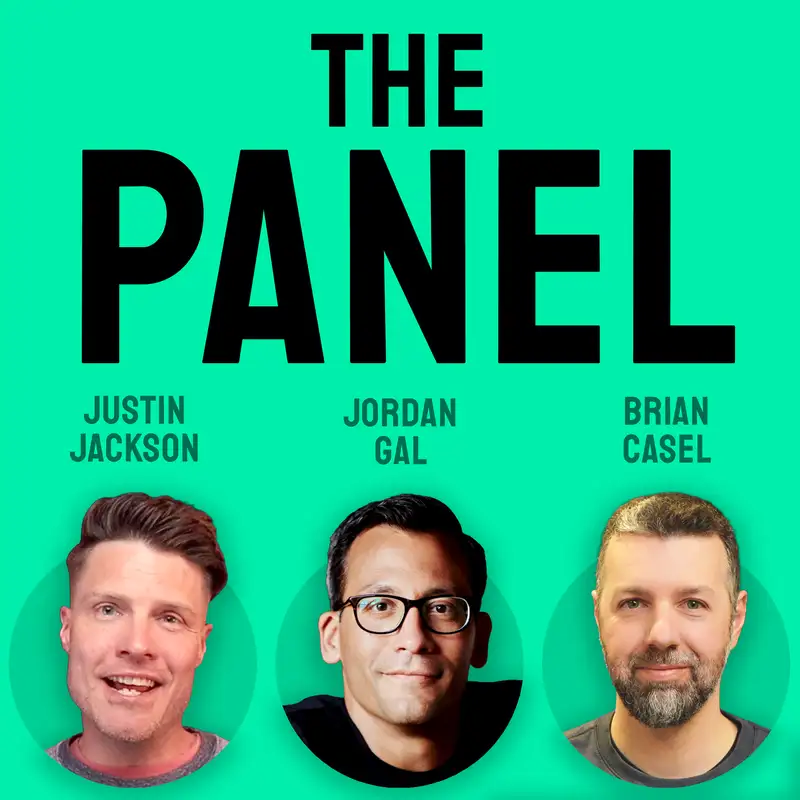
Justin:Welcome to the panel where founders figure out how to build a better business and a better life. I'm Justin Jackson, cofounder of Transistor. Fm.
Brian Casel:And I'm Brian Casel, founder of Builder Methods.
Justin:And today, we have a surprise guest. You know him as the cofounder of Honey Badger, which is air tracking. You know him as the cohost of the Founder Quest podcast. When's that coming back? You know him as Stimpy on Twitter, building stuff on the web since 1999.
Justin:One of the OG Ruby on Rails bootstrappers. Welcome to the show, Ben Curtis.
Ben Curtis:Howdy. Happy to be here.
Justin:Woo. Ben. Alright.
Brian Casel:Great to great to connect with you in person. I'm sure we we've connected before through the through the micro comps or the Twitters or one of those. But, yeah, awesome to have you on.
Ben Curtis:Remote fans, at least.
Justin:Yeah. I I wanted to have Ben on the show because Ben and Josh have been they were one of the besides Brian, they were one of the first bootstrappers I heard talking about using AI. And I know that Ben's been using Ben's been using it for some sales stuff. Maybe we'll get into that as well.
Brian Casel:Yeah. Interesting.
Justin:Maybe actually, let's start with well, I I was gonna put this on screen. I don't know if I can now. But one thing I need to shout out is that my mom listens to the show. I didn't realize that mom was listening. She says she catches the live stream sometimes halfway through.
Justin:So if mom is watching hi, mom. And last week, we talked about Pulsia. Ben, have you heard of Pulsia? This this viral Oh,
Ben Curtis:you haven't?
Justin:Okay. Well, Pulsia is this it allows you to build autonomous AI companies. And it's it's Rob Walling did a tweet about it. It's basically search your email for emails from Pulsia. You're probably getting tons of spam from Pulsia startups that are running autonomously.
Justin:And my mom messaged that Pulsia spelled backwards is AI slop. I didn't even notice that.
Brian Casel:Just the fact that your mom even knows the term AI slop is very My mom's a sharp lady.
Justin:Yeah. My
Brian Casel:mom's Literally, a just a few days ago, my mom was asking me, okay. So if I wanna use AI, like how do I use ChatGPT? I'm like, you go to chatgpt.com. Like, this is we're starting from the
Justin:basics. Man. Well, talking about AI, I wanna talk about how small teams should be using AI. And I wanna start with you, Ben. How is Honey Badger using AI right now?
Justin:And you can take whatever angle you want on this.
Ben Curtis:And we're using AI all over the place at Honey Badger. Josh and I have chatted about this a little bit. We think really this is a great tool for small teams to use to try and level up and compete with larger teams, because you can do so much. And you combine that with your agility that you have as a small team, it's just amazing. So I'll just give you a for instance, and then we can go wherever you want to go.
Ben Curtis:Just this morning, a few hours ago, I was using AI to help me out with the customer service thing. And this is, I think, a great use case for small teams. I'm doing triage for the team on customer support requests. We have only three of us who can really handle support requests because typically our requests come from developers about deep things in the application. It's not just like, Oh, what's my billing issue?
Ben Curtis:Usually it's a problem like, Oh, there's a bug that's happening in the pipeline. When I push this button, it doesn't work properly. So I had that this morning and had to use a report in the thing and I looked at it and I'm like, Well, okay, I know it's been working because we've had other customers say it's been working. So let me dive in a bit. And I did some research on this customer and what they're looking at, and it turns out it was a source map issue.
Ben Curtis:So the problem was they pushed a button to ignore errors for a limited time and the errors were not being ignored like they should have been. And so as I dug in, was like, Oh, this is a JavaScript customer, not our usual Ruby backend stuff. And with JavaScript errors, have source maps, which actually change the fingerprint or what the error looks like because it's enriched. And so we were doing this check before the source map was happening, and then the source map was changing the error, and then the check would then miss because it was a mismatch there. So I was like, okay, that makes sense.
Ben Curtis:But what was really cool was I had this theory and I thought I was right, but I wanted to be 100% sure because this is part of our pipeline. This is not an area of the code that we touched lightly. So of course I opened up Codex and I made my change in the code. I'm like, Codex, please review this. And here's the customer request.
Ben Curtis:And I literally dumped in the thing that the customer sent me. And I said, and here's what I think the issue is, and here's my fix, please evaluate it. And Codex was looking through the codes and it's like, yep, yep, you nailed it. And it's like, but there's this other use case that you may not have considered. And he said, just in case you were thinking about this, then this won't apply to that.
Ben Curtis:I'm like, perfect. I was not worried about that. Thank you. So just dumping in a customer request into Codex or into Claude. And sometimes I don't even do the work myself.
Ben Curtis:I just dump it in cold. I'm like, Hey, go fix this bug for me. Or find it for me. And nine times out of 10, it nails it. It's great.
Ben Curtis:George of my life. One of the top users.
Brian Casel:Here's the error
Justin:logs. What UI are you using to interact with it? Are you interacting with Claude inside Slack yet? Have you done any of that? Or is it just you're just in the command line?
Ben Curtis:Yeah. Just in the command line.
Justin:Okay. Oh, sorry. Not Claude. Code you're using Codex.
Ben Curtis:Oh, actually, I use both. So I use I use Claude code for most of the code I write, and then Codex for most of the reviewing.
Justin:Okay. Oh, why the separation?
Ben Curtis:Because they have slightly different models and they work a little differently. They just, they have blind spots. And using the two different approaches, you find those blind spots that one doesn't have.
Brian Casel:Yeah. How that's a question that I'm curious about. I know that there are folks like you who who seem to be super deep on the nuance between the different models. I don't know. Like, I'm I'm always late especially lately, I'm on the page that, like, any frontier model is just super good at not everything, but, like, I just don't know exactly what are the specific things that, like, Opus 4.6 is better or worse than, like, Codex 5.4?
Brian Casel:Where do you see those trade offs?
Ben Curtis:Yeah, I'm no expert, so I can't say A, B and C, but just like I've used them a lot. And you just develop this kind of sense, this kind of intuition for where one might fall short. Claude likes to give up kind of easily. Tries to one shot a thing, right? It's like, okay, I'm done.
Ben Curtis:And you bring Codex in and Codex digs a little deeper and it's like, I don't think you're quite done. And it's funny, I go back and forth between these tabs. I have Claude do the code and Codex do review. Then I'll bring that Codex's review back into Claude. I'll say, Hey, Claude, Codex found this.
Ben Curtis:And Claude whips up a change. He's like, Okay, I'm done. I go back to Codex. I'm like, Hey Codex, Claude thinks it's done. I want to check again.
Ben Curtis:And it'll find something else. Or it's like, Well, it's not quite right. So yeah, you just get a feel for that as you work with them.
Brian Casel:Yeah. I guess for especially people who are really in it building stuff all day every day, you just have so much surface area, like data points where you can get the feel. Like, for me, I I work on a lot of projects, but I also work on a lot of, like, video content or a lot of, like, other stuff than coding. I wish I could do even do more building and more coding. But, like, I sometimes I I struggle with, like, I just don't have enough surface area day to day to know, like I I tend to just default most of the time to Opus 4.6 lately, you know?
Brian Casel:Like, I just use it for everything. And occasionally, I'll Yep. I'll dabble with something else, but I just don't have enough data points to to see all the all the nuance.
Ben Curtis:Yeah, it's definitely, when you spend enough time with it, you start to find where it falls down. Like we have found is great for working on our Rails app. It's great for working on our CLI and things like that. But when we get into digging into our clients, like the code that get either Jim or the Ruby library that you install in your app to send stuff, it starts to fall over there. Just doesn't have enough context to really be able to So for instances, the other day I was working on a thing with Sidekick reporting stats to our insights product and we had a customer who was reporting too much.
Ben Curtis:And so I was digging into that. And so Claude came up with a solution that was just wrong. It looked right, but it didn't realize that, Oh, there's this other thing that's happening inside of Rails apps that I should be aware of that I just happened to know because I've been doing Rails apps for twenty years or whatever it so yeah, you you do When you spend enough time, do bump up against those boundaries.
Justin:You've also been Ben, we're gonna stay on you for a second. I I've got this tweet here where you say, I have an ongoing Claude code session for tracking my sales activities, helping with research, etcetera. I told it to self organize. And then you said it's a better UI than any CRM I've used. What can you tell us more about that?
Ben Curtis:Yeah. So this this was started by a blog post and some tweets that Obi did, where he was talking about how he set up this system to help him manage his job as a CTO. And my system isn't anywhere as involved as his system is, but I took that as inspiration. I'm like, Hey, let me just tell Claude, Hey, this is what I want to do. And you organize the data the way you see fit.
Ben Curtis:And that's basically what he did. And it's been great. So basically what I do, my sales activities are outreach to existing customers. So we want to get people to upsell, to use insights more, for example. And also a little bit of cold stuff as well.
Ben Curtis:So I want to do some research on this industry. We've identified our ICP and I want to find some more customers in that profile. So I have various sales tasks like that. And so as I'm going through, maybe I identify five or 10 customers that I want to reach out to today. And so I will use Claude, say, Hey, help me research this company or research this person.
Ben Curtis:And it'll give me some context like, Oh, they're the CTO at such and such, and this company is however big it is, and this is their revenue, blah, blah, blah. All the stats that you'd want to have an idea of who you're talking to. And then I'll compose an email and say, Hey, you should check out insights because of whatever. And then I'll send that to them and then I'll go back to Claude and I'll say, Okay, now I sent this email to these people and record that for me, just log that activity. And so I keep a daily log of the things that I do.
Ben Curtis:So then I can go back next week or whatever, and I can say, Hey, Claude, who did I contact last week that I should follow-up with this week? Or when I get a response, I'll go to Claude and I'll say, Hey, got a response from Bob and Bob said this. So that just, over time, that memory just accumulates. And now I have a lot of context around my interactions with Bob. And this is what CRM systems all try to do.
Brian Casel:Now they're all annoying to Claude is your CRM.
Ben Curtis:Yeah, basically.
Justin:It's a lot
Ben Curtis:of fun.
Justin:Brian, because you've been doing some of this too, like, with marketing stuff. Because I've been resistant to this. I've I've been using it for a code. I've been using it to answer questions. But I haven't, like, got, like, a a I'm assuming you have, a sales folder, Ben, where you're just doing all this stuff?
Justin:Okay. Yeah. So, Brian, how are
Brian Casel:you doing? I do have an example I wanna talk about that I've been using recently, but don't want us to pass over what we just heard there from Ben.
Justin:Okay.
Brian Casel:I mean, there's this ongoing conversation. It keeps happening. This debate, like, is AI going to replace SaaS? I mean, this is a perfect example. Like, you literally just described, you're not using HubSpot.
Brian Casel:You're not using Pipedrive. You're using Claude. Yeah. I mean, like, that's your CRM. And, like, this is the this is the thing that I that I think gets lost in this debate all the time.
Brian Casel:That, you know, there's always this notion like, oh, businesses are never gonna just vibe code all of their SaaS replacements. That's probably true, But AI can still replace them. I mean, you know, you don't need to build to vibe code an app to use Claude as your CRM, just like we just heard, you know?
Justin:Yeah. And I assume as again, because Ben could set that up inside Slack where he goes at Claude, and then he has a specific full channel that connects to a specific Claude code folder. And he can just then then it might even be more natural for the you know, your chief sales executive or whatever to start using it. You know, maybe they can't set that up initially. But once it's set up, then you just you just show them how to use it.
Justin:And then you're like, yeah, just keep giving it context. And then,
Brian Casel:yeah. On the sales stuff, yeah, just recently, I started to spin up a process because I I started recently just selling sponsorships on my YouTube channel. Sold a few recently, and and and I'm starting to like, I've had a a pretty heavy stream of inbound requests over the last couple of months, only recently I started to actually respond to them and start to sell some of them. And it's chaos in my inbox. So once I start to respond to them, now I'm in negotiations.
Brian Casel:And and then I get into deals that could potentially happen. And so there are a couple of things that need to happen. Right? So first of all, I this is not AI, but I I have, like, some Raycast saved replies. Mhmm.
Brian Casel:Like, here are my standard rates, you know, some standard replies that I use early on in the process. Then we get to a potential deal. We're negotiating over email, and I need to do a couple of things. I need to put together a contract for the sponsorship. So I had Claude build me a custom sponsorship contract.
Brian Casel:That's like my boilerplate with all of You know, it's like a legal contract, like two or three pages, kind of basic. But, I sell basically two different types of sponsorships, and then there's selling of potential usage rights. So there's like a couple of different configurations that might get built into each unique contract. Yeah. There might be a little negotiation on price.
Brian Casel:There might be a little bit variance on the schedule of the payments. There's probably some variance on is it a integration or a dedicated video? Is it organic rights or paid usage rights? What's the term on that? So I have these template components that can be swapped in.
Brian Casel:And I built a Claude skill where all I need to do is like, okay. I have a new deal. Here's the client name.
Justin:Here's the
Brian Casel:fee we agreed to. Here's the deliverable that we agreed to. Now build out the contract. Yeah. And and it just assembles it, and I and I send off the PDF.
Justin:That's cool. That's cool. See, we've been I I'm just on the verge now of we we've been talking a lot about, like, for me, the usefulness of these tools increases with the right UI. And there's just something about chatting in Slack that's different for me than chatting in, like, the Claude app or chatting in Claude code. It feels more I don't know.
Justin:Like, even even Telegram. Like, if chatting with a Claude bot in Telegram feels different than opening up the Claude app. I don't know why. And maybe it feels more like I'm I'm talking to my assistant and giving instructions to my assistant. And so I want I'm I'll report back on this, but I've just installed Claude in the marketing channel of transistor Slack.
Justin:Immediately, John Buddha was like, what's Claude doing in here? And the vision in my head is there's a lot of, like, little tasks I would send Josh, who's primarily responsible for the website, that I think Claude Code could actually do. Like, Claude, this image isn't loading. Figure out why. Fix it.
Justin:Issue a PR. Notify us here with a preview link on Netlify. We'll go check it out. And then if it looks good, we'll approve it, and you can merge it to main, and it gets deployed to production. That kind of stuff, I think it's gonna be interesting.
Justin:And then there's this other layer on top, which is because now you can do, like, recurring tasks. I don't know if you could quite set this up yet. But basically, I wanted to notice stuff and then suggest stuff. So, hey, I noticed you're getting way more traffic to this blog post. And then I just scan Twitter.
Justin:And I realized the reason you're getting more traffic is that Apple just announced a new update and you're you're mentioned in it. And so here's some suggestions on how I what I think you should do today, you know, and that it could be like And do you want me to do those things? And I kinda wanna just try saying, yeah, you know, and see what happens.
Brian Casel:I mean, that's all that's all possible. It's not it's not like snap your fingers, it's up and running. Yeah. It would take a lot of work to work out those processes. But the tooling for that type of thing, I think, is there now.
Ben Curtis:I a fun kind of experience with that, something similar to that recently. So I follow most of my Reddit via RSS, because I just don't want to spend my day sucked into Reddit.
Justin:Dude, you're fucking old.
Ben Curtis:So I subscribed to the Claude Code subreddit a few weeks ago. And there's a lot of garbage. People just complaining about limits. It's just ridiculous. The other day I got fed up and I went to Claude.
Ben Curtis:I'm like, Hey Claude, grab the RSS feed from the Claude subreddit and surface to me anything that'd be interesting and nothing about limits.
Brian Casel:Yeah, that's right.
Ben Curtis:So they tried to fetch it and of course it got rejected by Reddit. So it's like, Oh, let me build a script that fakes the user agent. And so it did that and it surfaced seriously, I don't know, six or seven things that were of interest in the past twenty four hours that were not anything limit related. So yeah, you definitely could do something like that where it's monitoring the stuff for you and telling you what's interesting and what you should respond to.
Brian Casel:Yeah. This is the biggest project that I'm involved in right now. It's exactly that. It's a lot of content monitoring and then content development in in my pipeline. And RSS RSS is actually interesting now because it's like, it's a tool for agents now.
Brian Casel:So I'll try
Justin:to give you Transistor fees are getting frigging hammered right now. Like I bet. Yeah. Agent traffic and people sucking down transcripts and everything else. It's just all getting frigging hammered.
Brian Casel:Yeah. My systems are sucking down this transcript right now. So, like I mean, literally so what's also interesting about this is, again, like, I'm kind of obsessed with this idea of of building our own tools. Mhmm. And I and I what's really interesting about that now is, like, yes, we can can spin up our own Rails apps or whatever we need to do certain things.
Brian Casel:And we can build these agent skills, and they interact with each other and with us. Right? So I I really like this, like, trifecta of, like, custom tool for a custom interface, quote, unquote, thinking work by the agent is done by Claude Code or OpenClaw with some skills, and it communicates to me usually with Telegram. You know? So, like, so right now, I'm I'm building out an app.
Brian Casel:I called it I call it like Sparkdrop. And it's like the it's like a Rails app that's basically an interface for content pipeline. Like, it it it surfaces like how do I explain it? So, like, I I do have a recurring agent, task run through, Cowork that is reading RSS feeds of tweets from from like Anthropic people, from OpenAI people, from different people that I wanna follow in our industry.
Justin:Okay.
Brian Casel:It's it it has a skill that I built in. It's also feeding in it's also reading all of my activities. So anything we publish on this podcast or on my YouTube channel or on my newsletter or my tweets, it has all that stuff captured in my files. It has my activity of what I worked on, all my GitHub activity, all my Clog code activity captured into markdown files. So I have all this, like, stuff that's, like, filed in my in my, like, files.
Brian Casel:My agents can read all that. They can generate ideas for potential content that I can react to, that I can then develop into drafts, that I might do a YouTube video about. And then I have this custom app that, like, receives that stuff from my agents and presents it to me in, a series of cards that I could swipe through and be like, alright. I like that idea. Let's develop this.
Brian Casel:Let's discard that. And so, like and and then there's a couple more skills involved. Like, okay, I greenlit that idea. Now let's send it into a a first draft. Have Claude write that, and then I I go back and forth on that.
Brian Casel:So it's like it's like multiple stages, but and multiple moving parts. The the app itself doesn't really have much AI into it. It's really just the interface. But there's an API that my agents can, like, push to. Yeah.
Brian Casel:But I read it through the app, you know?
Justin:This is I mean, this is kind of what I want is, you know, as the co founder of this company, really, when people employees come to me and bring things to my attention, and I say, yay, nay, let me think about it, whatever. I kind of want Claude to just do that. Like, hey, happy Monday, Justin. Here's like three things I want you to either approve, think about, or whatever. And to be able to just say, oh, yeah, this is perfect.
Justin:Like, if you're constantly bringing to my attention things that are going to move the business forward. Because so much about moving a business forward is just consistently doing things, consistently moving in the right direction. So, yeah, I I haven't got it there yet. I don't think I'm going to install OpenClaw, but I want that
Brian Casel:I would like like a low hanging fruit that you or any listener can start to think about is probably just reports. Right? Like so your analytics. Right? Just like send you a daily report or a weekly report, and and maybe maybe build into it a little bit of intelligence.
Brian Casel:Like, okay. This is this is unusually up or unusually down from Yeah. From the past few weeks. Right? Like like, that that alone is just some insight that can that can get you thinking on, like, alright.
Brian Casel:Maybe I should do something different today.
Justin:Yeah. Before we move on, Ben, do you have anything that's, like, Clive is bringing your attention to? You mentioned one. Anything else, like, business related that's helped move the business forward?
Ben Curtis:So I don't have an agent running just yet. I'm nervous about the whole OpenCLOA thing. Although I did buy a little mini PC where I run some cloud sessions remotely via SSH and TMUX. That's been fantastic. But no, I always treat Claude as like, I have a question or there's something I wanna know and just start it that way.
Justin:Yeah. I think the next stage is this, it brings stuff up. Alright. I want to talk about this Steve Shoger video I just watched. It's Steve Shoger, kind of the quiet co founder of Tailwind CSS.
Justin:If people don't know, maybe I can bring it up on screen for those of you watching. It's fascinating. It's one hour long. And for me, what was interesting about it is it had that thing that a great conference talk has, which is it made me excited about going and designing. Like seeing how Steve thinks and then translates that thinking into basically work, but he's using Claude at the same time.
Justin:So I'm gonna just play a little clip from this. We'll see if this works so you can see kind of what I'm talking about. Here. Let me let me see if I can pull this up here.
Steve Shroger:That seems fine, I think. K. But I wanna move these around. Right now, they're just kinda positioned at the top right. So I could kinda just tell it how where I want it moved to.
Steve Shroger:But you know what? I'm gonna have build me a little tool here, a temporary tool that I can use to move the image around myself to and get it to the spot I want.
Justin:This was the part that I was like, I hadn't seen anyone do this before. So he gets Claude to build him a little That's what I want. Tool.
Steve Shroger:So build a temporary tool so I can move the images around in the cropped area. And so I'm gonna have to do that. So build me a temporary tool so that I can move the images around in the crop area so I can position them exactly where I want.
Brian Casel:Oh, that's crazy.
Steve Shroger:Cool. See, now I can move this around right here.
Justin:So what I loved about this is this is a problem I've had myself, which is like, if you've ever interacted with Claude and images or designs and you're like, hey, can you just move it a little bit over here? Or so he was doing that. And he was getting he was, like, hitting this this problem, this challenge of, like, moving things around. And he was just like, oh, hey, just build me an in context tool so I could reposition it. And then I'll copy the values into Claude, and then you can keep them in place.
Justin:And I loved it. It was it was super interesting.
Brian Casel:Yeah. I I I didn't get to watch that whole thing. I wanna see what he was doing with that custom tool. Yeah. I like, do you guys have any other, like, takeaways from what you guys saw in
Justin:there? Because you watched it too. Right, Ben?
Ben Curtis:Yeah. Yeah. I I love that part. Because for me, I'm not a front end person. I can navigate my way around CSS, but I don't spend my time there.
Ben Curtis:And the idea of building a cropping scaling tool in the page, I would never have attempted that. But with Claude, I can. Like, hey, build me that tool and it'll do it. And I had a similar experience recently launching a new side product called Breakwater, where I was like, I've gotta build this proxy thing and I don't really wanna do that. And it's like, Oh, have Claude do it.
Ben Curtis:And so instead of me spending days or weeks on it, Claude spent twenty minutes on it and it was great. So I love that, going from, I got this friction, this frustration, I want this thing that doesn't exist yet. In his case, it was that scaler tool. And then five minutes later or ten minutes later, whatever, now you've got that thing that you you would've given up on before. I love that.
Justin:Yeah. And one thing he brings up in the video, Brian, is that he's not using Figma anymore. So the only thing he uses Figma for and again, just getting to watch a master work demystifies everything in a way that's, like, exciting. But yeah. So he's saying he's not designing in Figma anymore.
Justin:Have you had that experience too, Brian? Like, are you just designing in Cloud Code? Or
Brian Casel:It's still super it's it's evolving a lot. Although Figma like, yeah. I I don't really use in terms of, like what are we talking about here? Like, if we're talking about, like, designing an interface for an app that I'm building, I'm not really using Figma for that. And and also, I never really have, even before AI.
Brian Casel:Maybe a little bit for wireframing, but like not much. I usually I've always been more of a design and browser type person anyway. For the last couple of months, and Design OS was built around this idea, I would use Claude to help to to, like, spec and and and plan out, like, the the product. And off of that plan, I would first have it create JSON sample data. Mhmm.
Brian Casel:Like, based on this plan, develop a a big dataset of JSON to to represent what a realistic set of, like based on, like, the the models and the associations that we've been thinking about in our in our initial plan, put it into a dataset, and then I use the sample data to have Claude design and build a front end interface around that data. That helps a lot in terms of like accuracy. Because if you're building, let's say like a dashboard and you just say, yeah, build a dashboard for like a CRM kind of app. It's gonna it's gonna sort of like dream up all these little bells and whistles that you're you're not necessarily planning on having in your app. But if you start with some sort of sample data first, that keeps it in line with like, alright, we need to build around this.
Brian Casel:So that that helps. But late just last week, I I did play around with the new Google Stitch tool, which I think is pretty impressive, but it's still missing a few things from the workflow standpoint, I would say, that I think they'll probably smooth out soon. It's it's just got that, like, very beta, like, early product kind of stuff. But, like, from a quality standpoint, it was pretty impressive. Yeah.
Brian Casel:Like, you can just sort of like prompt it. Like, what I really like about that is like, it it starts from the concept of like, you're prompting, let AI design and present to you some options, and then you can prompt it back and give it feedback on those options. It's not whereas Figma started as like a design tool that you click around. So I do think that in general, like the process of designing going forward is gonna be using these highly powerful models to prompt, to be like your designer that you are directing to go do the design work. It then presents back to you drafts of of an interface or of a of a design, whatever it is.
Brian Casel:And then and then you as the designer, you use your taste and your experience to say, okay, we we need to tweak and refactor and edit just like a creative director would give to like a junior designer. Right?
Justin:That's the thing here. That's the thing that is so obvious. If we're talking about like, our designer's gonna go away. The first design that Claude Code gives Steve, like, he looks at it and he goes, this is for a marketing website. And he goes, oh, that's okay.
Justin:But immediately, he starts to identify these things. Like, I don't know what you call that where there's that there's this magic ratio for text that appears, and he left the lines it, but it has a little gap on the right. And he's the one directing it. He's going, okay. Well, need hey, Claude, we need to, you know, organize it this way.
Justin:You calculate the math on the first line, and then you move it over. And that part to me of just seeing like, okay, Claude gave us like a B or C level marketing website. Like, it was like, okay. And then he just elevated it in a way that I think human expertise it just shows human expertise is still a thing.
Brian Casel:Yeah. Especially for design. You really do need to have the eye for it and the experience. I mean, Steve is one of the best in the world at that. Right?
Brian Casel:So it's like, you know, a designer looks at something, there's just gonna be that immediate, like, first five seconds, there's gonna be like five or six things. It's like, okay, that's off, that's off, that's off, that's off. We need to like, it there's like little, like, things that are just gonna annoy you visually. So you just give that feedback. Right?
Brian Casel:And then, like, it does get to a point where I mean, lately, I don't really touch much code anymore. But, like, yeah, occasionally, I might go in there and, like, tweak one Tailwind class here and there or something like that. Speaking of Figma, though, I haven't tried this, but I did notice the other day that Claude shipped a Figma MCP.
Justin:Interesting.
Brian Casel:Which, as I understand it, means you can use Claude code or Claude to prompt into Figma. It used to be like, all the Figma MCP stuff used to be like, alright, some designer created a a fancy Figma mock up. Now let's convert that into HTML. Not interesting because I'm not even creating mock ups in Figma anymore. But what is interesting is if I can use, like, my Claude Opus model to generate a really detailed design instruction that I can pipe over to Figma to essentially using, like like, it it seems like a good alternative to this Google Stitch.
Brian Casel:Right? You could use Google Stitch or Cloud with Figma MCP. Like, that's that's an interesting option.
Justin:Oh, interesting. I I want to change the conversation just slightly. And this one's for Ben. How much longer will websites even matter? And here's the context.
Justin:I'm building my own little Ruby on Rails app. And I just asked Claude, okay, how do I I want to deploy this, like, on DigitalOcean or something. What how do I do that? And it recommended Hatchbox inside of Claude. And I even I I I asked if it could sign up for Claude for Hatchbox on its own.
Justin:It it couldn't quite do that. But I can imagine for Honey Badger, this is going to come up more and more as agents are going to be recommending Honey Badger. And if honey I don't know if Honey Badger has done this. But if Honey Badger has an agent interface that allows people to sign up or whatever, without the person even doing anything. How much are you thinking about this?
Ben Curtis:Yeah, I think about that a lot. So we have, as part of our signup process, we do have a box where we ask people, Hey, how'd you hear about us? Or do you have any thoughts for us? Whatever, it's the typical onboarding kind of thing. And I don't know what the percentage of people that actually use that is, but we get a pretty consistent drip of people putting something in the box and that shows up in our Slack channel and it is always cool to read.
Ben Curtis:But I can say probably starting, I wanna say, I don't know, four or five, maybe six months ago, started seeing people say, Hey, I heard about you through ChatGPT or heard about you through Claude because I was using Sentry and Frustrated. And so I asked Claude, what's the error tracking app I should use for my Rails app? And it's like, use, I'm trying you. And that just kind of blew us away. That's pretty awesome.
Ben Curtis:But definitely there are people who are saying, but yeah, I don't wanna have to sign up. If I'm in that Claude session, I just wanna say, okay, cool. Then go use HoneyBatters, set it up for me. And yeah, one of the things I've been working on for the past couple of weeks is newer version of our API, which is geared more towards agents so that they can do that kind of thing. Because we do have a free trial and we have freemium.
Ben Curtis:So yeah, it's possible for someone to create an account and start using it without having to provide any payment information. So that's definitely something we're looking at. One of the question marks is, okay, if you open up the gates to bots, because that's basically what you're doing, How do you keep out the bad bots? And that's not a solved problem yet, as far as know.
Brian Casel:Yeah. Yeah. That's an interesting question, Justin, about are websites necessary? Don't know that I totally buy that websites will go away from a marketing and sales perspective, but it really depends on the situation. So I'm thinking about like because there definitely are situations where I'm just gonna trust the agent, whatever it wants to And and like, we we've been doing this for years, right, where it's like, think about all the free libraries or free plugins and tools that the agent is probably pulling into your project depending on how closely you're monitoring what it's doing and and how close you're you're into the spec.
Brian Casel:Like, it's just it's it's gonna choose like, alright. I wanna I wanna markdown editor for this for this interface. It's gonna it's gonna go choose like TipTap or one of these. Like and you might know that, you might not know that. It's just gonna pull it into your project.
Brian Casel:Right? But that's but that's a free thing, a library. Once it get once you're talking about something that it's gonna choose and then you need you need to pay for, then it's a question of how much do we need a marketing website to make that buying decision. And then and then you think about all the situations where it's like, okay, you're a if you're a solo person, small business, you probably do wanna see a marketing website and understand who you're buying from and and actually make the decision. But if you're a larger business and you're giving your employee a company credit card to go do a job, do I care what tool that the employee is gonna choose?
Brian Casel:No. It it And what if that employee is an agent? Like, if I gave it a budget to work with, if I gave it a company credit card, if it gets the job done, I don't need to know every little tool that it buys.
Justin:You know? Yeah. I'm I'm of two minds about this. On one hand, I was surprised how quickly like, Claude code recommended Hatchbox and just said, here's the instructions. I was surprised how quickly I went from seeing that to signing up and paying for it.
Justin:Just cause I was excited and I wanna you know, I just wanna get to deployed. And I'm also surprised how we're seeing this in transistor as well. Like maybe a year ago, recommendations from LLMs was 15%. It might be up to like 50% now of people coming to Transistory. And there's this inherent trust there where it's like, you know, Claude told me that the best how did I say it?
Justin:Like, you know, people can have all sorts of criteria. Like, I want a podcast hosting company that's partly owned by Canadian, and they're bootstrappers and independent, but you they give me unlimited podcasts. And it's not you know, like, they could just line up all the criteria, and then it's like, oh, well, you want transistor. I'm surprised by how fast they go from getting that response to signing up with their credit card. It's amazing.
Brian Casel:I think it's an interesting question about, like, maybe we're not there yet, but maybe we are. I don't know. It's like, how intelligent are the LLMs at product market fit? Because okay. We we we've known that, like, LLMs are sending us all traffic because because of the same thing as, like, Google.
Brian Casel:Like, it it can it can scrape the web. It knows what websites are all about. So if you're asking about a thing, it'll find a relevant website based on based on what it has crawled
Justin:Mhmm.
Brian Casel:And found on the on the surface level Internet. Right?
Justin:Yep.
Brian Casel:But that's been true for over well over a year, two years, three years. Now these tools have so much data from so many users. So I wonder if it knows that if I am a person in software and SaaS and bootstrapping based on all its memory that it has about me and my preferences and what I'm asking about, and it knows that guys like Justin recently asked about similar tools and and had favorable responses about particular tools. Is it gonna use that sort of memory data intelligence to recommend tools to me?
Justin:Well, dude.
Brian Casel:You know what I'm
Justin:saying? I just I just asked live, what's the best air tracking for Ruby on Rails apps? Look at how it responds. So it gives me Sentry. It's a popular choice.
Justin:But then it says, Honey Badger is a favorite among indie bootstrap teams. Relevant to you, exclamation mark. It's simpler than Sentry, reasonably priced, and the Honey Badger Jam is dead simple to set up. Also includes uptime monitoring and check ins. And then he's like at the end, Claus is like, my take for a bootstrap SaaS like Transistor I've given it no other context, just all of my history.
Justin:Honey Badger is the is the number one. So and even what it says, word-of-mouth favorite in the indie rails community. Like, so it just intuitively knows that a company like mine is gonna like Honey Badger? That's kind of crazy.
Brian Casel:Mhmm. Yep. Yep. It's Yeah.
Ben Curtis:That reminds me of Seth Godin. Right? People like us do things like this. Mhmm.
Justin:Yeah. More relevant than ever. Are are you doing anything to try to optimize for that, Ben? Have you have you gotten into any AI SEO yet? Or
Ben Curtis:Well, yes. Yes. Used be.
Justin:You're actually doing it right now because the LLMs are gonna pull this in.
Ben Curtis:Yep. Yep. Yeah, so a couple of things we'd done. So when we started noticing that, and yeah, you actually reminded me that that's been longer than six months. It has been like a year or something since ChatGPT started recommending us.
Ben Curtis:I forgot about that. Yeah, some things that we've done and they're intimate as we noticed that is publishing LLMs. Txt and publishing LLM full. Txt. Recently Oh, heard of that.
Ben Curtis:Yeah, go check that out. There's more. And then recently we've also added a markdown variant for all of our documentation pages and surface that. Yeah, trying to make it easier for the agents to get the information they need to make a good recommendation to someone. And on the Bootstrap indie rails community thing, yeah, we've definitely done some marketing around that.
Ben Curtis:If you go website and you poke around a bit, you'll see some evidence of us putting that message out there. This is who we are, and if you're like us, then you'll love a tool like ours.
Justin:The other thing I would recommend for Honey Badger is you have this accumulated reputation. Like, you have been around a long time. I think one thing that all indie companies need to be doing is prompting their customers to go out and say things about us more often. So that could be at the end of every email newsletter, hey, Honey Badger's a small team. Reviews on Trustpilot are more important than ever.
Justin:Please go give us a Trustpilot review. Here's a nice one from Nancy from last week. Just a little prompt like that. But even like the next time, because you guys are great at events. Honey Badger is kind of renowned for like, putting together a little event at a Rails conference or whatever.
Justin:At the end, when everyone everyone's had a great time, they've all got their Honey Badger shirt, say, hey, everyone, all we ask in return for this is if you just go and say something nice about Honey Badger or this event on Twitter or LinkedIn or whatever. And this is all getting fed like we saw in Claude. It's getting fed into the LLMs. And all of these LLMs, but also Google Search and Bing, they're looking for human signal that this thing is a real thing and people want it, you know? So I think there's a lot I think established companies like Honey Badger actually have a great opportunity because you have this corpus of reputation that you can kind of rely on.
Ben Curtis:Yeah. For sure. Yeah.
Brian Casel:For sure. One thing I've seen come up this has come up in both Clarity Flow and a little bit now in builder methods is like, it's great that that, you know, customers are definitely discovering discovering it through the LLMs. Mhmm. And they're saying so. But then they also ask the LLMs about like current pricing.
Brian Casel:And then they're like, what about this free plan? Well, we don't have a free plan. We did at one point, but not now. Oh, but ChatGPT told me you do. Well, there are, especially like with Clarity Player, where you get a few like lesser, they think everything that comes out of ChatGPT is true.
Brian Casel:So it's like Yeah.
Ben Curtis:They get mad at you.
Brian Casel:Or like customer support stuff or how it works. It's like, well, it told me how to do this thing. Or does it have this feature or that feature? Well, maybe we shipped something last week that the LLMs haven't caught up to yet. And that that kind of thing happens sometimes.
Justin:Yeah. Alright. To close this off, I want to give each of us an opportunity to give an update on something cool we're working on, something we're launching. It could be whatever you want. I'll go first, and so you guys can think about what you want to talk about.
Justin:Transistor is building video podcast hosting. We are just cranking on it. One of the things that we are trying to do is now seed the LLMs with this new knowledge. Previously, they might have said you know, if people ask, does Transistor do do video podcasting? It would have gotten one answer.
Justin:But now the answer is yes. Transistor does video podcast hosting.
Brian Casel:And Wait. You haven't shipped this since last week? What's going on? I thought you guys were using Cloud Code.
Justin:We haven't shipped it, but we are it is we were one of only, like, five hosting platforms to actually get a HLS powered video show in Apple Podcasts. We're the only one that also put that HLS feed in the alternate enclosure tag and RSS feeds so that apps like Pocket Casts and Fountain and all these independent apps can also read those HLS video feeds. I'm having so much fun. I'm super excited. And we also just launched integration with Ghost.
Justin:So it feels like we're just shipping right now. And it's crazy. There's way too many messages in Slack every day, but I'm having a good time. Sweet. So that's what we're doing.
Brian Casel:About that Ghost integration announcement. That looks Yeah.
Justin:Sounds pretty solid. Pretty cool. Yeah. Yeah. It's that was really fun and fun to add another team to our Slack.
Justin:Like, we did the Slack Connect and just to interact with another team and see how they build things. I think it was good for our team just to see how much they're using Claude. And yeah.
Brian Casel:Yeah. I know, like like, John O'Nolan is is big into it and everything. Like, how I'm just curious, like, how did that perform for you guys? Like, an integration like that? Do do you see a spike in users?
Justin:We'll see. I mean, my thought is it'll probably give us an extra I don't know. Even if we got an extra 10 to 20 a month from it, it would be Yeah. A success. More of a slow burn.
Brian Casel:I'm sure it's a long long tail.
Justin:Yeah. I I think it just gives us tons of reputation in the community, though. Like, so many of the big indie publishers are using Ghost. And we had a lot of shared customers like four zero four Media and The Lever. So there's these big indie publications that are doing really well, both using ghost and transistors.
Justin:So it was like, well, let's just marry this. And it's another advantage to going to events. Like, that was me going to LariCon in Dallas. And then John O'Nolan and I were just eating lunch going, man, we got a lot of the same customers. We gotta do something here.
Brian Casel:Sweet.
Justin:Yeah. What about you, Ben? What's something you're working on or launching soon?
Ben Curtis:We've been doing a lot of work on insights, our structured logging portion of our product, and that's still relatively new. And one of the features that we've had requests come in for is S3 archiving so that customers can send their logs to Honey Badger and have them do the querying and set what they wanna do there and charting and so on and alarming, and then have them shuffled off to S3 as well so that they can have this long term archive, a lot of compliance requirements. You wanna keep stuff around for a year, but you don't wanna keep necessarily in HoneyBadger for a year. You don't need it there. You don't care about it anymore.
Ben Curtis:So that's a thing we're working on that should be coming out in the next few weeks. We're pretty excited about. And then I already mentioned the API for agents. So yeah, just trying to make things better for teams who are using these tools.
Justin:Did the insights thing, like that feature you just mentioned, did that come from customers asking for it? Or were you just like, Oh, this would be a good idea?
Ben Curtis:So insights, it came from, This is something that we want. And because if you have your errors here, you have your uptime checks here, why not have other application events also here correlated with, what was going on in my application around the time this error happened? Well, if we have your logs, if we have your events, then we can tell you. And so, was definitely like something we really wanted ourselves. And so we built it.
Ben Curtis:Sweet.
Brian Casel:You sort of mentioned something offhand a little while ago, like another product that you're working on. What was that?
Ben Curtis:So that's Breakwater. So that was over the Christmas break. So one of the things we have is we have customers who wanna purchase Honey Badger for a self hosted deployment. And so we have, I don't know, six or eight, whatever Docker containers that make up the Honey Badger stack. And so we wanna deliver those Docker images to a customer so they can run it themselves.
Ben Curtis:And what do you need to be able do that? Well, you need a way to authenticate who can have access to your Docker images. And so this was a project that I had on my to do list for a while. And I just kind of like, Ah, it's kind of annoying. I don't wanna deal with it.
Ben Curtis:And then I was like, Over Christmas, I was like, But what if I made product? Then that's a lot more interesting. I whipped up Claude, course, and that's when the Claude, the Opus really dropped the December time period with those, they really got better. And so I just jumped in the Claude curve like, Hey, let's build this thing. And so over a few weeks it came to be.
Ben Curtis:And so basically what it is, the platform where if you are distributing Docker containers to your customers, then this is your authentication layer. So you can set up what products you wanna sell. You can set up who has access to those Docker containers. And then you can specify what kind of tag versions, like maybe they get V1, but they don't get V2. So it was basically a scratch my itch kind of thing where I wanted to say, Hey, I want an authentication layer in front of my Docker registry so that I can limit it to just my customers who are paying for it.
Brian Casel:Super cool. Have you started to, like, promote this to your Honeybadger user base?
Ben Curtis:Not yet. That's probably coming soon.
Justin:Nice. That's cool. You're you're you've done the thing that we all have been, like, thinking about, which is like, oh, I'm just gonna build another project beside my other project and see what happens. I
Ben Curtis:mean, Clobb makes it so easy. It's like yeah.
Brian Casel:The the Christmas break product launch
Justin:Yeah. Yeah.
Brian Casel:That everyone does. Alright.
Justin:Brian, before we leave here, what what what's going on over in your world, man?
Brian Casel:I I've I've been noodling on the idea of maybe hiring a producer for to work with me on my YouTube channel. I do work already work with a video editor. I'm I'm up in the air on on this question of actually, let me call this thing out. I I've been I've been a fan of, you know, Marques Brown Brownlee's YouTube channel for a long time. He's a massive YouTuber in the world doing tech reviews.
Brian Casel:But he he does he he recently did a couple of interviews, and he has this other channel that's behind the scenes of his YouTube channel. And they show his his studio, like, a team of 20 people, all, like, super creative, super high caliber people. And I love how, like, literally the only metric that they try to optimize for is, like, how can we make the next video just freaking awesome? You know, from from on all the angles, on all the creativity levers. How can we just keep pulling these levers and try to outdo ourselves creatively?
Brian Casel:Like, there's always gonna be the topic selection that's super important and and the messaging and the relevance and all that. But as a creative like, I I'm just really inspired by that sort of thing. So there there's that side of it, and I'm I'm also really struggling with time management. YouTube is extremely important to my business, but it's but it's eating up multiple days of my week and my creative energy. And and and I would like to be building more and and serving my membership more of more of those days.
Brian Casel:So I'm always gonna be involved in YouTube, of course, but, like, I I wonder if somehow finding, like, a a higher level, higher caliber creative collaborator to work with me on the YouTube channel in in like some sort of producer role. And I'm a little unclear what that might even look like. But that's an open question that I'm thinking about. I don't really know.
Justin:Having somebody who's really proactive and smart and really good at what they do. Like, it's that same thing I was talking about. Like, you could show up on Monday, and then Claude, someone's brought up something. But if you could show up on Monday and have a producer say, okay, Brian, like, we're gonna make the next video incredible. Here's some things I thought about over the weekend.
Justin:Yeah. And we're gonna set it up this way. That would be so helpful.
Brian Casel:Like, that's the thing. Because I'm I've been spending all my time hacking on how can we use like Claude agents and process tools and stuff to and how can I streamline my process to finish a script and then get the recording done and hand it off to the editor and have a process for him to do it and we can publish it in forty eight hours? Like, we've just been hacking on that process over and over again. Mhmm. And my editor is good, but he's he's just a video editor that follows the process, takes the files out of Dropbox and gets them cut up.
Brian Casel:But it would like you said, like, it would be nice for to to work with somebody who is just thinking about, like, just creative ideas all the time. And and I would like to experiment with new formats and and and throw different ideas visually and video content wise at the wall and work with somebody who can sort of roll with that stuff. And I can I still wanna come to the table with the ideas and the message that I wanna say and show? Mhmm. But I kinda just wanna do that, show up on camera, and then somebody else think about all the other creative elements.
Justin:Yeah. You know? One thing I'm surprised about is how few pitches I get from people proactively, not bots or like spam emails or whatever, or but just proactively saying like, hey, like Brian, I I know your content. I know every like, and I'm really good at what I do. And here's I could could do this for you.
Justin:Right? And that's kind of like what you want all the time. But I'm surprised like get like That's
Brian Casel:why I talk about it here.
Justin:So but and to be clear, of course, you could shoot your shot and Brian could say no. But really thinking through trying to pinpoint what is the boss's problem. Like what is Yeah. What do they actually want? Because what I usually see is people misdiagnose it.
Justin:They're like, oh, I could do this for you. I'm like, no, I don't I don't care about that. And you almost want them to kind of preemptively know. Yeah. What am I actually struggling with?
Justin:And can you actually help? You know? Yep. And I think the truth is, is there's just not that many good workers in the world. Like, either they're all hiding, or they're all employed, which is they're probably all employed.
Justin:But to have somebody that's proactively like, Hey, I know this is gonna help you.
Brian Casel:Yeah. And we're also at a time right now. We've been talking about this for weeks on the show about like, how do you make yourself more valuable in this world with AI and all these different things? And I think we are at this point now where it's just like, if you're high caliber in whatever you do, you need to be adaptable. Like, you need to like, the that's probably the best advantage that you can demonstrate now is that you can use your own chops and show how I would love to work with someone who's got years of chops when it comes to video content or photography visuals and motion graphics.
Brian Casel:That would be amazing to work with someone. But then they should be of a caliber that when you work with me for a few weeks, you're going to start to naturally become an expert in Claude code and agentic building. And you're going to start to under you might not be a coder today, but since you're working with me and and we can then you can start to know the topic space even even better and and become an even more valuable producer. You know what I mean? Like, I just kinda shift into these spaces.
Justin:Yep. Alright. Send your pitches to Brian. I I gotta go. I gotta go help my son pick out a suit for grad.
Justin:Ben, thanks so much for being on the show.
Ben Curtis:Well, thanks for having me joining
Brian Casel:you.
Justin:We will have you back. I'm gonna try to get Josh on here at some point as well. Folks, go check out founderquestpodcast.com. They haven't posted an episode since January 3. But that episode and that conversation was what got me thinking about AI.
Justin:And I think the episode is Will AI Replace Developers? Really good episode. Highly recommended.
Brian Casel:Yeah. I've been a fan of that that podcast for years. It's it's really obviously, you guys talk tech, but it's entertaining too. It's a good time.
Justin:Yeah. It's very good. And, of course, go sign up for honeybadger.io. We are happy customers at Transistor. Just an excellent product run by the best people.
Ben Curtis:Thanks, Justin.
Justin:Alright, everyone. We'll see you next week.
Brian Casel:Later, folks.