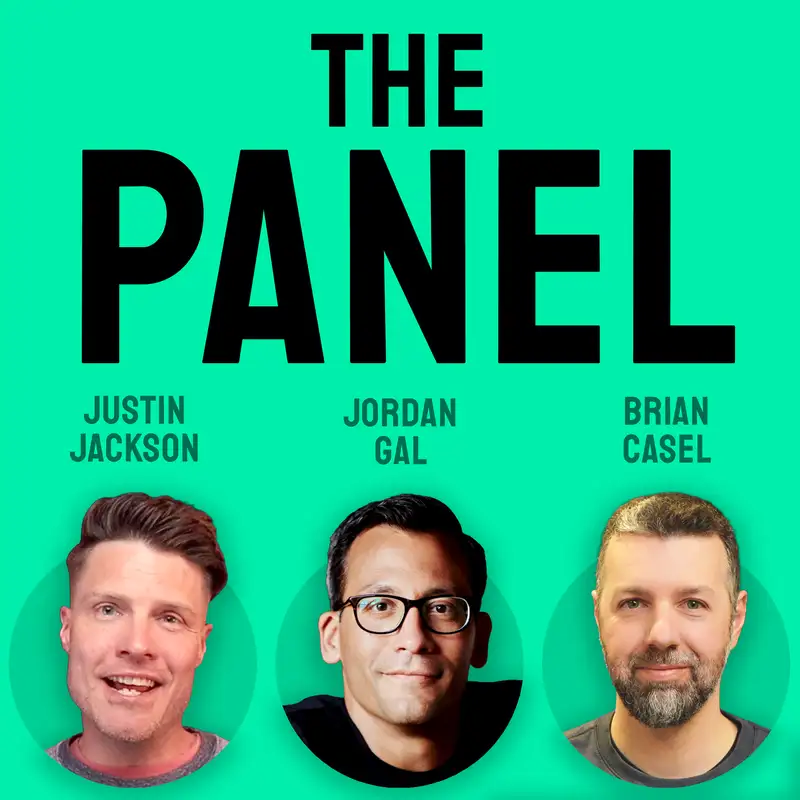
Welcome to the panel where founders talk about building a better business and a better life. I'm Justin Jackson, co founder of transistor.fm.
Brian Casel:And I'm Brian Casel, founder of Builder Method.
Jordan:And I'm Jordan Gal, co founder at heyrosie.com. Gents, good to be back together.
Justin:Guys, this is so good. I listened to your episodes while I was away. I got a lot to talk about. I got big city energy. That's what I want to talk about.
Justin:I was in London, UK for a week, had incredible time there, stopped by the Indie Beers, like the Indie Hackers meetup just on a whim. And it was like, Charlie runs that over there. And I I spent all day at this conference that had like thousands of people, this podcast industry conference. And I felt like I got a better reception at the Indie Beers Indie Meetup. Yeah.
Justin:And that's really been my past two weeks. I've just been jumping from meetup to meetup, from meeting to meeting, from party to party and that would exhaust some people but I am at a 120%. So yeah, did London UK, did Toronto. Let's Let's talk about
Brian Casel:let's go, man. I'm I'm going to, I'll be in I'm flying into London but I'm I'm speaking at Brighton Ruby in what, two weeks, two or three weeks?
Justin:Oh, wow.
Brian Casel:So I'm excited to, it'll be my second time to The UK.
Justin:Wow. Yeah. I mean, I it'd be interesting to get your your perspective. There's this new thing that Charlie started. It's Charlie Ward, I think that runs that is that right?
Justin:From Raman space, napkin math. He started a a thing called London maxing, which is instead of, you know, the Brits are notoriously cynical and negative and like not super big on their own. And he's like, wait, London's a great city. Let's just start London maxing it. And it's become this it just exploded.
Justin:Like he's he's had a meeting with the mayor. He all these influencers have come out of the the woodwork to they've done a giant meetup about it and I'm just
Brian Casel:picturing you on on like all like the touristy, like like the the double decker bus, you know, the I'm I'm selfie on the on the on the big on the eye on the on the
Justin:I mean, here's the thing. I've never really lived in a big city. The biggest city I've lived in is in Edmonton, which is about 1,200,000 people. The first time I flew into New York, I got it. It was like, oh, wait a second.
Justin:This is an entirely different thing. There are cities that are a million people. And then there are these kind of cities, New York, London, Toronto, Paris, I'm sure Tokyo is like this. There's just these cities that have this energy.
Brian Casel:Yeah.
Justin:That you can feel it. It's a dynamism. It's just you can feel the money and everything flowing through it. Mhmm. I am just totally infected by it.
Justin:When I'm in these cities, I come alive. I feel like the most true version of myself. I'm just like, who do I know? Who can I talk to? Who who can I meet?
Justin:And it's just, the definition of a good trip for me is like, I've got something every day, meeting people every day. I'm, you know, when I was in Toronto, was visiting my son. I'm bringing my son to all these different meetings. He's just getting thrown into these things. I just love it.
Brian Casel:Jordan knows what I'm talking about. Like, there's New York City has always had that energy for me. Don't, I don't know if part of it is like growing up in the I grew up in Long Island, but like going to the city as a little kid all the time and still, you know, still I'm an hour out. Yeah. It's like almost like something in the air.
Brian Casel:I just even remember from when I was a little kid stepping out of the train onto the street in New York, it it there's a different smell, energy, feel, like excitement than any other city. And that that's still true for me today. And I also think that like big cities, I I would almost I I like to think of it as like East Coast cities in The United States. I I tend to but I I I bet the same as like in a place like London where it's like, there's something about the language and the vibe of like New Yorkers and Bostoners and Mhmm. You know, and probably people from London, think.
Brian Casel:I I would I would say, people I know there, where it's like, I don't know, it's like a rougher edge. It's a little bit more aggressive, a little bit more cynical, a little like faster pace. We're we're all impatient. Mhmm. And it's like we have this language that we just understand each other out of the gate.
Brian Casel:Know?
Justin:Yeah. I mean, the joke if you grew up in the West in Canada, and I think this I've I've noticed this by him in The States too, is we all hate Toronto. Because those Torontonians, they're full of themselves. They think they're the center of the universe. And now my joke is like, go there and I'm like, well, this in Canada, this is the center of the universe.
Justin:This is this they're right. They're right to be stuck up and feel like, there's something special about this place because I think people feel the same maybe about New York, right? Everyone's like, ah, New Yorkers, they're their own thing. So here's the question and maybe I'll start with Jordan. Jordan, do you think this is just a temporary thing that's gonna fade and I should not move to a big city
Brian Casel:or Are you serious about considering that?
Justin:I am. I'm I'm so I'm wondering if this is a stage of life thing because it and I think you guys
Jordan:This usually happens to me when I go to like an island or beach. Yeah. Why
Brian Casel:do we live where we live? Yep. Like
Justin:Yeah. So I wonder if it's a stage of life thing and I'd I'd be interested to hear what let's start with Jordan and then go to Brian. But, know, my kids I've got my second youngest is graduating this month. Next year, I'm going to be theoretically could be close to being an empty nester. So now I'm kind of feeling like, know what, we moved to this place, this quiet touristy ski resort area for the kids.
Justin:You know, let's have a quiet, relatively safe, You know, you could buy a bigger house, all that stuff. Now I'm thinking I'm I'm thinking about buying a brownstone, I'm gonna go right in the middle of the action. London, Tokyo, New York, Toronto, I'm gonna choose one. That's that's how I'm feeling. What do you think, Jordan?
Jordan:Okay. Okay. So I I am resting on a decent well of credibility on this topic. I have lived lot more places than the average person. So just to mention that real quickly, at some point, my wife and I traveled for eighteen months where we went to a different city every month or two.
Justin:Okay.
Jordan:So we went all over and we learned a lot about ourselves and how to think of a city and its culture and its people and how we fit into it and all those trade offs. So when I hear you talk about this, for me, breaks down into three parts. Part one is the nature of a city is different. Yes. It's just a lot more people, and that creates a different environment.
Jordan:So you can think of New York and Miami and L. A, San Francisco, London, Tokyo, Madrid, Rome, like, yes, the fact that it's a big megalopolis with millions of people is like the first defining characteristic. Mhmm. Yeah. But right alongside that, not like much below it, but right alongside size is culture.
Jordan:Yeah. And and how a city speaks, how it whispers to you. If you go to DC, it's an amazing city, and it whispers to you, you need some power. Yes. You need influence.
Jordan:You need connections. You want in? That's what you need to do. New York, straightforward. Bring the money.
Jordan:Right. LA? LA is more is is different. LA is like fan. It's not just looks.
Jordan:That's my Hemi. Yeah. Yeah. It's Hollywood. In San Francisco, whispers are different thing.
Justin:Mhmm.
Jordan:So the culture matters. And because of that, New York is very different from Sydney. Yeah. Sydney, you pop your little tall poppy up and it will chop your head off, which is a very different culture from you're the best lawyer in this firm. It's great that you make $4,000,000 a year.
Jordan:Mhmm. Without the issues of Sydney is how you would never mention that. Yeah. You're talking about similar Australia? You would well, yeah.
Jordan:Australia is similar to Canada, similar to England and the Anglosphere in general. That culture is not boastful. Yeah. And so you wouldn't even you wouldn't even dare to say that you think you're the best lawyer, let alone like brag about things that are in New York that are much more straightforward. So Yeah.
Jordan:So so the size of the city and the fact that cities are of a different nature. Yes. But the culture is right there with it. You go to the wrong city, you won't get what you're looking for. You won't find, oh, I love this energy so much in London.
Jordan:And then you get into the culture and you realize, oh, what I want is not celebrated. And now I have to I have to I have to put myself into that culture and morph and adjust so that it makes sense. Otherwise, you won't have a good time. Me in Portland was an example of like, what is this guy doing here?
Justin:Yeah. Portland was an interesting choice for you, actually.
Brian Casel:Yeah. Yes. Yes.
Jordan:Yes. I I am comfortable, being a bit of a fish out of water. You know? Yeah. I, you know, I'm I was a republican in New York City in like 2002 during during the Iraq war.
Jordan:I was like, people did not know what to do with my opinion at a bar. They were like, well, you're the only person that that thinks that way. I'm like, what do you do? So I think maybe I became comfortable with it.
Justin:And what's the third thing?
Jordan:The third thing is that travel is different from living.
Brian Casel:Mhmm.
Jordan:And when you go travel, you you just wear a different skin. Mhmm. And then you go to a city and of course, I I think it's totally fine to just look at the surface and fall in love. Yeah. And ignore all the realities underneath and the culture.
Jordan:Once you got into it, you understand the trade offs and all this other stuff. But what I think we can talk about and I want to hear more about your experience because the three of us all experience this. I'm assuming people listen to this also experience. You get out of the house, you get on a plane and something starts coursing through your veins. Yeah.
Jordan:It is like this human. Yes. Like I'm out in the world. I'm pioneering. I mean, are a nice secure little bubble where you check into your hotel.
Jordan:But who cares? The the truth is your body, the reactions and it of course it affects your thoughts. It's I'm out. I'm I'm away from my tribe. I'm out here.
Jordan:Yeah. And you see the world very differently. It's super exciting.
Justin:Yeah. Yeah. You're on a mission. Alright. Brian, what are your thoughts?
Brian Casel:Yeah. Just in terms of like choosing where to live and and our, and, and we talk about, you know, Amy and I talk about it all the time. Like, we, we talk a lot about where are we going to go when the kids get out of the house, which will be what, roughly like eight to ten years from now. It doesn't seem that long now.
Justin:It'll go
Brian Casel:by It's crazy, man. But, yeah. So, like we live in the suburbs here in Connecticut, about an hour north of New York City. And for, for us, I, I think that, you know, me and probably, probably both Amy and I are, are pretty different from the two of you. Are much more, quiet home bodies.
Brian Casel:And and also like my family, we are really, I know all of us are sort of this way, but like we are really like a family unit. We're not doing a ton of Like we have close friends and everything, but we don't We're not like socializing all the time. You know, so we like to do our own family trips. We like to do our own family day day trips even if it's just like hiking around here in Connecticut. We go to the beach a lot.
Brian Casel:In the summer, we we like to go skiing and snowboarding in in the winter with the kids and stuff. I I've always really valued, being close to For me, I I've I've always grown up near water. Like, I I grew up fifteen minutes from the Atlantic Ocean. Mhmm. Here we are ten minutes from the Connecticut, like the Long Island Sound.
Brian Casel:Also, you know, within a a train ride commuting distance to New York City. I'm not saying I would always I I always we always sort of kick around the idea like, what if we we move to Costa Rica? What if we move to Asia? What if you know, what if we So
Jordan:your conversations aren't like, let's go back into the city once we're done with the suburbs that we need to live in for for the kids?
Brian Casel:So, like, we we lived together in in Queens, like, just across the river from Manhattan. I lived in Brooklyn for a couple of years when I was younger. Loved it then. So I think for me and Amy, it's much more about our lifestyle.
Jordan:Mhmm.
Brian Casel:And where we are now in Connecticut just fits perfectly with how we like to live. Like we we like having the car, we like to go out on road trips, we like to go we like having space. We got a huge yard, know, we like to go to the beach. When, when we were in the city, you know, you're so confined, you're so dependent on public transportation. These, like back then there, there was no Uber and stuff.
Brian Casel:So like, yeah, like, like, and like we don't value the accessibility to go out and we like to have a drink once in a while, we don't go partying at at bars all all the time. The the travel thing is real for us too. So, like, we always like to sort of like dream a little bit, like what what it would be like to move to to one of these other places in the world that we love to visit. Mhmm. But I think, I think we also really value the ability to just go travel there whenever we want.
Brian Casel:Yeah. You know? And that, like like Jordan was saying, like the traveling aspect of it is the exciting part. Like we, we, we really love where we are in our home. We like our town.
Brian Casel:We like our area. We like the accessibility around here on the East Coast. Yeah. I would love to live in Colorado, but we could just take a trip there.
Justin:Yeah.
Brian Casel:I would I would love to, you know, live in Hawaii, but we can just fly there, you know.
Justin:Kinda Yeah. What do you wanna say, Jerkin?
Jordan:I want I wanna bridge something between Brian and yourself and ask you. It sounds like Brian doesn't feel like he's missing anything. Mhmm. He's he's happy. He's content where he lives.
Jordan:It's kind of the right arrangement.
Brian Casel:For now. I I would say we are set on like, we're not gonna stay here after the kids leave. Like it like, we're not
Jordan:gonna So get there will be families. Know? Mhmm.
Brian Casel:Well, like, I I think we we all we often dream about like, well, once the kids are out, like, yeah, well, let's go live in a paradise. Let's go live to live in like, I don't know. Okay. Costa Rica or like some some beach
Jordan:island. It's almost like a more comfortable, more interesting, more adventurous, more whatever version of what you have now. Like, it's not a complete shift from we want to go back into that river of energy, culture, events. Yeah. Access.
Brian Casel:I don't think we're
Jordan:itching to get into the
Brian Casel:city as we get older.
Jordan:Yeah. So, Justin, what I want to ask you is when I travel to cities or conferences, I get the same feeling that you this is the high that you're on right now.
Brian Casel:Mhmm.
Jordan:And what it makes me ask myself and what I wanna ask you is, does that mean something's missing?
Justin:Yeah. Yeah. Yeah. I think so. I mean, I even think about like moving here was a dream.
Justin:We used to visit here all the time in the summer. It's like, it's got these beautiful beaches. It's got these beautiful hills. You're not far from the Rockies. It's, you know, we come here in the winter and go snowboarding.
Justin:So we used to visit all the time. And I was like, man, if I could just get a remote job, then maybe we could move there. Like that would be incredible. So this place was a place we used to vacation. And then we said, let's think about moving there.
Justin:Let's figure that out. Moved here in 2012. Our kids are I don't know how old they are, but let's say 10, you know, down to three or something.
Jordan:Fourteen years later.
Justin:Now, you know, yeah, here we are fourteen years later. And we're living in a small little town. And I'm bored. I'm just bored. I'm recognizing it more and more and more.
Justin:I'm bored here. I, I like every time I get that same feeling. Every time I go back to a city, I'm like, ah, like, and the other, the other thing is that we got married super young, like we had our first kid at 22. So, some people have the 20 to 30 to 35 in the big city. I miss that part.
Justin:Okay. And there's just part of me that's like, there's there's something in me that in the same way that I can't I kind of came alive here when I was visiting. Now I'm come I'm coming alive in a different way, different stage of life. I'm turning 46 this month. And I'm like, I got like, how much longer is this energy gonna last, you know?
Jordan:You sound bored and happy. You don't sound unhappy.
Justin:No, no, I'm bored and happy. But also like, even like, okay, now I've done whatever fourteen seasons of snowboarding. It's fine.
Brian Casel:That's what I wanted to ask you about. Like, moving to the place that you always loved to to go vacation to. Did it did it lose that excitement, the fun like it?
Justin:For the first, I'm I am a cheerleader, like I'm a rational optimist in this way. Like I got here and I just rose colored glasses for the first ten years. I'm just like, this place is amazing. I can't believe we get to live here. I can't believe I get to go snowboarding all the time.
Justin:Last four years, I'd say, I've started to feel like, Now, I think I I think my expiry date here might be moving, you know, I think it's time to, you know, once the once your kids don't want to talk to you anymore, they're just sitting in the house and you're just like, you're like, hey, you want to go snowboarding? You don't hear response at all.
Brian Casel:I do always. I am always jealous of those who can just go out and drive twenty minutes and be at an amazing mountain. We're several hours away. And like we've kicked around the idea of getting like a vacation home either up in like Vermont or New Hampshire. It may be part as like an Airbnb property or something, but you know, we sort of always come back to like, well, rather than owning a second place, we'd rather just spend our money on traveling where wherever we want, whenever we want.
Justin:I think that's the right answer. I think it's it's just because I know that like it's way easier to imagine yourself living somewhere when you're on vacation. Everybody does that. But this is like a sustained trend with me that I go to a big city either for like like I technically while I was in Toronto, I was on vacation. I was supposed to just be hanging out with my son, but I'm booking all these meetings.
Justin:I'm going to all these meetings. I'm just like, I it's the thing I love to do.
Jordan:I want it. I want to try to define that feeling because it's kind of hard to put into words. Mhmm. I know this is going to sound a little weird. I'm gonna try not to make myself sound too weird.
Brian Casel:Well, I had this
Jordan:experience As with we're talking about this, I had this very memorable experience. It was a microconf. It's like ten years ago. And it was it was what I think was the first time that I I gave a full talk. So it's a lot of nerves going in.
Justin:Yep.
Jordan:And then and then you do the talk. And then and then, you know, then there's relief. Brian, I think we had already started the podcast. It was it's the first time that I like walked into a conference and people were doing the, like, shake your hand. Like, I listen to your podcast all the time.
Jordan:So great to meet you. And it was like a it was a few days of that feeling plus the talk. And then after the talk, and I was like, I felt like a human magnet. I was like, I can do anything. I can convince anyone of anything.
Jordan:I like I think I walked into an Uber, and I was like, I'm pretty sure this Uber driver wants to sleep with me. It was I was just like, it was, you know?
Justin:I know this energy though. This energy is like, everybody wants to talk to me. I'm gonna talk to everybody. I'm gonna yes.
Jordan:And and and I'm not like a like a very like arrogant person, so it it has this weird effect of, like, also making me be, like, slightly self conscious. Like, hey, don't don't think that way. Like, relax. Don't be overly confident. That kind of thing.
Jordan:Mhmm. But if I shed all that and I'm just being, like, really genuinely honest with myself. Mhmm. It's ego. Mhmm.
Jordan:When I go to March Capital, our lead investor, I go to their conference in LA and I do a whole, you know, few days of talking to people and meeting people and pitching and just like all that energy, I I just walk away with my ego like, you can do more than you think you can. Mhmm. You can actually do anything that you want to do. Mhmm. There are no barriers.
Jordan:They're like all the things that your day to day life just kind of put you in a lane and they're like, this is this is your normal life. You can do this or this. If you want to go crazy, you can drive forty five minutes in the city, but that would be crazy on a Tuesday. It's like it's very confining. Yeah.
Jordan:And when you just throw all those like constraints out and you're just out in the world. So for me, the the I I don't know how to put that feeling of like the travel and the business and that into words, but it is like this confidence and part of it is wanting more of that. Yeah. And then like linking it to like, well, that's another version of me that can accomplish more, that basically just puts themselves out into the world more. Yeah.
Justin:And maybe I maybe I like that version of me better than the
Jordan:one that I live with day to day. You know, I see some of the comments like people are like, oh, it wears off. Like, yes, it wears off, but it is also true. So how can you put into words what you just I mean, you're experiencing right
Brian Casel:now.
Justin:I love this. I love this. I love this. I mean, to be clear, like, moving to a new city is one of the funnest things I've ever experienced. So when I moved here, I had that same energy.
Justin:I'm here on a mission. So things I would have never done in the town I grew up in. I'm here, I'm like, I'm meeting everybody. I'm gonna the director of economic development. Let's do a meeting.
Justin:Let's start a meetup here. Let's start a coworking place. Let's do a hack night. Like I'm just like, going going going with the same kind of energy, finding my people, all this stuff. So I think the energy you've described perfectly.
Justin:And I think the the thing I'll add to it is I've also felt that energy, not just when traveling, but when moving to a new city, you fly in, you're like, okay, this is new start. I'm going to create, I'm going to help attract the thing that I want to see in this place. I've got to get moving. I got to get going here. And, that has sustained me for, you know, especially the first ten years.
Justin:It was great. The last four years, what the feeling I have here is I'm hitting a ceiling. But, oh, there's really the only thing left to do is for me to say, in ten years, I should join city council and try to like, change this town, you know, like
Brian Casel:Right.
Jordan:Like, give basically give back. Give back but
Justin:in a long term way.
Brian Casel:Like Do
Justin:I wanna spend the next ten years trying to manifest something in a culture that really actually probably isn't gonna happen here?
Brian Casel:So to to relate this to business in some in some weird way, Would you say that like you've like plateaued on your Mhmm. Social ladder, engineering that like But this is just no more growth potential for
Jordan:you. This has to you're churning growth for now.
Justin:Yeah. Yeah. Yeah. Yeah.
Brian Casel:You're churning friends.
Jordan:Yeah. I'm
Justin:not churning friends like it's it's all fine. It's just it relates to business in the sense that what remember when we define burnout as that repeated feeling like you're just not making progress anymore. You've gotten to a spot. And like, there's some burnout where you've just been working too much. But then there's that other kind of burnout where you just like, oh, oh, oh, you know, like it you keep pushing forward and you're like, and I think when it comes to a city, there's something there's this realization that was like, okay, what did we come here for?
Justin:We came here to raise the kids and teach them to ski. Check done. And now it's like, okay, what what now? Well, I love to work. Like I love I freaking love to work.
Justin:And there's something about being energized in a way that translates its way into work that I'm like, man, the next ten years. Like, if you give me the choice between skiing and work, I'll choose work. I freaking love to work. If you give me the choice between sitting on a beach and going to a meetup in a different city, I'm going to the meetup every time. Like that's
Brian Casel:think it's so interesting. The of like like personal lifestyle in our in our work lifestyle. And what what is the optimal version of that for for all of us? And I I I and think it's probably pretty different for the three of us, know? It sounds like to me, I probably for both of you, correct me if I'm wrong, is that like the the ideal work lifestyle is direct interaction with a team and ideally in person.
Justin:Oh, I would build a team in person next time.
Brian Casel:You know, and and if not that or or if you're most of your team is remote, like still a regular cadence of like in person meetups and even just meeting up with other people from other businesses in your in your local area all the time. Whereas like, you know, for me, like I I've spent years trying to craft the perfect home, quiet, creative studio, just me in my little cave here.
Justin:Yeah.
Brian Casel:You know? And I'm happy and I work when we travel and I'm comfortable working on a plane, I'm comfortable working wherever, but like, I just like to optimize that, home comfort, you know? And and it but like the the travel thing, of course, like we love to travel. And I think the big the big thing there for us is like, it's the break in the routine because we are so routine at home, which we like. Like we it just works for us.
Brian Casel:I'm extremely routine in my day to day. Sometimes I joke with Amy that I think if I had some sort of tracker on me, maybe I could this with the Apple Watch. I think I literally make the same sequence of physical movements twenty four hours a day every day. You know? But like Pod.
Brian Casel:Yep. Like, like a shower open like the way I I brush my teeth to the shower, to the coffee, to the work, like all of it, you know? Anyway, but like, yeah, you get on a plane, go somewhere, go snowboarding, travel somewhere. It it just breaks up the routine.
Jordan:Yeah. Here's what I was gonna say. They feel it feels like there's a battle between the wisdom on one side.
Justin:Mhmm.
Jordan:Right? If if I could introduce a classic quote into the podcast here from from Pascal. Right? All of man's suffering stems all of man's problems stem from his inability to sit in a room alone. Right?
Jordan:Yeah. Like, Brian Brian has some wisdom in, like, well, my family's safe. I'm close to my wife and kids. Mhmm. Right?
Jordan:And there's, like, wisdom in finding happiness in that. And Yeah. Thank goodness the Internet allows us
Brian Casel:Not saying I'm always happy. It's a lot of it's a lot of like quiet stress stewing over decisions. But anyway Yeah.
Jordan:Right. Different type of happy. Yeah. Right? You you like, you're in a good place.
Jordan:Right? You got your family around you and and and there's wisdom in being satisfied with that and saying, like, no, this is actually good. And I prefer this than something else going to an office or commuting or or something else.
Justin:Question. If I'm sitting in a room alone talking to just a screen of people, am I am I technically alone?
Jordan:It depends. Are you on Twitter or Blue Sky?
Brian Casel:Or are you I mean, I'm just saying maybe
Justin:Pascal was talking about being in a room with the Internet.
Jordan:I like it. Well, that's There's a lot a lot less boredom in that room.
Brian Casel:My my kids and Amy always always say to me like, hey, Brian, just like, ask your friend this question. They mean like, go ask AI.
Jordan:That's tough. That's tough. My my my wife, right. What what does what does Claude say?
Justin:Yeah. Okay. Keep going, Jordan.
Brian Casel:Keep going. Okay. So so the
Jordan:the wisdom on one side Mhmm. And then on the other side, it's like, yeah. But I am I am human,
Brian Casel:and I
Jordan:don't always want to follow that wisdom. And I want to go out and create more stuff, do more stuff, work, earn more, make a reputation myself, become known, all the things that are, I don't know, in in the realm of vanity. Things that like are not actually necessary. You could just sit quietly in your room and be happy, but you want to go out there. Some combination of instinct and vanity and ego and whatever else and desire, whatever else.
Jordan:Yeah. So when I think of something like a city or moving to a city, it is like a challenge because I know it's not wise. I know it'll very likely to lead to more unhappiness and dissatisfaction and comparing myself to other people and and lusting after the wrong things that aren't as important. But so I don't know how to balance that.
Justin:Yes.
Jordan:I think of my my younger brother lives in Manhattan. Yeah. And when I tell you his network is it is so many levels above what I have access to. It is no wonder that that he can do more stuff, be more successful, raise more money, do bigger projects, just all the things. And I Okay, so if I followed that, I would go to New York and and enter that universe.
Jordan:But it doesn't feel wise. It's like, am I going to chase the wrong things? So I always try to have my cake and eat it too. How about I sit quietly in my room here in this beautiful suburb North of Chicago? Mhmm.
Jordan:But keep the ambition and and do the big numbers. And it's not really possible. It's it's not. You got to go out into the into the bigger environment more regularly.
Justin:Yeah. I mean, I think there's there's a few things that made me think I I I don't know if I I agree with the characterization that it's like it's like you should feel guilty about any of that. To to me, this is not about it's not I I don't see it as being about ego. I don't see it as being about ambition. It for me, it's about being the most fully realized person that I can in any given moment.
Justin:And so when I moved here, the most fully realized version of myself was like, yeah, you've got four kids you've got to take care of. You've got to have them in an environment that's reasonable. We're not gonna stuff them all in a brownstone in Brooklyn, like that's not happening. And It's a choice
Jordan:because you could.
Justin:You could. But it's like, what's the most fully realized version of myself here? And there's some sacrifice and suffering in in everything that you do. But it's like, what is a what is a thing for? You know, what is the most fully realized version of a tree?
Justin:What is the most fully realized version of anything in nature? What is closest to their nature at this given point in time? And, you know, like at some point, the salmon here in British Columbia, they all run up the river. And that's like, that's crazy. Why are you doing that?
Justin:Like, you're going back up the river and you're basically going to die. But that's the most fully realized version of them in that moment. There's nothing, you know, bad about it. There's nothing inadvisable about it. That's just the way it is.
Justin:And I think, you know, even for my son, he was like, should I come home or should I he's like, I'm just feeling the pull to Toronto. I'm like, dude, if you're feeling that pull, you gotta you gotta explore that. You gotta explore. If there's something about you that's resonating with something, you've gotta you wanna become the most realized person. And sometimes that means
Jordan:will have priorities that intrude on that. Yes. Later.
Justin:Yes.
Jordan:And that that right. Because that's maybe there's also wisdom in that in saying, well, I have three kids.
Justin:Mhmm.
Jordan:And what I want is not the only factor. And so for this moment, the most realized version of me is actually subordinating my desire and needs and saying no in the larger context, it makes more sense to go somewhere else, which sounds like a lot of the kids getting older is shifting the priorities and responsibilities that you have. And it opens up this possibility of saying, oh, maybe my parties have shifted enough where that same equation doesn't have the same result.
Brian Casel:Yeah. I guess maybe it all always just this sort of thing always comes back to FOMO. Right? Like, like kind of, I don't know, like, like, should I go? Should I not?
Brian Casel:Should I do this thing? Should I not? I, I tend to lean toward doing it if, if only because there's, there's a slight hint of like, if I don't, I might regret it. I wanna at least I wanna at least try it.
Justin:I I I don't even think of it in terms of FOMO. Like, I could remember, I'm living in the suburb in Stony Plain, and I'm driving an hour into Edmonton every day downtown. And I'm just driving there and I'm just like, I fucking hate this. Like, I want something better. And at the time, the thing I wanted was remote work in a ski town.
Justin:That's what I want. Guess it's not FOMO. It's just like, there's this thing that is pulling me forward. And it was just like, then I was just like, how can I make that happen? And I tried, you know, I applied to 37 signals and then that didn't work.
Justin:And then I, you know, tried to convince my boss and that didn't work. And then I applied to thirty seven signals again, and then they offered me a job and then I was gonna take it. And then my boss said, actually, we'll let you work remote and give you a raise. So I took that. And it was just like this, pull pull pull, like just get me there.
Justin:And then you get there. And then I got here and it's like everything people there's all these warnings, these like these these tales like, it's never gonna be what you expected it to be or anything. It was great. It's been great. And, I think I'm just now I'm I I love this feeling kind of bubbling up in me of like, wait a second, there's something else.
Justin:Like, we can go do something. We can go do something else. Let's go do that.
Jordan:Doesn't really matter what you do. Yeah. But that's still there. It's, it's, it's not going anywhere for a long time. I, are we all in our mid forties?
Jordan:Yeah. Yeah, I'm,
Justin:I was born in 1980.
Jordan:I'm 43. Whatever. Young. Yeah. I think this is a great time to kind of be like, oh, we're starting to feel old and then come back around to actually not even close.
Jordan:Not even close. There's so much more to do. There's so much more time to do things, opportunities.
Justin:Yes.
Jordan:All good.
Justin:The the other thing that you will you will start to think about is and this is this is something like sometimes, you know, we'll tell our kids will be like, you know, like before you guys came, we had our own lives that weren't centered around you guys. Good luck. Had our own thoughts, we had our own feelings. And you will start to feel that once they get into high school, and they start leaving the house, you're starting to feel you're going to start to feel like, Oh, wait, I used to be a person. And what, my having kids at 22, my whole life has been orchestrated around, I got to feed these kids, I got to pay the mortgage.
Justin:It's just like, basically nothing on me. It's just like, I've just got to be in motion taking care of this thing. It's taken care of, you're kind of you start to feel like, oh, wait, I used to be a person.
Brian Casel:Yeah. I mean, had I I guess most of your twenties started out like in as as like parenthood. Right? So,
Justin:like You're right into it.
Brian Casel:Yeah. So, may maybe there's some of this like, re relive the young adult life in your in your forties and fifties.
Justin:That's right. That's right. Hopefully, in in five years, I'm not like on cocaine in a bar in Manhattan.
Jordan:Hey. If that's where it leads you, you know.
Brian Casel:Hey. I mean, that's the most If you're feeling that pull You're
Jordan:going to Murray Hill bars at Tuesday nights.
Brian Casel:Oh, man.
Justin:Alright. That was a
Jordan:big update for me.
Justin:Let's I think let's just turn this into update episode. I wanna hear what you guys are doing. Jordan, why don't we go with you and then we'll go to Brian. So what's your update? What have you been working on?
Justin:What have been thinking about?
Jordan:Alright. So maybe two weeks ago, I was looking at all of our stats.
Brian Casel:I think I I think I spoke about this with with Brian,
Jordan:but it's kinda defined the last two weeks. I looked at all of our stats and and and I'm kind of internalizing like we're we're really close to more of a breakout. Like we've been growing consistently.
Brian Casel:Mhmm.
Jordan:And I want to accelerate it. And, you know, what I think about a lot of the time is how do I do that? How do I accelerate it? I'm very happy with the way things are going. But as Rob Walling has always given me the same advice, when things are working, do not give in to the instinct to slow down because they're working like that's the time to go much, much harder.
Jordan:Yeah. So I always keep that in mind. And what I realized was I have more control than I have been acknowledging in our advertising funnel. I can optimize it. And I've had this experience over the last two weeks turning Claude Cowork into like a procrastinating, destroying machine.
Justin:Okay.
Jordan:It has. So I like to work through meetings and conversations.
Justin:Mhmm.
Jordan:But it's not really fair to do that to your colleagues in a in a remote environment, especially when it's the boss and no one can say no. And they're like, alright, I guess I'm gonna be on calls with Jordan all week.
Brian Casel:You know?
Jordan:Not not not great.
Brian Casel:Mhmm.
Jordan:And I've just started working with Claude Cowork almost like a colleague, and it's very motivating. So I'll do a project like let's update the pricing page. Here are my goals. Here are other pricing pages that I like, and let's go from the top from the headline. Let's go.
Jordan:This is
Justin:you talking to Claude Cowork. Yes. Okay.
Jordan:Yes. And so it pretty quickly understands it has a lot of context from my previous conversations and documents and folders and all that. And it's very good at like best practice optimization stuff. And so normally if I just open up a blank Google Doc and I'm like, here's the updates that I want to make to the pricing page. It's very it's very hard to get going and build momentum in that project.
Jordan:Mhmm. And so I've been using co work as this conversational back and forth motivator and it works. I I've just been really productive. So so that that my focus this week has been optimization. So I did the pricing page and I'm doing the the home page and I'm looking at, like, the names of the pricing plans and the prices and and and that, like, has lit a fire.
Jordan:I think I got the idea that I am empowered. I have a lot more control over optimizing this funnel as opposed to just watching the ad spend and and kind of, okay, when's the next batch of creative and this very passive version? I think much more active, role in it and it feels it feels amazing.
Brian Casel:I love this. I mean, you're describing how I work with Claude. I I hunt I 100% have a coworker in Claude and we work together on everything. Every single thing I do ever now for the past year is is what you just described Jordan. I like, if I'm working on a project, I have a Claude conversation going alongside it to to talk through every creative decision.
Brian Casel:I'm curious to know why co work and not just like regular Claude. I do most of that type of work In chat. In regular Claude. The only thing I go for co work for is if, is if it has to run on the machine and has access to the local files. So I'm doing some like background, like agent stuff with co work, but like, any kind of strategy or creative work, meet me to Claude.
Brian Casel:It's usually just in regular Claude.
Jordan:Yeah. I think it's just psychological in how I approach the Claude window when I open it.
Brian Casel:Mhmm. Mhmm.
Jordan:I just look at it. I'm like, oh, my chats are like these back and forth conversations, questions. You know, in in chat, will upload an NDA and I'll say, can I sign this as is? What issues should I be aware of? Is there anything nonstandard in this NDA before I sign it?
Jordan:And that's like a I look at it as like a quick chat. And then I go over to co work and it's like I put on like a new hat. I'm like, oh, this is a this is a different experience, even though it's not. But what CoWork seems to do is when I lay out a project, on the right hand column, it creates
Brian Casel:a to do list. Yeah. Yeah. It does. It just creates more like
Jordan:Right. So on the pricing page, I had this feeling of progress because I'd look over and I'm like, oh, we're three, you know, three things down on the list between the pricing grid and the testimonials and That's a good point. FAQs. And I'm like, okay, so so now I have this. So it's it's psychological.
Jordan:Right? No. But it's it's not that's really interesting because anything.
Brian Casel:It's really interesting because it's the same technologies, the the same LLM, the same Mhmm. Cloud model. Yeah. It's about the interface.
Justin:Yes.
Brian Casel:And it's not even the harness because they're it's essentially the same harness and all Cloud Code, Cowork, Cloud AI, it's all the same secret sauce under the hood. But what you're describing Jordan is, is the UI, just, just the UI element. And you're right. I was just looking at Cloud Cowork this morning because I had an agent running a skill on it. Okay.
Brian Casel:And, and I could see that to do list. I could see where it's at in the progress. And, and I must say like when I do a lot of the other thought partner stuff that we're like that within regular Cloud, I do a lot of like artifacts, but those get messy and they get out of date and stuff. Yeah. It's it's not an an optimal UI.
Brian Casel:So that that's really interesting.
Justin:I I think the interface layer is still the most interesting part about all of this. Yeah. The fact that Claude has been Anthropics been able to do this is kind of wild because you think about all the other temps from other companies like Dropbox tried to do paper, you know, Dropbox paper. And it was like, it never really worked.
Brian Casel:I was like, stop trying to sell me anything. I just want to keep paying you for the syncing.
Justin:But here we have a suite that's basically new. This is like, this is not Microsoft Office. This is and even like Slack has tried. Slack has said, you're gonna do your planning in here and your calendar and your tasks and everything And most people don't use it that way. But but Anthropic's been able to define these different UIs.
Justin:You've got Claude in code in the terminal. You've got Claude chat, and then there's different UIs within Claude chat. And now you've got this idea of co work and I was like putting on my co work hat and it's like, here's my co worker.
Brian Casel:And co work is such an interesting product for them to launch because it literally is Claude code with a more friendly interface around it for non developers. But you can, you could tell right from day one of of Cowork that like, this is Claude code. They they literally just relaunched Claude code with with a coat of paint around it. Mhmm.
Justin:But and and
Brian Casel:it's interesting how, like because people
Jordan:like me started thinking of Claude for developers, and I was I was jealous. Was I like, you guys are doing
Brian Casel:all this
Jordan:magic. Like how about me? Where where's my Claude? And they were like, how about we give you a new skin called co work? And there you go.
Jordan:So I'm happy now.
Brian Casel:Yeah. I mean, and there are little technical differences between Claude code and co work that I've been sort of discovering lately. Cause I'm, I'm trying to run like these on the dedicated Mac mini that I have for agents. I'm using Cowork there and, and there's been like, this gets a little bit into the weeds, but like the question of like, do I run these recurring scheduled tasks using co work or do I have them run Claude code? And one of the frustrating things about Claude's ecosystem right now is that they seem to to be like one is sort of catching up to the other, which is catching up to the other.
Justin:And there
Brian Casel:are all these like little little gaps in paper cuts that they just haven't shipped the the optimal version of. So like recurring tasks is something I do a lot with with the background agents. Right? I I I create a skill. I have them running on on a daily basis.
Brian Casel:They're running it at like four in the morning while I'm sleeping or something. Claude code can't really do that. At least sort of can, but like, like the, the, the scheduled task, like they're going to fire that up in the cloud. Whereas Claude Cowork can actually run it on your machine where you have your skills, where you have your files. So they have like the schedule.
Brian Casel:So like, they're, they're just like these little paper cuts that they still haven't smoothed out yet, especially in the handoffs between mobile, between Claude Code Cowork. Yeah. But, mean, you know it's all gonna get better.
Justin:Yeah. But, yeah. And the the other thing to think about on the UI layer is just imagine what's gonna happen when Jordan figures out that in CoWork, he can also say, okay, now we've got all these pricing changes, I want you to figure out how to connect to our
Brian Casel:Go do it.
Justin:GitHub repo, and I want you to open up a poll request with this because I'm ready for this to get shipped and reviewed. And now you're gonna see
Jordan:Yeah. Right now it goes to the the goal of the project in co work is to hand off a document to the designer. Mhmm. And and what this experience has done over the last two weeks is it has made me want to learn more about about Claude.
Justin:Yeah.
Jordan:So now I'm like, okay, I am at like 5% of the power here. Yeah. I I'm not even close. I barely do anything other than just chat with this thing. And so I'm starting to look around like, how do I level up myself?
Brian Casel:It's so powerful. You're going to
Justin:break out of you haven't broken out of the sandbox yet.
Jordan:That's right. That's right. I'm still discovering like, first of all, it's it is already helping significantly. So shipping this pricing page, shipping the home page, like those can have a significant, significant impact on on the business.
Justin:Yeah.
Jordan:So even with this much little power, it's just kind of helping me along and kind of pushing me along and helping me get to where I want to go. But but then it just makes you want more like, Okay, well, what's next? What am I missing?
Justin:Yeah. Here we And the interesting part is as I think different people in the organization figure out, it's kind of like in in like the movie War Games or something, like, they all of a sudden they're like, they they realize that they can like ask this machine to do crazy shit. That's like like happens in real life.
Brian Casel:Mhmm.
Justin:And I think when different people in the organization organization start going, wait, Claude, can you actually just go do that for me? And it goes, Yep. And then it breaks through breaks out of the sandbox. Man, that's gonna be wild.
Jordan:That's that's my update. Other than that, I have had a lot of trouble not getting cranky. Oh. I I every morning I get to work and I'm like, alright, I'm good now. And then something will happen.
Jordan:And I usually temper myself, and I have failed at tempering myself. And I almost seem to be enjoying it at just just being honest with the emotion. So yesterday, I'm on a call with our advertising agency, and I saw a tweet a week ago from someone that I trust about ads on Meta. This guy, David Herman. And he said something about audience network.
Jordan:I'm like, what's audience network? And so audience network is Metas like, I mean, literally their audience network that they that you can run ads on that are outside of the main surfaces of Instagram and Facebook. Right? They also own advertising space on like mobile apps, for
Justin:example.
Jordan:And I went over to our ad agency and I said, we're not we're not showing ads to the audience network, are we? Because I just wanna be on Facebook and Instagram. That's where our people are. And then we looked at it and turns out, actually, we are because Meta has that on by default. Uh-huh.
Jordan:And so we've been spending money showing our ads in, like, random mobile games.
Justin:Mhmm.
Jordan:And the click through rate is literally 30 x. 30 times.
Brian Casel:Wow. In the audience network?
Jordan:In the audience network.
Justin:Oh, wait. Wait. Junk. They're junk I see.
Brian Casel:I see.
Jordan:I They're people, like, clicking on the ad to, like, get through it to get to the game.
Brian Casel:Yeah. Oh, yeah.
Jordan:So I'm looking at that, and I'm like, here's the deal, buddy. I'm you know, I I said it properly, but I was like, this is some bullshit. Do
Brian Casel:not do
Jordan:this to me. I I control where my money gets spent. And the fact that I had to send you a tweet and now this line item, like, in our analysis every month shows up that says audience network now that I've never seen before.
Brian Casel:Mhmm.
Jordan:Do not do that to me. Do not put me in that situation. And now, of course, because it's meta, you can't just turn it off because that would change the nature of your campaigns. Mhmm. And you don't wanna mess with campaigns that are working.
Brian Casel:Mhmm.
Jordan:So I'm like, I'm in this situation and you need to know I am unhappy about being in so if it feels like something like that has come up like every other day and I'm just like, I'm full on honesty. This makes me unhappy. I think you did a bad job on this. Don't let this happen again. Mhmm.
Justin:And I
Jordan:feel like usually I'm a little more tempered in that type of feedback.
Brian Casel:I yeah. Know. And I I kind of thing, I would be pretty pissed about too because it's like a vendor like, that's what they do. They manage the campaign and optimize it. Right?
Brian Casel:Like, because like the the thing that's I I'm just realizing now as you said that about because you we know that like Facebook, like Meta's reporting of of how well your your ads are doing, they're always gonna like inflate it. You can't, you can't trust how, like how their conversion. Yep. I did not realize that the, like the click through on game ads, you have to click through it to get back to your, your game. Yeah.
Brian Casel:They're gonna count that as a, as like a click and a conversion, and then you got ad agencies who are also taking credit for that, like
Jordan:Well, dude.
Justin:Have you seen your kids play a free game on their iPad?
Brian Casel:Yeah, of course. It's just like We've been like Like my family, we've been doing like a Tetris tournament, and it's like every time we're we're clicking through all these all these ads just to get back to it, and like Yeah.
Justin:I'm watching my niece play a game and she's just it's just like it's just like I'm like, what's that? She's like, I gotta just click through this and watch this movie and I'm like, what the this is complete trash and that yeah. All all those clicks are just going straight through the Rosie's advertising bill.
Jordan:Yeah. And it's it's a bit related to the same vibe that you're on, Justin, around that, like confidence high.
Brian Casel:Because
Jordan:for me, what's happened is as I started looking into like our debt options, it has brought out a bunch of equity investors that are like, actually, we think you're doing a great job. Maybe you could talk about investment. So I've I've been like pitching and talking to investors the last two weeks, and that makes me gives me that extrovert high. Mhmm. And I think that confidence also comes out in like the what audience network nonsense.
Jordan:You know, it it allows me the confidence to just speak my mind without any filter. I'm not being a I'm not being a jerk. I'm just being like, well, I'm just not gonna not say what what I really think. I'm just gonna tell you how I think and straightforward. It's like it's not firing you.
Jordan:It's not like, oh, you're the worst person ever. I'm just saying this makes me unhappy. Here's why. Don't let it happen again. So I think it's all all related.
Justin:Think about here's the thing. It's like, because I, you know, I don't like conflict either or confrontation. But when I think about the things, the moments in my life where I had an interaction with a boss that stuck with me, they're all confrontations. They're my boss pulling me aside going, listen, you can't do it that way. And me being like, oh, wow.
Justin:Okay. I guess I better pay And often, not every boss, some bosses are are confident and they have nothing to back it up. But often, the boss has something to back it up. They were right, you know? And that sticks with you and it's valuable in that sense.
Justin:Mhmm. Brian, what's going on in your world, man?
Brian Casel:Yeah, maybe a little bit similar to what Jordan was saying about his experience with co work and just like, just a little bit of a breakthrough and like, how can I use AI to really, be like a massive, like step change in productivity or optimization or whatever it might be?
Justin:Mhmm.
Brian Casel:I've been talking about how over the last two, three weeks, I've I've taken a little bit of a pause in the operations in builder methods with YouTube, specifically to, you know, I've I've built a bunch of internal apps, built a bunch of agent skills to help me reoptimize, rejigger, reconfigure how I go about everything in the pipeline from ideation to writing to editing to tightening up and and editing and and then like video editing. Mhmm. Just this, this past week. And so I've, I basically finished most of the building part of that and like standing it all up and getting it online. And so now I've, I've, I've into like, okay, let's put this to the real test, which is like the, the fundamental problem that I'm going, that I'm aiming to solve with all this effort is optimizing this metric that I've been obsessed with since the beginning of builder methods.
Brian Casel:Of course, I look at the revenue graph, but what I'm actually really upset what what I've realized that the the most impactful metric that impacts that is my ability to ship content. Mhmm. It's, I'm in a content business and both quality level and speed, which means like quantity, the ability to, to ship more of it in more places, more platforms, more formats, higher quality video, always raising the bar on that. But ultimately, all of that boils down to my ability to ideate, script it, write it, tighten it up, record it, edit it, publish it. Right?
Brian Casel:Get it out there. Mhmm. That time, that time window of going from idea to to hitting publish on YouTube. Mhmm. Right?
Brian Casel:How can I cut that down and down and down? And when I when I started almost a year ago on builder methods, it was like well over a week, you know? And then, and then through a lot of optimization and learning and trying different things, cut it down to maybe three or four days of full time work. And this week, and I've been on the lookout for like AI powered or AI assisted video editing. I've, I've gone deep on Descript.
Brian Casel:I've, I've played around with all the, all the Hagens, the, all the Riverside's, all the, all the AI video related tools out there. Would like whenever a new one pops up, I'd look at it and they're never good enough. They could always do a few things Okay. But it still requires a human to basically sit there for a few, for several hours at least and do it, which meant that I would always have to resort to hiring an editor to at least get it off my plate. Then that still requires several days of turnarounds now.
Brian Casel:So then that that time to publish still extends because I'm outsourcing it.
Jordan:Yep.
Justin:This Can I pause right Yep? Because as you're talking, I'm just thinking, this is the difference between an entrepreneur and an expert. An expert says, expert says, you you go to a video editor and you say
Brian Casel:haven't either.
Justin:Who's been working in the industry and you say, hey, I need to publish some videos. How long is this gonna take? And the video editor will say, it takes at least a week. That's how long it takes. We're gonna you're gonna give me that your footage, I'm gonna go over it, I'll send you a draft, you we could talk back and forth about it.
Justin:We'll ship it in a week. And these are the kind of the fundamental things that I think entrepreneurs come up against. This is Elon and rockets, like the experts are saying, you can't build a rocket for less than, I don't know, $5,000,000,000,000. And Elon goes, but are you sure about that? Exactly what you're doing, Brian, is this distinction between entrepreneur and experts slash professionals.
Justin:And I think it's just interesting to watch it because there's a lot of people that would be looking at you going, shipping a video every two days, that's not how this works, buddy.
Brian Casel:Right.
Justin:And you're
Jordan:like The entrepreneur does not like the answer. That's right. I don't like that answer.
Justin:Yeah. The other sorry, the other thing I want to identify, which I think is clear, is the professional and expert don't understand the fundamentals often of the the economic fundamentals. So Elon's going like, no, no, no. For to make this viable, we have to reduce the price to here. And all the experts are like, but forever, we've always done it this way.
Justin:And we we launch a rocket every ten years.
Jordan:Right.
Justin:And Elon's going, no, no, no, no. But for this to work in the market, we have to get the price down to here. And expert would go to Brian. Yeah, you can't do that. You can't ship.
Justin:That's the part. And Brian's like, I that to get to the thing that's going to work, I have to.
Brian Casel:Yeah. It's I I that the business model depends on it. Yes. You know, that's that's the thing. I'm in a creator business, which means I'm in the content business.
Brian Casel:Mhmm. Like, yes, I'm in the AI, like, building business, like, building with AI business, and I build tools, but really the the only tools I build now help me solve that exact problem. It Yeah. I'm building I'm only building tools that help me solve that time to published problem.
Jordan:Mhmm.
Brian Casel:And the other attention to, to build on what you're saying, Justin, is Yeah, I agree with you. I do think like I'm a I think like an entrepreneur and like how do, how can I break down the process, streamline it? How can I shave off hours from it? Yeah. And that's that's progress that I've been making.
Brian Casel:But I'm also, I also sort of struggle, but also highly value the tension of like, I have a high bar when it comes to creative quality. Like, it won't work. Like, yeah, I could publish shit 10 times a day. Yep. I could do AI generated slop all the time and really blow it out of the water.
Brian Casel:But like, that's also not gonna work for me, and I and I believe it won't work for the business either, you know.
Justin:Yeah. I think this is what I think this is focusing the ability to focus on what matters. Like, love that I love that Steve Jobs quote, partly because you could just see him getting so angry, it's, he's talking to an audience and then a guy stands up and goes, what about this Linux technology, how come you're not using that? And, you know, maybe you should read a book or go
Brian Casel:to school or something.
Justin:And Steve sits down and takes a long drink of water and you can tell he's just fuming. And he just immediately cuts to what matters. He's like, listen, you cannot build an amazing product if you start with technology. Basically, he's saying to get here, you've got to focus on what matters. And the problem with engineers, as they focus on this part over here, but he's like, I'm not in the business of doing that, of optimizing for I'm here to focus on what matters in terms of building a business and building exceptional products.
Brian Casel:I've got two, parts of this process that I've been talking about that I that I feel like I'm getting to some sort of breakthrough right now.
Justin:Okay.
Brian Casel:In cutting down that time to publish, scenario. Right? One this week is like, I think I'm actually pretty close to having an fully AI powered video editing system.
Justin:Okay.
Brian Casel:Which cloud code ended up being the It's basically just clog code, with a couple of I found a couple of skills. I forgot the name of them now. One is like, I don't know, like video use or video
Justin:Oh, yeah. Yeah. I saw you
Jordan:post I'm about I'm sure it'll be in one of your upcoming videos.
Brian Casel:Yeah. But it but really all all it It's it's it's really just just like a a a collection of instructions that help it use FFmpeg to to to edit your videos. But I But then I I've been building a wrapper skill around that, which is like how do I edit my videos the way that I want them? And and and and you know, just really like how do you analyze my my script and my, the the formats that I do in my videos and but like everything from not just cutting out like the ums and the uhs, but like it can analyze all of my bad takes and take them out. It can stitch together.
Brian Casel:It can reorganize my my takes and say like, alright, it's better if you say this before that. It can do picture in picture with screen and camera. Exactly.
Justin:Oh, wow.
Brian Casel:All of it. Like, and I mean, I mean, literally to the point now, and, and I've only done sort of like a prototype version of this, but I would say my next several videos are gonna be on this new system. So just on the video editing piece, from the moment that I have a finished raw recording, so I've just sat down and recorded. Now I have like, let's say four or five video files on my hard drive. I drop them into a folder.
Brian Casel:I run them through this video editing skill, like my wrapper for it. Step one, go. And it just analyzes and and does like the first half or like the first pass. And I walk away for fifteen minutes and I do something else. And then I come back for thirty seconds and I and I review some like some like preview clips to to sort of approve certain things and then I'm like, go for phase two.
Brian Casel:And then I walk away again for fifteen minutes and I come back and I basically have a ready to publish YouTube video that's Wow. That that looks like you cannot tell the difference from my previous videos. It is, it's it's like ready to go. And and I mean, we are talking about, I can record a video in the morning and publish it by lunch.
Justin:Like So this is a big, this is a
Brian Casel:big deal. Was gonna
Jordan:ask how far have you gotten? It sounds like you've gotten
Brian Casel:I mean, so I published a video today. Now there's a few issues in there and believe it or not, it's not due to the AI. There was, did end up having to fix some things, I'm gonna course correct on the next video, but I recorded it yesterday morning. I spent a few extra hours yesterday, like fine tuning this new AI skill to get it shipped. But I, I recorded that video yesterday morning and it published this morning today.
Brian Casel:The next video, the next several videos that I do, because I it used to be, I finished a recording. I handed off to my my editor. He's gonna edit it for two days. I'm it's gonna come back to me. I'm gonna have some revisions.
Brian Casel:Then it's another three days. Then we're at a weekend. And then we wait till Monday. And so it's the difference of like, on a Tuesday morning, can record and I can publish that thing on Wednesday, you know? What
Jordan:did you need to provide before it started working? Right. So, so you, you are recording all
Brian Casel:of yesterday. Yeah. So I spent all of yesterday, about a day, maybe it was a day and a half just prototype. I did a, I did a big prototype project.
Jordan:Did you give it your previous YouTube videos?
Brian Casel:Yeah. Gave it, I gave it raw video from one of my previous videos and, but then, but then we just stepped through the process one by one. Like, okay, let's see if you can do the part where it's just me talking to camera. Here, here's one of those clips. Okay.
Brian Casel:It stumbled on this thing. All right. Now, what if we tweak the instruction this way? What if I have you analyze the script first and then, and then do the color correct and it does like color correction and shit like it like, so just rejiggering the process at every minute screw in the motor. Right?
Brian Casel:Okay. That, that works great. Now let's do a segment where I'm doing screen plus camera and picture in picture. Okay. Does that.
Brian Casel:Okay. The, the, the camera's a little bit too big. Let's reduce the size, add some rounded corners. Okay. It, I'm noticing that the cuts that you're making, they're a little bit too fast.
Brian Casel:What if we build in exactly point tenth of a second buffer on every single cut to make it just right? You know, it just all, and all these little, all these little rules that you can just build into the process. And then I started thinking like, okay, once I got those technical things worked out, now how do I think about what my input is as the human in the loop? Because I don't, the whole point is I don't want to have to sit here and babysit every single step in the process. Just because AI is doing it, if it still requires me to say yes, say no, fix that, fix that, fix that.
Brian Casel:If I'm doing that for three hours, then we didn't naturally solve anything. Mhmm. Right? Like, had Part of the solution means like, Brian gets to walk away and do something else while this thing is doing it.
Jordan:Mhmm.
Brian Casel:So, so then I boiled the sequence of steps that it's doing down into like, okay, phase one, we press go. Somewhere in the middle, I step in and do some final confirmations and then we do phase two and then it goes. Right? So it's just like reorganizing the process. I spent about, you know, a full working day on working that out and it's still, you know, I'm still learning and tinkering and fine tuning it.
Brian Casel:So that's, that's where we're at on that. Does it give you hope that it's achievable? Yes. Yeah. Yeah.
Brian Casel:Yeah. I mean, it basically worked on the on the video I I I published today. It's gonna be even better on the one I do next week.
Justin:I mean, the proof will be if all of a sudden we look at your YouTube channel and there's video every two days, we'll be like, okay, he's nailed it.
Brian Casel:Yeah. Yeah. Yeah. So I'm still getting, like getting, just getting this online now, kind of ramping up the volume on it. Right?
Brian Casel:The, the other piece is, is the before process. Right? Everything that cause this was my big bottleneck was like, how do I prepare an idea that's ready for me to record? That has always been a lot multiple days of tuning the idea, figuring out what the most valuable kernel is, scripting it, tightening it, getting the wording right, getting the packaging right before I even record. Right.
Brian Casel:I went through a learning experience and I sort of overengineered this a little bit and I, and I realized that I was focusing on the wrong part of the process. Right. So I thought that the most important critical part of the process was the writing of the script. And so I was sort of overlooking the ideation stage. I knew ideation was important, but I figured like, all right, I could just have AI sort of suggest ideas.
Brian Casel:I can green light them or I can reject them. And then it goes into, into the, the scripting phase, have AI write the script. And then I have a lot of training material, voice training and whatnot to, to make the scripts pretty good, like to make it right and sound like me. That'll be pretty good. And then, and then theoretically, I should be able to just show up and have a ready to go script and read it on camera.
Brian Casel:What I realized was by not emphasizing the, the time in the ideation stage, was receiving I was receiving ideas that were like six out of ten, five out of ten, six out of 10, which are like pretty good. There could be something here, but it's not a nine out of 10. It's not a 10. It's not, this is not going to be a banger. And so what that hap- what happens then is like, okay, well that means it's going to script based on the six out of 10 idea.
Brian Casel:And then, and then I'm not going to be happy with the script. And so then I'm going to be like, this video needs to be more interesting. It's not worth post posting. So then I'm, then now I'm sitting there an extra hour, extra, extra two hours rewriting, re editing, fixing it before I'm actually ready to record it. Even when, even recording it, I'm like, I don't have the confidence in this.
Brian Casel:So that takes me even longer.
Justin:Yeah.
Brian Casel:So, so then it, it really made me realize it's, it's not worth, it's not worth all the extra creative cycles on six out of 10 ideas. The the nine out of 10 idea, the 10 out of 10 idea, when that goes through the pipeline, that thing just writes itself. Mhmm. You know? And that, and I can just ship that.
Brian Casel:And and this goes for so many other things in business and in life, like the the the best ideas, they just come fast.
Justin:Yeah. But
Brian Casel:like, it, like I realized like if if if I put myself into the ideation stage a lot, a lot more than everything else can be so much more streamlined and fast to to to get me to go from idea to flip on the camera. So that, that's like another big learning that I'm, I'm still working through it right now, but that's, you know, that's, that's where I'm engineering the One
Justin:bottleneck at a time. Yeah. That's it. I wanna, I, I definitely wanna hear more about that. One question from chat is, Seth wants to know if you've tried using Remotion for motion graphics along with your system.
Brian Casel:Yes. So the second one, or that was you, Jordan, that posted, hyper frames?
Justin:That's me. Yeah. Posted that.
Brian Casel:Yeah. Yeah. So hyper And I'm I still haven't really spent enough time with this yet, but Hyperframes from what I have seen is like the better alternative to remotion.
Justin:Alright.
Brian Casel:And so what Hyperframes will do, and I haven't started really implementing this yet, but it's, this is for the motion graphics part of it. So, if you need to put a visual on screen or put some text on screen and, and stuff like that, like, it can just generate that and, and build it into your video. And so, you know, that too, it's like, what kind of visuals, what kind of branding do I want? Like, how do I want them incorporated into my into my videos? Mhmm.
Justin:Yeah. That's sweet.
Brian Casel:Thing When we really get an update from you, Justin, though?
Justin:I mean, that was basically it. I mean, the we're,
Brian Casel:I know you've been traveling.
Justin:Been traveling.
Brian Casel:Working
Justin:on yeah, we're still working on video, like, full steam ahead. Well, actually, one thing, let's discuss this quick. We got five minutes? You guys got five minutes?
Brian Casel:Yeah.
Justin:Okay. Let's I wanna come back to this because it just it really hit while I was traveling. I was just talking to somebody at a very big, very big tech company that you would all know. He says, man, this pace, again, coming back to the pace, I said, hey, my contact at your company just left, he's going on sabbatical. And this guy said, half this company, this giant company we've all heard of, all feels like that.
Justin:They all want to go on sabbatical. Why? The pace of AI right now is just we've all gone from working eight hours to ten, twelve hours a day. We are working harder than ever. The context switching is killing us.
Justin:He said, even people that like it, he's like, I love it. I'm I'm having a great time. He's like, it is just this pace is exhausting us. And I think Transistor experienced this, you know, I got to see all my competitors at in London. We're all hanging out.
Justin:We've just all built an enormous amount of software.
Jordan:Apple
Justin:announces video, you know, whatever that was six weeks ago or eight weeks ago. And we are all like, we're all building it. But guess what, we're all using Cloud Code. And we all built an enormous amount of software and shipped something that would have normally probably taken us at least a year, probably two years. We all shipped that in whatever it was eight to twelve weeks.
Justin:People are burnt out. And I think the one thing that I'm I'm getting more and more of this vibe when I talk to people is the limiting factor, like we're wondering if people are everyone's gonna there's gonna be any jobs left. What I'm seeing at software is I think people are gonna have to companies are gonna have to hire more people.
Brian Casel:I've been hearing this argument come up more and more. I could see it too. I I do think that, like I'm preparing this this workshop for for teams at at Brighton Ruby in two weeks. And one of the ideas that's coming up in that is this idea of everyone's role is going up a a step in the ladder
Jordan:of Mhmm.
Brian Casel:Human judgment and management level. Yep. So if you're you're junior, you're going up to middle. If you're middle management or whatever, you're you're you're going up a level in because because everything junior, everything under you is becoming more and more automated, but that stuff only works with experienced, skilled managers with taste, with human judgment, with with strategic thinking, with systems thinking. So like that those those skills, I think, are more valuable than ever.
Brian Casel:And if you're sleeping on those kind of skills or not interested in learning how to go from being a coder to more of a product manager or, you know, from a just a designer to how do how does all the UI and the UX and and the products come together. Like, you gotta be thinking about these things because that that's where the value is, is is being more in the decision making.
Jordan:Mhmm. Does anything about about your team, Justin?
Justin:Yeah. I think that our team's feeling it for sure. Like, just feeling like, whew, that was a lot. Every and everybody's feeling it. It's like customer success is like, wow.
Justin:Like, it felt like we built an air Jay, Jason and our team is like, it felt like we built a airplane in the air while it was flying and then it turns out the airplane was a bicycle. Like, we're just like, this thing is up in the air, down on the ground, people are like, everything's moving at the same time, know, there's lots of gaps we need to cover with customer success and support. It's, I'm loving it.
Jordan:Same.
Justin:But I can see the human cost and I can also see it when I'm talking to other people at other companies. They're just like, this pace is not sustainable for us. And I'm trying to figure out what that means. Part of me is wondering, like we hired this intern for the summer, man, just having one more person is like he immediately is full capacity. He's I we can fill up like, we could add another engineer.
Justin:I think I think the way I'm thinking now is AI has just expanded my field of view. I feel like I see everything more clear. But I also feel like, man, we could build so much more. And what's the limiting factor? Actually, it's we we need more humans, I think.
Justin:I think we're gonna eventually need more humans. And everyone's kind of in this holding pattern because all the big companies are laying off all the people they hired during COVID and saying it's AI. But I'm even thinking like them, like, if they're if this big company that I talked about is experiencing this, their resolution, I think, unless something changes, is going to be, we need to hire more people because now it's just people are running on this treadmill so fast, they get tired faster.
Brian Casel:Do you, do you think both of you, like, because the, I always try to think like, what is the actual framework or mental model that we all can say like, if your team needs to get on board with this way of this strategy for getting it for for transforming your team into the AI era, right? What is the actual strategy or what's the actual playbook? And the only logical thing that I can come up with, I don't know if this is correct or not, but is more individual work. Like breaking up the, the, the old way is a designer and a developer and a front end and a backend and a product manager and a copywriter are each doing their role in the process on a single feature. That's the old way.
Brian Casel:And now the new way is people who are themselves full stack with Cloud Code go off and that person handles that feature and that person handles that other feature. And then we come together and talk about the strategy on the rollout and the product roadmap, but less collaborative in the creative process, more personal individual ownership, and then sort of like regrouping as a team later, because then it's like, because, cause I, I feel like if, if you, if you do it the old way now in the AI era, the old way is like, every person is just waiting on someone else. And it's like, why do I have to wait on the backend when I can just, when I can just build, build a version of it now? Like, yeah, I know that there's all sorts of holes in that logic. Of course, you got, you know, you got to have like back end engineers under to Yeah.
Brian Casel:Bigger companies are not part of that.
Jordan:It was so interesting to have Henry on and that very, very different perspective of much larger teams, much larger companies and limitations that they have. Know, in a startup, you're
Brian Casel:like, well, we got to
Jordan:get this work done. If you could do more of it, great. Please do more of it. Right? Like, Brock and Andrew right now are just like, cool.
Jordan:I will do the front end, the back end, the DevOps work, the tests, the I'll I'll just do a lot more by myself on this feature before I hand anything off. Great. I think larger companies have more trouble with that. It sounds like what you're saying is like kind of like directionally right where you're like, you can do more and that helps you go faster. The only then you
Brian Casel:hit some walls where it's like, actually, you need a back end engineer to look at that.
Jordan:Yes. Which which is fine, you know, whatever, as long as everyone's doing more as a as a whole and moving faster and things are the quality still there and and that allows the company to have bigger ambition. Right, like like the product that we're building over the next year is so much more ambitious than when we started. And that's fun. That's cool.
Jordan:That that all all around good. I think there's a layer of decision making and strategy to not pursue everything. Right? And the order of things matters and how pricing fits into that and that's fun. That's like, you know, actual human decision making.
Jordan:The only solution that I have found so far against the burnout element is is the offsetting momentum, revenue growth and optimism. But it does feel scary that if that goes down at all, you could see people get get to burnout really quickly. And maybe that's a weird element for, large tech companies. I mean, these companies are really successful. They're really rich.
Jordan:The employees aren't they don't have that offset of like, oh, my God, we're going to make it this momentum, this optimism. We're going to get to, you know, these places that we'd only dreamt of going because they're they're already there.
Brian Casel:Mhmm.
Jordan:So it sounds really tough to keep that energy and motivation going when it's the treadmills at, you know, 20 max speed.
Justin:Yeah. Yeah. I think this is something I want us to keep tracking. I highly recommend if you're not already subscribed to Thorsten Ball's newsletter, because Brian, you're asking how do you figure out the framework? I think his he is just so good at articulating the new framework for building software on a team.
Justin:His latest essay, Building Software is Learning is excellent. I I put it in the show notes. I think it's required reading. I've got to run, I've got, believe it or not, I have someone from the podcast industry who's giving, he flew from Australia to give a talk in Kelowna. I'm gonna go pick him up, have lunch and a bunch of other stuff.
Justin:So, big city energy coming to Yes. To Coming
Jordan:to life.
Brian Casel:You can't move there, bring it to you
Jordan:Justin. I'm going to the backyard to build my new barbecue.
Brian Casel:Oh, there you go. Today's last day
Jordan:of school here is is party time.
Justin:Jordan, you want to kick start your YouTube video, just live stream you building the barbecue, That is guaranteed.
Brian Casel:That's true. He'll be a banger. Thanks, everyone.
Justin:Thanks, everyone. We'll see you next week.