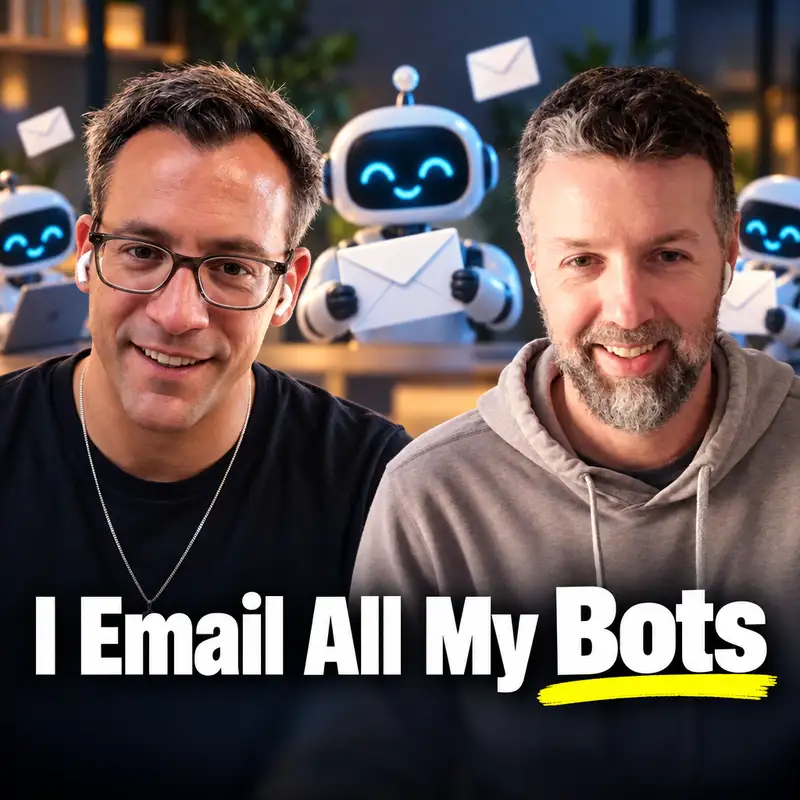
Hello, everybody. Welcome back to another episode of not Bootstrap Web, it's the panel podcast, but it's the two of us. It's myself and Brian, old school Bootstrap. Brian, great to see you, man. Happy Friday.
Brian Casel:Yeah. You too, buddy. Yeah. It it kinda feels good to to be back on a Bootstrap Web style, the panel, but who knows? Maybe Justin will hop in here.
Brian Casel:We know that Justin is out on a team retreat with with the transistor crew. He has the Riverside link, so we'll we'll see if he hops in.
Aaron Francis:I don't We'll see what... I don't know what they're doing. He sent the link to their Airbnb house. Beautiful spot in Toronto. I'm sure that's good time.
Brian Casel:I just wanna, like, join the transistor team for five days a year just so I can go on these trips. You know.
Aaron Francis:They they have a good, like, glow about it. It's just like a cool company. And it it looks like fun also. So... Cool.
Aaron Francis:Justin, if you join, great. Otherwise, I'm sure he's gonna listen to this. Of course.
Brian Casel:Don't you
Aaron Francis:always listen to the episodes when you're not there? Alright. What... What's new?
Brian Casel:What do we got? Like the good old days with Bootstrap Web, you and I have done basically zero prep for for today's episode. We're just gonna go back and forth with...
Aaron Francis:Give ourselves some credit. We we talked for... First, we talked for, like, twenty minutes and talked personal, and then we talked for two minutes. And I think we're we're ready to roll.
Brian Casel:We got a few topics. Two minute drill, we're we're in. Here we
Aaron Francis:go. Yes. Alright. Where do we wanna start? Do we wanna start...
Aaron Francis:Let's start in our little universe. And I think I... The first topic I wanna bring up is Rob and Inar's talks from Michael Connf were published. And I think that's a good base to work off of for for our other topics.
Brian Casel:I wanna hear about this. I I didn't get a chance to to watch their videos, but I've been meaning to. So I wanna hear your your take on it.
Aaron Francis:So Rob and INR gave separate talks at MicroConf, and they were centered around the changing landscape and reality in the SaaS environment. So Rob talked about basically the the the dangers that are gathering for SaaS businesses. They went through, like, 10 or whatever it was individual types of risk and danger. You know, your product becomes obsolete because people don't need it anymore. Your...
Aaron Francis:The the platforms that you're built on and integrate with launch their own because it's so easy to launch new features now. So he kinda went through all these, like, very realistic, very real issues. It was pretty scary. And and his his goal in the talk, he said, he's like, I mean to scare you, but not like too much. And he turns it more positive toward the end.
Aaron Francis:But it's it's scary.
Brian Casel:What do you see or maybe reflecting what what Rob had to say about, like, the big change in terms of, like, SaaS outlook right now? Because I I do remember from years ago, it must have been in in in a Rob talk or a podcast, just, all the all like the risk factors in SaaS in general, like like like platform risk and two sided marketplaces and like things that generally make SaaS hard and how to overcome them and stuff like that. But yeah, like what are the new things that that this AI world introduces that?
Aaron Francis:It felt like the goal of the talk, which I agree with very much, was was like a ringing the bell, like a like in a wake up call. It was basically like, if you feel like you're not in danger, you should rethink because we're all kind of in danger in some way. So you you need to be cautious even if right now it feels like no big deal. I'm okay because I do x y and z. The the the changes are big enough leaps and unexpected enough that you you better off operating under some paranoia.
Aaron Francis:So it's almost like he listed like a somewhat exhaustive list of of dangers to make sure that no one should really be comfortable. Like, the the... This is legitimate ranging from, okay, you you provide software to front office receptionists and forget that something like... Okay. Let's just say something like Rosie comes along and makes receptionists not have to do the work in that same way, and then that market just kinda disappears on you because there isn't demand for your type of solution.
Brian Casel:Yeah. Like, what if there are no receptionists? That's right.
Aaron Francis:And then at the same time, it's also like, well, Rosie's also in danger because people are building so many competitors because it's relatively easy to build. So either one, like you can look at both and say, oh, that's risky and the other one's okay, but but in reality, they're they're both at risk.
Brian Casel:Are they speaking to the startup or the established SaaS that has hundreds or thousands of customers and I... Because I I think that the risk factors are very different. I think they both have risks, but it's a very different situation. Like, if you're trying to decide what to put your bet on in terms of a new SaaS right now in 2026 or or like I think a lot about Justin with Transistor, it's hard for me to see or make the case that like, because now we're in AI, people are going to cancel their podcast hosting service. Like, I just don't see that as a plausible thing and I think obviously transistor is not declining because of that.
Aaron Francis:Yeah. Like... I I agree. It's it's just a a funny thing that that's a boring, stable type of a product. Yeah.
Aaron Francis:And and now that's an envious position.
Brian Casel:Yeah. And and I I think I think, you know, anything that's like sort of like hosting related like that is relatively more safe than than many others.
Aaron Francis:Yeah. Yes. So many This
Brian Casel:is really interesting.
Aaron Francis:So many products in the MicroConf and Bootstrap universe were were these very targeted pieces of software that identified something very painful that you could build software for to make it better.
Brian Casel:Yeah. Turn a spreadsheet into a SaaS.
Aaron Francis:Yes. Yes. Something repetitive into a SaaS. Now next to that, talk was adjacent, and it talked about moats and how to make sure your company is worth something. Right?
Aaron Francis:So if you think about Rob, company building, and Einar, like, liquidity, like sell... Company selling or what's going on in the market, Einar has a really, really good guide on this on the Discretion Capital website. There is an excellent book. I think he actually put it out as, like, a real book that you can get. It's also just in web format on his site about, like, what modern moats look like.
Aaron Francis:It is very up to date, and it's very informed by his work in the market selling software companies to companies like PE that are pushing back and identifying what's emote, what's not, what's valuable, what's less valuable than it used to be. So I highly recommend going to the site. So those two talks together is concerning.
Brian Casel:I mean, I I'm still wrestling with like, I just don't know what my opinion is on... First of all, I've I've sort of just like bowed out of even trying to have an opinion on how to start a SaaS or what you should be doing. Like, I kind of just stopped caring about all that. But yeah, and I do think it's a very case by case basis depending on like what category you're in. Obviously, I'm much more focused on like what types of products are even worth starting, you know, because like the main risk factors now, like there are all sorts of little like turn a spreadsheet into a SaaS type ideas that I would never even, I just wouldn't even think for two seconds about building that today as a product.
Aaron Francis:Yep. Yep.
Brian Casel:Because I could just build it as my own tool in two seconds with thought. Yep. And you know, like I, like for years I used to be obsessed with this idea that I never got around to building, which is put all of your metrics in like a dashboard. I sort of did build the Sunrise dashboard thing and like I would never build that today, you know. Like, I've already I I have already built my version of that for myself.
Brian Casel:Like, this that there's that's just not a product to build anymore. Yep. You know, and then...
Aaron Francis:That's like a service that helps you roll over all your API keys all once. Yeah. Exactly. That's your paranoia to being Exactly.
Brian Casel:Yep. And then I guess there's this other category of potential product or tools that it's not that they're so easy to vibe code, it's that OpenAI and or Anthropic either have already started building the competitor or very likely will.
Aaron Francis:Yep. You know, that's one of the risks Rob talks about.
Brian Casel:Yeah. Yeah. I mean, like, like Claude now has a Google Docs like built into it, you know, with these artifacts. You know, just like stuff like that. That's just like...
Brian Casel:Yeah. It's hard to hard to get your head around. Do tend to think that there's like a niche. There's still the classic niche opportunity. Go go to vertical SaaS, especially a vertical that is not super tech savvy.
Brian Casel:I guess I guess maybe the way that I think about that opportunity is like, you still have a few more years of opportunity before that one dries up too. Yes.
Aaron Francis:Yes. Yes. And... Yeah. If nothing else, it makes a better argument for bootstrapping and not raising money or or only raising non institutional money to get off the ground because you just don't you just don't know what the longevity is.
Aaron Francis:You don't know what it's gonna do for you. You you really don't know what what it is in the early stages. Is it a big business? Is it a small business? Big opportunity?
Aaron Francis:Side thing? Little income for a year or two? You know, something to grow with the 20 people? It's like impossible to tell. It's not all the same, like, outcome range.
Brian Casel:And I mean, you know, we we talked last podcast episode about Josh Pickford and how he launched this, like, SEO service all completely done with AI. In in many ways, that's a very similar type business to what I had done with with audience ops, which was a team of 30 people, and now he's doing it just solo with with bots. And I do think that, like clearly he's doing well, but I tend to think that there is still opportunity in services, productized services, it's much easier to scale those more profitably with more AI and less people. I think that there's still opportunity to helping companies adopt AI. That's still a widespread problem.
Brian Casel:But... Yeah.
Aaron Francis:I think I'm very curious to see if Josh has hit on to a new model. Right? One of the things Einar talks about in his talk is selling the outcome and not the tool. Right. Which is is a pretty good succinct framing of the moment.
Aaron Francis:Don't sell this tool that people log into and click around and now can do it better than they used to or better than a spreadsheet. Just figure out a way to provide the final outcome that the person was gonna use the software to achieve anyway.
Brian Casel:Yep.
Aaron Francis:And there's something about the the upside of SEO, like what it can do for you... For your company, the price point not being too too high or too low. I had a conversation with a listener to our podcast, actually, Ryan. He runs an SEO service and and was asking... So we had a
Brian Casel:call They run run Noah Toa. Yeah. He now runs Noah Toa.
Aaron Francis:Right. So it's like a, you know, it's a product and they have a service arm also. And we got into this conversation. And what I what I found myself saying was the price point needs to be right for something like like the SEO service that Josh is offering. It can't be too high.
Aaron Francis:I don't I don't wanna spend $10 on on SEO. It's so disconnected from ROI. I can't justify $10.
Brian Casel:Yeah.
Aaron Francis:But I don't wanna spend 0. I can't justify zero either. Zero doesn't make sense. Yeah. What what...
Aaron Francis:Where is it that feels like a right price point with a with a with a good likelihood of the outcome that you want that turns it into a no brainer. And I'm... I mean, Josh is what? He's over 500 k in ARR right now?
Brian Casel:Yeah. At least.
Aaron Francis:Something like that? 470? Something like that? I don't know how that's gonna work out, but I'm very curious to see because that that might be a really good model for people who know how to build software, but, you know, don't wanna walk into extremely risky situation around what you're building and who
Brian Casel:who can We you at talked about it a little bit on the last episode when we were talking about that, but I think it's fantastic what he's... Well, it's it's like a... It's an AI world version of a productized service, which means there are so many fewer people involved. Yeah. Which is fantastic.
Brian Casel:I do think that since it is a marketing service, I would expect that eventually at some level, this is not insurmountable, but like he will run into the things that I ran into with Audience Ops, which is like, it's a marketing service, so that's a marketing budget that's easy to cut or it's a marketing service that could do well and then they just bring it in house, you know. Yes.
Aaron Francis:It needs to be justified in some way. Yeah. Yeah. So you kinda pumping it up into into reality. Like you Yeah.
Aaron Francis:Yes, there's spend and then there needs to be justification.
Brian Casel:There is a big space. I don't know how much of this is like kind of bullshit, but there's a lot of like YouTubers out there who are selling help your small business adopt AI or like AI automation. They used to be like the no code automation people and now they're like the AI automation people. Okay. There's lot of consultants and agencies offering that kind of thing, you know.
Brian Casel:At the end of the day though, it is still a service. There there is some some messiness in the back where where there's there's some clients who have different personalities or different special needs and, you know. Yes. There's always gonna be that element of it.
Aaron Francis:Yeah, look, you can't help being an experienced business person on the internet for a long time. You look at that and you there's doubt of it succeeding. But of course,
Brian Casel:like you look at it, it's like, it... I wanna be wrong.... 100 k AR. Yes. Those are problems that are, like...
Brian Casel:Yes.
Aaron Francis:Like, oh, that can't possibly be done with all agents, all automated, all... It's not gonna work. You know, like, that doubt
Brian Casel:is Yeah.
Aaron Francis:Definitely there immediately. But I'm... I wanna be wrong. I I wanna see that business work with two account managers
Brian Casel:Exactly.
Aaron Francis:That that take care of people, and then the bots really do the thing that they need to do.
Brian Casel:Yeah. I mean, there's no doubt that it will continue to work. I I think he's I think he's got his just as a fan and observer of Josh's work, huge portfolio, he's launching projects all the time. It seems like he did finally land on prime, like his primary business for the next while, for the next foreseeable future, and then I'm sure he'll still hack on other stuff. But like Yes.
Brian Casel:I I love it. I think it's great.
Aaron Francis:Yeah. So that might be a good transition to ask you what you're doing on on the automation front. We had a great conversation with Corey Haynes. He's a great inspiration on on all this automation. Yeah.
Aaron Francis:We look at Josh on SEO. What what do you have cooking?
Brian Casel:Yeah. So, you know, the way that I see my work and my operating system at this point, like my, what my business is, is really, I am trying to be a company of one, although I have one person running Clarity Flow for me, but I, but the, it's, wanna be doing two things at all times. One thing is working on a product, I have started building a new product, it's like a video creation product and then the other big project which is always ongoing is marketing systems for all of my products in the portfolio and that I've been, I talked about this a bit but now it's really starting to, it's like up and running now, so I have, I'm using GrockBot and I have a team of GrockBots. A chief of staff and I've got like five or six individual Grockbots, each one manages one product in my portfolio, but those tend to send their tasks out to my cloud account and they run, so it's the way that I use Grock Bot is not like a personal assistant, I don't, I'm not texting it all day, I use it as a team and the team have jobs.
Aaron Francis:Okay.
Brian Casel:And those jobs run recurring on schedule, so every single day now I have, like there's activity happening across all of my products. What basically it starts with a foundation, which is pretty much what Josh offers as his service. I've I've built it for for myself, which is every product gets like SEO foundations where, you know, we're setting up all the optimization on the site, the structured data, the site maps, all that kind of stuff. Then I have like other like AI visibility stuff and then I have like we're, you know, they're up comparison to competitor pages, they're doing special guides, they're doing free tools, they're doing like, they're just spinning this stuff up all the time and they run
Aaron Francis:on Where's where's that that work being done? Is it being done at the Grok level? Because I can't help. I wanna ask. You're technical.
Aaron Francis:You have worked with Hermes. You've worked with Open Claw that give you a lot of freedom, but you ended up on on Grock Bot. Is that for ease or reliability?
Brian Casel:Okay. So, yeah, we could talk about the the bots category. I think that's really interesting. Yeah. My systems...
Brian Casel:So basically, the I I have landed on GrockBot. I think that... So now all the major tools, all the major labs do have their bot platform. You got GrockBot.
Aaron Francis:Claude just launched also.
Brian Casel:Claude just launched their new one. I I haven't had it yet. Meta has Muse. OpenAI has Dots. So now they're now they're all in that game, which means...
Brian Casel:And and I saw this coming as soon as, like, Grockbot came out, which was, like, Open Claw and Hermes, like, forget that honestly, like it's too complicated, too... Too much work. It just breaks too much, it's too hacky. You got to go with one of these major things. Of course, instinct too, they raised a ton of funding and everything, I still, I don't who's investing in that if every one of the major labs has their own competitor, you know.
Aaron Francis:Desperate VCs that don't know what to do with their own.
Brian Casel:Yeah, so, you know, like pick one of them. I really like GrokBot because it's, right now, I think it's the only one that's structured like a team. Like you can have multiple bots, you can have a chief of staff, like...
Aaron Francis:Right. The the point of view of the product is you have a team and...
Brian Casel:Yeah. And the product is really well done. It's done by the team at Cursor, really. That's right. But what I have it do is, anytime it's doing any work at all, my Grock bot talks to my Claude account.
Brian Casel:Okay. So it's spinning up Claude sessions, like I literally see them pop up in my Claude desktop. I have a Claude Max plan, so I want any important work to be done using Opus 5.5, like that's, I freaking love that model, everybody loves it, it's great. I want my Grockbots on that model, they do that but I spend, I do in all this is I'm working on the skills that I basically program the jobs that they are doing. So that's what I'm spending a lot of my time on, I have a whole collection skills like doing the SEO work, doing the content creation work, doing the site map work, doing the, all the things, right?
Brian Casel:And then the other thing that I did was I plugged in a service called agent, I think it's called agent mail. So you give each Grock Bot an email address. They they literally each have an email because I'm not a chat person. Like I actually never even go into Grock Bot to chat with them. I just...
Brian Casel:Too many... You email with them? I do email with them.
Aaron Francis:No way, awesome.
Brian Casel:So, you know, because I do have multiple products and multiple jobs happening every day, so most days of the week I get an email from one of my bots or my chief and it says, so I've got one email that's like my KPI reports. I've got another one that's like, here's your SEO health report. I've got another one that's like, okay, just spun up like 10 tasks to fix these things. These four things need your approval before I can publish them. And I just reply to the email, like go, good.
Brian Casel:Or I'll be like, number one, yes. Number two, yes. Number three, no. Number four, fix this. Number five, go.
Brian Casel:And then it just goes off and continues the work. So it basically starts with like the SEO, AI visibility, We got some metrics tracking and then I set up a system so that we're doing marketing experiments on all of them. So it, like, say, like, take one bot for one of my... Like one of my products is Flyright, you know, markdown writing tool with AI. It'll research the market, it'll research the competitors, It'll send me an email and pitch me on like three new marketing experiments that we can run this month.
Brian Casel:And I'll reply to that email. It'll be like, yes, let's go with number one. And then it will spin up all the relevant tasks like, okay, we're going to be doing competitor competitor articles or we're going be doing cold email outreach or whatever that might be. It's going to spin up all the things. I'm going to approve the things.
Brian Casel:And meanwhile, I'm working on my new product over here and it's, and I might give some input on strategy and then it's every day or week I'm getting emails to approve stuff and then at the end of the experiment, what did we learn? Like the bot has a process for like, let's analyze the trends, the history, the learnings, the results, and then it's like, do we turn this into an ongoing program or do we just run another experiment? So my goal right now is I wanna be building all the time and making videos some of the time and I wanna make sure that every one of my products has these loops happening all the time and I spend a lot of time on those loops, like engineering the skills and the jobs that they're doing but I'm also spending a lot of time on like, how can I make my input into those loops as efficient as possible? So like those emails that they send me, I spent a lot of time like, all right, I want this email formatted like this with this subject in a way that's so easy and fast for me to receive the email on my iPhone or whatever and be like, this has been up and running for like four weeks.
Brian Casel:So early on I would get these emails like, all right, way too much information, takes me too long to get through it. So I was like, all right, we got to trim this down, we got to make it more focused. So I'm always iterating on like, how can I make this more efficient so that I only need to spend like five minutes to approve things, bots go off and work, and then I get back to work on on this thing over here, you know? That's my operating.
Aaron Francis:Very, very interesting. I I wrote down some notes. I don't know other people listening, but that that setup between Grok bot to run the team, but then to use the model that you want at Claude Yes. To do the work and the writing because that's, like, where your confidence is when it comes to models. It's interesting to see, like, the separation between I'm...
Aaron Francis:I I have confidence in Grokbot to manage the team and the tasks on a recurring basis. And then I have confidence in OPUS 5.5 with with my cloud instance and all the data that I have there in context that it has. Yeah. I mean, really, like... That's manageable now.
Brian Casel:Yeah. I mean, Grock Bot really is just a job runner. It's like a it's like a scheduling and job runner essentially Mhmm. For me. That's really all it is.
Brian Casel:It's it's not really an assistant. It's not really... I'm not using Grock models. It's kicking out to Cloud to do the actual work. So...
Aaron Francis:Yeah. Yeah. We'll we'll talk in about a month to see if you end up doing everything inside of Cloud or if it's still if it's still missing the, like, approach to the product and to the the usage of the product that Croc has. I... It's very straightforward team thing.
Brian Casel:I might, you know, like, if I don't have access to that Claude bot thing that they just launched.
Aaron Francis:Yeah. Duet or something? Duo? Yeah. Duet?
Aaron Francis:I'm not sure. Yeah.
Brian Casel:The... From what I've seen of it, I think it's a single Claude. So Okay. I kinda want the multiple team Yeah. Situation, because I, you know, I I have multiple products.
Brian Casel:Yeah. For sure.
Aaron Francis:Yeah.
Brian Casel:Yeah. Like like, don't sleep on GrokBot because it is just a really well done product at this point and it keeps getting better. So I'm I'm really into it.
Aaron Francis:Cool. Yeah. It's the only only one I I've used. Mhmm. We like consistently.
Aaron Francis:You know, I've experimented with the others, but I tried instinct. It's a bit of a weird sauna process, whatever else. Mhmm. Yeah. It's it's funny to think about what we talked about with Rob and I in our conversations, and then what you just described is like, right, all of this is asking the question, in a world where you can build really fast, what should you do?
Aaron Francis:Where is value? Where is pricing power? And so on. And this is like, well, if I can spin up products relatively quickly, that's only useful if those products can then be marketed, but like almost as efficiently, just as quickly.
Brian Casel:Yeah, I mean the thing that I'm solving for is my own weakness, which is like I I tend to launch products and my audience might buy them, I'll get spike of customers and then they sort of just sit in the portfolio and don't do anything. I just wanna make sure that like anything that I do launch has a life that can continue to grow. I mean, Corey is a great example. If you listen to last week's episode, he does... Like the stuff that you see him tweet about publicly or talking about Corey Haynes is just a fraction of his portfolio.
Brian Casel:I think what he said was, he has, I mean, he has something like 20 or 30 different apps and he was like, they're not really worth keeping around they're not growing. They might be growing very, very slowly, but I still want to see that line at least gradually going up into the right and also if you look at any of these like markers or Josh has been publicly like showing like these screenshots of a traffic graph, oh I've been investing in SEO and look at this traffic graph. Yep. It typically looks like three, four, five months of very low level drips and drabs and then boom, Like then it's like Google or wakes up and picks it up and so I have those systems in place so that at least any product I work on has a chance at achieving that. And then the other half of what I do is like, what products am I gonna launch?
Brian Casel:What products can I build or should I build? You know? Yeah. But powerful
Aaron Francis:would it be to be able to ask that question of what should I build? And know that it's not... You're not giving up time required to do the marketing for the previous products before it. It's really like, you know, putting Yeah. Putting seeds down in a line, but there's some form of automation that will water those seeds.
Aaron Francis:You you don't have to... You're not stuck between should I stick with this? Should I move on to the next thing? If I if I stick with this for three more months, will it work? So am I going too early?
Aaron Francis:Like, all those normal questions don't don't look exactly the same if you can keep watering it long after you've moved on to the next thing.
Brian Casel:Yeah. And I mean, you know, I've I've decided a couple years ago that, like, I'm I'm just not of the mindset that I want to be all in on any one single bet. Like the one bet that I am all in on is this idea that like, I like to stay small. I like to constantly be creating and building things, whether it's new products or building these Grock Bot systems for my products. That's what I wanna be spending my time on.
Brian Casel:And if I can just make that profitable and sustainable, which so far I have, like, you know, builder methods is sustainable and these things are investments in assets that can grow that I have plenty of time, have plenty of runway to do this kind of work now, so that's kind of how I see it. Like, you know, I wonder about like what Rob and I and R, I gotta go, I'm gonna watch that. Yeah, it's good. But the, I'm curious about what you might think of this or maybe listeners in general, like what is the actual goal of what you're trying to do with our time, with our business, with our career, what are you trying to optimize for? I've been doing a lot of that type of thinking over the past year or two, you know, constantly shifting around but I'm also at an age and like stuff going on in my life where I'm just like, this is where I need to be, like this is what I need to be doing.
Brian Casel:I'm not like, like I don't really, yeah, of course it'd be fantastic if one of these products just skyrockets and I get a crazy exit and life changing and all that, but like I'm sort of past that at this point. I'm pretty comfortable, you know, my family's pretty comfortable. We're not, you know, we're not rolling in it, but like I feel like I am rolling in it from a lifestyle and work and craft standpoint at this point, so that's pretty valuable to me, so I don't know.
Aaron Francis:Yeah. No. I I... It's a good way to put it because if I look back over the last year, a lot of similar questions because the the nature of what we do and how we get to where we wanna go has changed a lot. It used to be over the last few years, I, you know, I'm just looking at the equity that I own and I wanna turn into an exit and like, that's the goal.
Aaron Francis:Like, do you build the business and that builds the equity value and your investors and everyone in common kinda goes up with it. And then at some point, you can turn that liquid in some way. And like, that's the leverage. Right? You you work with people that provide the money, you provide the work and the know how, and then you kind of go for a ride together.
Aaron Francis:And and that is much more in question than it was twenty four months ago. Yeah. The nature of it, the risk of it, where the money comes from, why do you even wanna raise money, all these other things. You know, the the... My drift into, like, becoming more and more interested in, like, finance and m and a side of things is almost like a natural response to the other game.
Aaron Francis:Doesn't look that good. It's almost that the the the equity growth side of the game looks so bad that I wanna be on the other side of the trade.
Brian Casel:Like Yeah.
Aaron Francis:It's not it's not to acquire companies instead of trying to grow the equity value of it in
Brian Casel:in It is interesting, like like, how uncertain things are in in the in the world of SaaS and and, like, yeah, you start to, like, move toward, alright. Yeah. How do I get on that that other side of that equation?
Aaron Francis:Right. Okay. Where where do I belong? You know, what should I do that I that I enjoy that actually makes sense?
Brian Casel:I mean, at the end of the day, it's like everything we ever do as as entrepreneurs, as builders is like, how do we reduce our personal risk? However we define what that risk is, you know?
Aaron Francis:You have a topic, otherwise I can go.
Brian Casel:Well, yeah, like just one more like end cap on that section was like, I found myself this past summer, like the last several weeks, just in this not very healthy cycle of overthinking, overanalyzing, spending a lot a lot of time just thinking, like what should the next product that I build be, like I can't choose the wrong product, I can't make the wrong bet, you know, and if I choose this, then what then, then, then, and then, and just overthinking, overanalyzing, and then finally, like about two weeks ago, I started working on the next product idea that I've been working on, which is like a video creation tool. And it's like, yeah, this is... It just reminded me, like, day to day of like, I need to be, I always need to be building something.
Aaron Francis:Okay.
Brian Casel:Whether it's a system for Grockbots or queues and that's, I'm going sort of back and forth day by day between those two projects. I can't get into the cycle of overthinking anymore. I, the way that I get out of these funks is I create my way out of them, you know, and like that's, that was a big realization that like, I'm working on this thing right now, who knows, it might be another month or two on this, I'm going to get that out there, get the marketing engines going on it, and I have another two more ideas that I'm going to build after that. Like that is what I'm doing and I can't let myself go in between, I get into trouble in between projects. If I finish a big project and I'm deciding what's next, If I'm spending weeks overthinking what to do next, that's not healthy and frankly things move so fast now that I should just get building, you know.
Aaron Francis:Okay. Right. Too too much analysis, too much worrying about what will happen in the future with competition or with models. Yeah. That's that's that's good for you for the, like, self reflection and acknowledgment on that.
Aaron Francis:Unlike, you know, at some point to unblock, you gotta take some action. And that sounds like what you did. You're like, screw it. I'm just gonna start building.
Brian Casel:Yeah. And like there's so much we don't know. And like, yeah, like every every one of the product ideas that I'm working on, yeah, they all have an element of that risk factor, this might be irrelevant in a year, or maybe these marketing engines aren't gonna work for this type of product, there's always those what ifs, but it only costs me about a month, So, you know. True.
Aaron Francis:And I I have to say the... What... The system that you're describing around the automation, like, I would watch the hell out of a YouTube video on on how you do that.
Brian Casel:Yeah. I I did do a video that just did pretty well. It's it's my last one. It's it's the one that is published about a week ago on... It...
Brian Casel:It's like a Grok bot related title. Okay. I think it's up to like 20,000 views at this point. So that that one gets into some of that. Yeah.
Brian Casel:Okay. Love
Aaron Francis:it. So the the thing I have is I I wanna point out basically one friend's approach to dealing with all these things that we're talking about. I I think it's a very very cool case to to look at. So good friend of mine, Jared, he runs a company called Appointlet, which is scheduling software. Been around for years.
Brian Casel:By the way, I don't know Jared. I don't... Maybe we've met. I I forgot. Sorry.
Brian Casel:But I do I do remember Appointlet. You know what I remember Appointlet from? This this shows you how far back Appointlet goes. Appointlet was the scheduling tool I used for scheduling sales calls for Restaurant Engine. Okay.
Brian Casel:So, yes. Twelve years, thirteen, fourteen years.
Aaron Francis:Yep. He's been doing it a while and and, you know, has done well with it. The whole deal. So... And and it's still around and it's got a big customer base, very interesting kind of not sales process, onboarding and like marketing.
Aaron Francis:Okay. So what he did recently is he launched a... An adjacent product called Little Desk. So if you look at a pointlet.com and then littledesk.com, what you'll see...
Brian Casel:Think I saw this on Twitter.
Aaron Francis:Yeah. Check it out. What you'll see is it's scheduling software specifically for parent teacher conferences.
Brian Casel:Okay? Oh, yeah.
Aaron Francis:Right. So so so think about this. He has a ton of expertise, a ton of know how, a ton of lessons. Good, bad, ugly, you know, ten years of running a software company like a point that you obviously learn a lot. I I I was about to say he's got a code base, but when I asked him, the code base actually was the least relevant part of of of all of that.
Aaron Francis:The know how and the lessons learned and all that.
Brian Casel:But I mean, like, is Little Desk appointment under the hood?
Aaron Francis:I don't think it is. I think it's different infrastructure and different code base and and all that because if you built a product ten years ago, would you use the same code base right now?
Brian Casel:Probably not.
Aaron Francis:Probably not? If you if if you're in a traditional SaaS like Pointless and you see all this stuff swirling around. Right? It's pretty pretty interesting to look at your customer base, identify a niche, and then maybe two years ago, launching another product to manage would would not sound like something you wanna do. Split your focus, split your team, split your time, all these other things.
Aaron Francis:But if we go back to the pros and cons of being in a world where you can build things very, very quickly, maybe it makes sense. And and one of the things I wanna point out when what I pointed out to Jared kinda and and asked about, if you look at littledesk.com, one of the things you'll notice is fewer features and really really simplified pricing.
Brian Casel:So Yeah. So like
Aaron Francis:Only only annual. Right? Okay. Almost like if you looked at your size
Brian Casel:I love that.
Aaron Francis:And you said to yourself, okay, I built this this software and it's got a very horizontal approach. It's got a bunch of industries, but one of these industries really loves us. And man, wouldn't it be cool if I could get away from like this monthly pricing model? And maybe I could, you know, go annual only and what that would do is allow for the initial transaction to cover a lot of advertising spent. And then all of a sudden, I could take a product that I just could never really make the math work on advertising.
Aaron Francis:But maybe on this one, I can because I'm getting paid more than the CAC upfront for the annual cost of it. It's like I
Brian Casel:love it.
Aaron Francis:It's like you could pick and choose the best characteristics, put aside the the the characteristics that you like least in your existing products. Like, it's like this refinement, like chipping away to get just the kernel of exactly what you want out of your software product. And you don't even need to use the same customer code base. Like, okay, you take all the know how and just and just build it.
Brian Casel:Yeah. I mean, I I love this whole move. I love the branding of Little Desk for for parent teacher conferences. The site looks amazing. I am such a fan of the annual pricing.
Brian Casel:You know, every product is different. You're gonna have a different strategy for however you price, but just literally looking at all products that I have right now, with the exception of Clarity Flow, which has monthly and annual, everything else is annual. Builder Methods Pro is annual. Cool. Flyrite is $99 a year.
Brian Casel:Mimio is $500 for the first year. This new one, this video tool is gonna be a Mac app that is an annual license. I I love the annual thing because, like you said, like, yeah, you've got you've got the you've got the financial runway to, like, you know, fund ads and stuff, but it also adds a commitment for the customer even if low. Like, even if it's $99 or $2.02... $300 for a year, they're still making a decision to, like, okay, I'm gonna buy this today and I'm gonna use this.
Brian Casel:Mhmm. You know? Yeah. $9... A $19 a month SaaS, like, you might sign up for four of them at the same time.
Brian Casel:You know?
Aaron Francis:I mean, it happens in our product and I'm sure everyone else. If you have a monthly product, $1,929.49 a month, people will sign up and leave it running for three months and not log in once and then cancel. It's it's not not ideal. Yeah. But I I I think it's cool.
Aaron Francis:And I was gonna say that some products lend themselves really nicely. The annually, right, parent teacher conferences, like, it makes sense. Like, you do it, you know, three... I don't know, two or three times a year and you just pay for the year and it kinda makes sense that way. But Yeah.
Aaron Francis:What you just described with all of your products that are annual is a good challenge for me to say. Anything could be annual, actually.
Brian Casel:Yeah. I've I've been kicking around like different ideas to play with the pricing on Builder Methods Pro, which is I I did raise it to $3.99 a year. It's back to $2.99 a year. I I've been... I haven't done this yet, but I've been playing with the idea of maybe as like a churn reduction thing, if you try to churn, then I present you a monthly option that you can downgrade to, like on the back end.
Aaron Francis:Yeah.
Brian Casel:I don't know, just like different ideas, but I do think, I do like the idea of just at least committing to a year of revenue, because that's a year of... Or at least a significant commitment for for the user, you know.
Aaron Francis:Oh my goodness. Imagine if everyone just paid annual upfront. It'd be a lot better. Really be a lot better.
Brian Casel:I mean, you know, going back to Josh's thing for services, audience ops worked really well because we offered quarterly. We had some customers paying annual, but we had monthly and quarterly, and the majority of customers were paying on a quarterly basis, which was Okay.
Aaron Francis:I'm just about to move to quarterly billing with with LiveKit, which is our, like, infrastructure provider for our, like, AI stack. And I have learned so much from their sales process and how they do it and how they price. They're they're very very good at it. It's like the closest thing to an everybody wins offer that I've come across with something that is an annual contract and this is by far our biggest expense annually, by far, by like an order of magnitude. But this is what we run on.
Aaron Francis:This is this is...
Brian Casel:This is your like AI token? Yeah. So so
Aaron Francis:it's infrastructure that allows you... It makes it easier to build our voice stack.
Brian Casel:Okay.
Aaron Francis:And it also has enterprise agreements with all the different models. The inference models, the text to speech, the speech to text, the different LLMs, all all this other stuff. And so when we when we are on their platform, a lot of our commitment is spend. And because of that, we get their pricing, which is much much lower than what we would get normally. So it's like everybody wins on that front also.
Aaron Francis:That's great. And they're good. So it it all kinda works out. But the way they do their pricing is like they they estimate your usage and then that's what you commit to. But you...
Aaron Francis:You're very unlikely, you know, in that scenario, of course, what you're stressed about is like, I don't wanna overpay. What if I don't need all this? You know, I don't wanna pay tens of thousands of dollars more than I should. And at the same time, they're also worried about, well, what if the... It's wrong the other way, you actually use a lot more because you grew a lot and that's a good thing.
Aaron Francis:It shouldn't be a bad thing. So they just have like these usage credits and it's like you sign an annual agreement, but then it's like if you use all the credits in six months, that's it. But it keeps your monthly payment the same. It's like here's the annual commitment for the entire year divided by 12. That's your that's your monthly payment.
Aaron Francis:But inside each month, based on your usage, you're using the credits either faster than expected or slower than expected. And if it goes fast... If it... If the contract lasts nine months, then whatever. Then you just renew at nine months.
Aaron Francis:It is is great. That's because the The the last annual agreement that we signed, we used up all the credits in six months. So now now we're renewing six months instead of twelve months in, but it's like my pricing stayed the same over the last six months regardless of the fact that we accelerated by two x.
Brian Casel:Yeah. It's it's crazy, man. Like the... Oh, I I just want... Just for like one minute, you know, most people know this by now, like Opus 5.5 is incredible.
Aaron Francis:Yeah. Tell me about this. This is now your go to.
Brian Casel:I'm all in. And so about a month ago, I left Claude. I was like, I'm done. Like, Opus, Well, like, because Opus, what was it? Five...
Brian Casel:Opus five or 5.1, that was the one that, like, everyone sort of hated, including And it was, like, super expensive. And so it... Everyone hated it, so we always used Fable, which was super expensive.
Aaron Francis:Yep.
Brian Casel:And I kept getting these over dues. So then in the month of like July or August, I was like, screw that, I'm going to OpenAI, I'm going Codex, you know, got a subscription over there, I was paying for a lot of credits through AMP, and in the month of like July, as I was using Codex with occasional fable and occasional other credits, I probably racked up about a thousand bucks a month for like July and August in AI usage. Opus 5.5 comes out and in the month of like like mid September into now into October, I've been backed all in on the max plan to just $200 I haven't even come close to hitting the usage and I am multitasking a lot. Talked about the crock bots, I'm building all the time, I mean, 5.5 is not only to me the best model that I've used, it's just so, like, I just trust it with everything I throw at it, but it's like, holy shit, like, how am how am I still 20% through my usage? Like, it's crazy.
Aaron Francis:This feels like where it needs to I hope, like, I almost like good and cheap.
Brian Casel:I just don't, and like, Claude is not known for being cheap, but, like, I just... I almost, like, I just don't want them to even release any new models. This is perfect. Just stay here. You know?
Brian Casel:Yep. Anyway.
Aaron Francis:Yep. Okay. Cool. I'm I'm gonna I'm gonna check it out. I have kinda stepped away from using AI as much over the last, like, two weeks.
Aaron Francis:I've been focused on some other things and now now getting back into it. It's gonna contract. Oh, I I don't know. It feels good.
Brian Casel:What do you got... What what else you got going on?
Aaron Francis:I did enjoy the flying cars. Yeah. I enjoyed the flying car. That was that was a cool I showed it with my kids, you know.
Brian Casel:Yeah. Showed it to them.
Aaron Francis:I the I enjoyed the the Elon haters just like crying into their their sad little.
Brian Casel:Yep. You know, it's funny, Elon. I I was... Last night, this this is like a new interview between Walter Isaacson and Elon Musk. So Isaacson, I guess, has a podcast.
Brian Casel:I I saw it on YouTube. I had like a... It was like a thirty minute interview with Elon. I think it's new. I think it's like this week.
Brian Casel:And it was almost like Isaacson's like catch up with Elon since he did the biography. Okay. So so he was talking a lot about what it was a really interesting interview to me because I like interviews that are like biography, like why did you choose to do this and then that? You get Elon talking about his sort of like regrets over spending the year doing the political thing with like the, not that he disagreed with what he was doing, like he still has those stances on like, he thinks Trump is better and all that, he was like, probably shouldn't have done it for a year, I probably should have just done it for a month And he was like, maybe I shouldn't have been so upfront. But then he talked about after that, he pivoted his, like Elon's focus to XAI, to the AI company.
Brian Casel:That's interesting to me because it's like over the past one year, like he said, like I've been at this company for one year, the company is about three years, but I've been on it for one year and that's been my focus and Elon was saying like he regrets not focusing on it two or three years earlier. So that's why I think that like as as much as I love Cloud and everything, it's like don't sleep on x AI because I really think that they are gonna be in the top tier conversation over the next couple of years. Like they're they're they just started later at this point, you know. That's right. And they have all these resources, this compute SpaceX, like, it's really interesting.
Aaron Francis:Yeah. I think it's, yeah. It's it's healthy right now. It's just... It's still booming.
Aaron Francis:We just wanted to keep going and Yep. No crazy hiccups and all that.
Brian Casel:You did get a lot of, like, crazy... I mean, it's plausible, but it is crazy to hear someone like Elon talk about like, yeah, I'm pretty sure in the not too distant future, like money is not gonna be a thing.
Aaron Francis:I saw that. We
Brian Casel:might be in a simulation and like if and like the chances are we are not gonna be in control. The robots are gonna be in control. And maybe that's a good thing. Like you just hear them saying stuff like this, oh, okay.
Aaron Francis:Yeah. It's it's tough because every everyone has to kind of decide where their line is on, like, alright, beyond that, that's actually too much for me and I'm just not gonna pay attention or or believe that because I can't handle acknowledging that.
Brian Casel:Yep.
Aaron Francis:The the person that does that for me is Palmer Lucky because he says some insane things. And and if you listen to some of the details, it's like, oh god, he might be right. You know, I I think I think they're they're now like, they built a company that's going to breed animals like dogs and wolves for military purposes. I'm like, guys, what what what
Brian Casel:is happening? What are we talking about here?
Aaron Francis:Yes.
Brian Casel:Hurry up. I don't know, man. I don't know.
Aaron Francis:Yep. You got any plans for the weekend?
Brian Casel:I think we're gonna do a date night tonight. My my older is now kinda old enough to stay home and, you know, without a babysitter, so we're, we're taking full advantage of that whenever we can.
Aaron Francis:Good for you. Very nice.
Brian Casel:Fall fall is the shit. I just love it around here, and, it's just beautiful.
Aaron Francis:Nice. Yeah. My my my brother and his wife went to Litchfield. Oh, yeah. Last weekend or maybe earlier this week.
Brian Casel:That's over where my brother lives.
Aaron Francis:That's right. Very close. Beautiful spot. I was in Las Vegas earlier this week. Not as nice.
Aaron Francis:Not as nice. Las Vegas is so weird, man. I was I was having to come home. Yeah. I don't think we're doing anything special.
Aaron Francis:I think tonight's Freaky Friday, little dance for the sixth graders or fifth graders or something.
Brian Casel:Very cool.
Aaron Francis:Soccer tournament in Wisconsin, you know, I could go on but nobody nobody wants to hear it.
Brian Casel:Yeah. Good stuff, man.
Aaron Francis:Great stuff. Let's call it. Thanks everyone for listening. Brian, great to see you as always.
Brian Casel:Yeah. You too, buddy. And we'll be back maybe next week. I'm sure Justin will be back on. Maybe?
Brian Casel:I don't know. We'll see. Yes. You never know. Alright.
Brian Casel:See you. Later, folks.